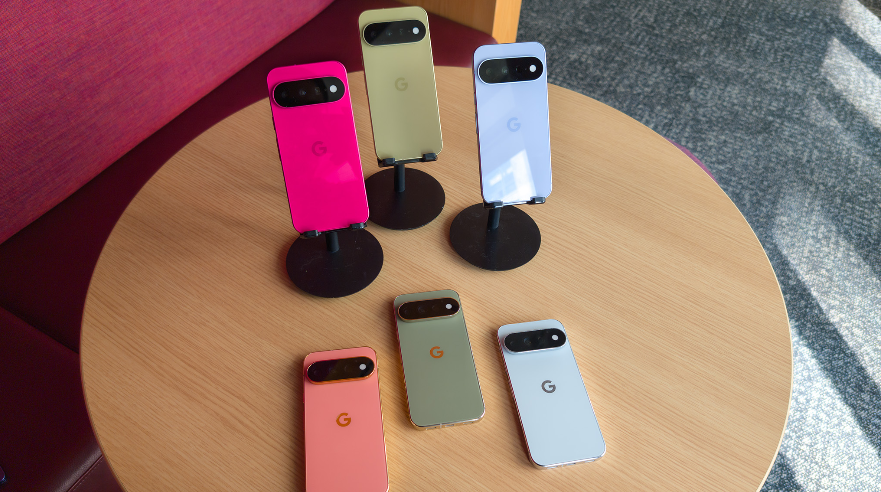
A New Pixel Generation Takes Centre Stage
Google’s latest Pixel launch has quickly become one of the most talked-about smartphone stories in the UK technology market. The new Pixel 11 family brings together upgraded artificial intelligence, a new generation of Google’s Tensor processor, camera improvements and a refined hardware design. The range includes the Pixel 11, Pixel 11 Pro, Pixel 11 Pro XL and the foldable Pixel 11 Pro Fold. UK pre-orders are already attracting attention, with trade-in offers and bundled promotions from major retailers and mobile networks.
For British consumers, however, the most interesting question may not simply be how fast the new phones are or how many cameras they have. As smartphones become increasingly dependent on AI, battery performance is becoming just as important as processing power.
The Pixel 11 generation illustrates this change particularly well. Modern phones are expected to handle photography, navigation, streaming, gaming, video calls, cloud services and increasingly sophisticated AI functions throughout the day. That means battery efficiency has become a crucial part of the overall smartphone experience.
At the same time, the launch arrives at a moment when UK consumers are becoming more careful about how long their electronics remain useful. Instead of replacing a phone whenever a new model appears, many people are interested in durability, software support, charging performance and long-term battery health.
Why the Pixel 11 Is Creating So Much Interest
The Pixel 11 series represents a refinement of Google’s smartphone strategy rather than a complete departure from previous Pixel designs. According to hands-on reporting, the new phones use the Tensor G6 platform and focus heavily on efficiency, AI performance and improved camera capabilities. The Pro models also introduce enhanced displays and advanced computational photography features.
One of the most distinctive additions is HiLight, an illuminated feature around the camera flash that can act as a notification system. Instead of relying entirely on the screen, the phone can provide a visual signal when it is placed face down. This is a small but noticeable example of how Google is attempting to make smartphone interactions more natural.
The Pixel 11 Pro and Pixel 11 Pro XL are also positioned toward users who want premium photography and display technology. Meanwhile, the Pixel 11 Pro Fold targets consumers interested in combining smartphone portability with a larger foldable screen.
These developments matter because every new feature creates another demand on the phone’s internal hardware. Better cameras require processing power. AI tools require computational resources. Brighter displays can consume more energy. Faster communication, navigation and background services can also contribute to battery drain.
This creates an important balancing act: smartphones need to become more powerful without becoming less convenient to use.
AI Is Changing What People Expect From a Smartphone
Artificial intelligence is arguably the biggest reason the latest Pixel generation feels different from older smartphones.
Google has spent years integrating Gemini and other AI-powered functions into Android and Pixel devices. Recent Pixel updates have expanded features such as Circle to Search and Gemini-powered assistance, allowing users to perform more tasks directly from their phones.
For UK users, this could change the way a smartphone is used throughout an ordinary day.
Imagine someone commuting across London. They might use navigation in the morning, answer messages through voice commands, search for information using an AI assistant, take photographs during lunch and stream music on the journey home. Later, they might use the camera to scan documents or edit photographs.
Each individual task seems relatively simple. Together, however, they create a demanding workload.
This is where battery efficiency becomes increasingly important.
The future of smartphone battery performance will not necessarily be determined only by having a physically larger battery. Processor efficiency, display technology, software optimisation and intelligent power management can all influence how long a phone lasts between charges.
For buyers considering the latest Pixel devices, understanding the condition and quality of a google pixel smartphone battery can therefore be just as important as comparing camera specifications or storage options.
Battery Life Becomes More Important as Phones Get Smarter
A smartphone that lasts all day is no longer a luxury. For many people in the UK, it is essential.
Phones are now used for digital banking, train tickets, authentication codes, work communication, entertainment and navigation. Losing battery power at the wrong moment can cause genuine inconvenience.
The increasing use of AI could make this even more significant.
AI functions can involve intensive processing, although modern smartphones increasingly perform certain tasks locally and use specialised hardware to improve efficiency. The Tensor platform is designed around Google’s AI ambitions, giving Pixel devices dedicated capabilities for machine-learning workloads.
The challenge is to deliver these features without making users constantly search for a charger.
This is why battery health deserves attention even when discussing a brand-new phone. A new device may provide excellent battery endurance, but lithium-ion batteries naturally experience chemical ageing over time. Charging habits, heat exposure, heavy workloads and the age of the device can all influence long-term capacity.
For someone buying a Pixel 11 with the intention of keeping it for several years, battery longevity should therefore be considered part of the phone’s overall value.
The UK Market Is Becoming More Focused on Long-Term Value
The British smartphone market has changed considerably. Consumers have access to a huge range of premium, mid-range and affordable devices, while mobile networks increasingly compete through trade-in programmes and monthly payment plans.
The Pixel 11 launch demonstrates how important these incentives have become. UK pre-order promotions include trade-in savings and bundled offers through Google and several major retailers and networks.
This makes the decision more complicated than simply asking which phone has the best specifications.
A consumer may instead ask:
How long will this phone remain fast?
How long will the battery remain practical?
How many software updates will it receive?
Will its camera still feel competitive in three or four years?
Can the battery be maintained or replaced when capacity eventually declines?
These are increasingly important questions because flagship smartphones are expensive pieces of technology. Getting more useful years from a device can make a significant difference to its overall value.
Cameras, AI and Battery Life Are Closely Connected
Photography is another area where Pixel phones have developed rapidly.
The new Pro models bring improvements to camera hardware and computational photography, while AI processing plays an increasingly important role in producing final images. The latest Pixel 11 Pro models reportedly introduce a new 50MP sensor and enhanced zoom capabilities, with AI processing contributing to the photography experience.
For photography enthusiasts in the UK, this can be exciting.
A weekend trip to Edinburgh, a football match, a family gathering or a day exploring the Lake District can generate hundreds of photographs and videos. Modern computational photography can process images quickly, improve dynamic range and help users capture subjects in difficult lighting conditions.
But taking and processing large numbers of photographs also means more work for the processor and display.
That is why users who frequently rely on their phone as their primary camera should pay particular attention to battery performance. A phone with an impressive camera is less useful if it cannot maintain enough power during a long day of shooting.
In this context, choosing a reliable google pixel smartphone battery becomes part of maintaining the complete photography experience over the long term.
The Foldable Pixel Brings an Even Bigger Challenge
The Pixel 11 Pro Fold is arguably the most ambitious device in the new range.
Foldable phones have to balance several competing requirements. They need a large internal display, a practical external display, sophisticated hinge technology and enough battery capacity to support both screens without becoming excessively heavy.
The new Pixel foldable is thinner and lighter than its predecessor, while Google has also refined its hinge and display design.
A larger display can be fantastic for watching video, reading documents and multitasking. It can also increase the potential energy demands of the device.
This makes battery management especially relevant to foldable phones.
Someone using the Pixel 11 Pro Fold as a compact productivity device may spend much longer looking at the internal display than a typical smartphone user. They might simultaneously use email, a browser, messaging applications and cloud documents.
Battery endurance therefore becomes an important part of whether a foldable feels genuinely useful.
Charging Habits Can Influence Long-Term Battery Health
Battery technology has improved enormously, but users still need to think about how they treat their devices.
Heat is one of the biggest concerns. Intensive gaming, prolonged camera use, navigation under direct sunlight and charging in hot environments can increase device temperature. Keeping a phone unnecessarily hot for long periods is generally not ideal for long-term battery health.
Charging accessories also matter. Users should use compatible, reliable chargers and cables rather than choosing unknown accessories simply because they are inexpensive.
Wireless charging adds another layer of convenience. Google introduced Qi2-compatible Pixelsnap charging accessories with the previous Pixel generation, showing how magnetic wireless charging has become part of the Pixel ecosystem.
For many users, the best charging strategy is simply to avoid extreme conditions. There is no need to become obsessed with achieving a perfect percentage every time. Instead, maintaining reasonable charging habits and avoiding excessive heat can help support long-term performance.
What British Buyers Should Look For
Someone considering a Pixel 11 in the UK should look beyond the headline specifications.
First, think about usage patterns. A person who mainly sends messages and checks email has very different battery requirements from someone who records 4K video, plays demanding games and uses navigation for hours.
Second, consider the size of the device. Larger Pro models may offer bigger displays and additional hardware, but the overall experience depends on how efficiently the phone balances performance and power consumption.
Third, consider how long you intend to keep the phone. If you normally upgrade every year or two, long-term battery degradation may be less important. If you plan to keep the device for four or five years, battery health becomes much more significant.
Finally, consider maintenance.
A smartphone is not simply a disposable gadget. Its battery is a component that naturally ages. When the capacity eventually declines, a properly compatible replacement can potentially extend the useful life of the device rather than forcing the owner to replace an otherwise functional phone.
For long-term Pixel owners, understanding the role of a google pixel smartphone battery can therefore help them make more informed decisions about maintenance and ownership.
Pixel Is Becoming More Than Just a Phone
Google is also expanding the Pixel ecosystem beyond smartphones.
The company’s latest launch includes the Pixel Watch 5 and Pixel Tag, while the Pixel 11 Pro Fold expands the range into foldable computing. Google has also been developing deeper connections between Gemini, Pixel devices and everyday activities.
The company recently announced long-term partnerships involving Gemini and Pixel with major football clubs including Arsenal, Liverpool, Barcelona, Bayern Munich and Paris Saint-Germain. The goal is to use AI and smartphone technology to bring fans closer to the game.
This is particularly interesting in the UK, where football is deeply connected with everyday entertainment and digital culture.
A smartphone is increasingly becoming a central hub for communication, entertainment, photography, navigation, payments, AI assistance and personalised information.
That makes reliability even more important.
The longer a person depends on one device for essential tasks, the more disruptive battery problems can become.
What the Pixel 11 Launch Means for the Future
The Pixel 11 launch suggests that the smartphone industry is entering another stage of competition.
The biggest improvements are no longer simply about adding more megapixels, increasing processor speed or making screens larger. Manufacturers are trying to make phones more intelligent, more context-aware and more useful throughout the day.
AI is at the centre of this transformation.
But AI cannot replace the fundamentals of a good smartphone. Users still need a reliable display, responsive performance, strong connectivity, good cameras and dependable battery endurance.
In fact, the more intelligent a smartphone becomes, the more frustrating it will be if it cannot last through a normal day.
This is why battery technology and battery maintenance deserve more attention than they often receive in launch coverage.
A More Practical Way to Think About Smartphone Upgrades
The excitement surrounding a new Pixel generation is understandable. New cameras, AI capabilities, faster processors and unusual features such as HiLight make smartphones increasingly interesting.
But consumers should also ask whether a new phone genuinely improves their daily life.
For some UK users, the answer may be yes. A photographer may benefit from the improved camera system. A business user may appreciate AI-powered productivity tools. A frequent traveller may value navigation and long-lasting connectivity. A foldable enthusiast may want the larger screen of the Pixel 11 Pro Fold.
For others, an older Pixel may still be perfectly capable.
In that situation, maintaining the existing device could be more sensible than upgrading immediately. Battery condition is one of the most important factors in determining whether an older smartphone still feels practical.
If performance remains good but battery capacity has declined significantly, addressing the battery may provide a more economical solution than replacing the entire phone.
A well-maintained google pixel smartphone battery can therefore play an important role in extending the useful life of a Pixel device.
The Next Chapter of Pixel
The Pixel 11 generation arrives at an exciting time for the UK smartphone market. Google is pushing deeper into AI, refining its camera technology and expanding its hardware ecosystem. The Pixel 11 Pro Fold also demonstrates that the company is willing to experiment with new smartphone formats.
Yet perhaps the most important lesson is surprisingly simple.
The smartest smartphone still needs dependable power.
As AI becomes more deeply integrated into everyday mobile experiences, battery efficiency will become increasingly central to the way consumers judge a phone. The best device will not necessarily be the one with the most impressive specification sheet. It will be the one that can deliver useful performance throughout a busy day and remain dependable for years.
For British consumers deciding whether to upgrade, the Pixel 11 offers plenty to consider. But beyond processors, cameras and AI features, battery longevity should remain part of the conversation.
After all, innovation is only useful when your phone has enough power to keep up with you.