A New Chapter in the Global AI Race
Artificial intelligence is changing almost every part of modern life, from the way people search for information and communicate to how businesses manage their operations. However, behind every intelligent chatbot, image generator and automated service is an enormous amount of computing power. As demand for AI continues to grow, technology companies are facing an increasingly difficult challenge: finding enough electricity, cooling capacity and physical space to support the next generation of digital services.
Now, SpaceX is proposing an extraordinary solution. The American space company, led by Elon Musk, has received authorisation from the US Federal Communications Commission (FCC) to deploy up to one million satellites designed to function as data centres in orbit. Known as the Starmind constellation, the ambitious project could represent a major change in how the world builds and operates artificial intelligence infrastructure.
The announcement on 25 November 2026 has attracted international attention, not least because it raises questions about the future of technology, energy consumption and the environment. For the UK, where the expansion of AI infrastructure is already an important economic and political issue, the development could have implications far beyond the space industry.
What Exactly Is SpaceX Planning?
Unlike conventional communication satellites, the proposed Starmind spacecraft would have a much more demanding role. Rather than simply transmitting signals between locations, they would contain computing equipment capable of processing large quantities of information while orbiting Earth.
The basic idea is to move part of the infrastructure behind artificial intelligence away from the ground. Instead of relying entirely on enormous buildings filled with servers, SpaceX wants to establish a network of orbital computing facilities that can perform AI-related tasks and send the results back to Earth.
The company believes this approach could offer significant advantages. Satellites operating in carefully selected orbits could receive sunlight for extended periods, allowing them to generate electricity through solar panels. Their computing systems could then use this energy to process information without depending directly on national electricity grids.
SpaceX also intends to use laser-based communication links to transfer information between satellites and connect the orbital network with its existing Starlink infrastructure.
The scale is remarkable. One million satellites would be an unprecedented expansion of commercial activity in low Earth orbit. However, authorisation does not mean that all these spacecraft will immediately be launched. SpaceX still needs to overcome considerable engineering, manufacturing and financial challenges before the proposal becomes a functioning global system.
Why Does AI Need So Much Computing Power?
The growing popularity of generative AI has created a new infrastructure challenge for the technology industry. Training advanced AI models requires thousands of specialised processors working together, while providing services to millions of users creates continuous demand for computing resources.
Every time someone generates an image, asks an AI assistant a complicated question or uses an automated business platform, computing equipment somewhere must process that request.
These activities consume electricity and produce heat. Traditional data centres therefore need sophisticated cooling systems, reliable power connections and carefully controlled environments.
The problem is particularly relevant in Britain. The UK is investing heavily in artificial intelligence as part of its ambitions to become a leading technology economy. At the same time, the country must consider how additional data centre demand will affect electricity infrastructure, planning decisions and environmental targets.
London and other major technology locations already have important data centre markets. However, expanding these facilities is not simply a matter of finding an empty building. Developers must secure suitable sites, access sufficient electricity and meet increasingly demanding sustainability requirements.
This creates an interesting question: if AI companies could eventually move some computing operations into space, would they still need to build so many facilities on Earth?
SpaceX clearly believes orbital computing deserves serious consideration.
Could Solar Power Make Space Data Centres More Efficient?
Energy is at the centre of the Starmind proposal. SpaceX argues that satellites can take advantage of abundant sunlight without being affected by clouds, rain or the changing seasons in the same way as solar installations on the ground.
For the UK, this is an especially interesting comparison. British households and businesses are familiar with the challenges of renewable energy generation, including the changing availability of sunshine and the importance of balancing electricity supply with demand.
An orbital solar-powered system could theoretically provide a different model. By positioning satellites in suitable orbits, SpaceX hopes to capture solar energy for computing operations over extended periods.
There is another potential advantage: cooling.
Earth-based data centres require substantial engineering to remove heat from densely packed processors. Space offers a different thermal environment, where equipment can release heat through radiation rather than relying on conventional air-conditioning systems and cooling towers.
However, space is not automatically a perfect cooling environment. In a vacuum, heat cannot simply escape through moving air. Large radiators and carefully designed thermal systems are still necessary to prevent sensitive electronics from overheating.
The same principle applies to an electronic device battery used in a satellite. Although the main computing infrastructure may receive power from solar panels, onboard energy storage remains important for managing interruptions in sunlight, supporting essential equipment and maintaining stable electrical operations.
This means that orbital data centres would still depend on sophisticated power-management technology, even if their primary energy source is renewable.
What Does This Mean for Britain’s AI Industry?
Britain has been working to strengthen its position in the international AI market. From financial technology companies in London to research organisations in Cambridge and Oxford, businesses across the country are exploring ways to integrate machine learning into everyday operations.
The government’s AI ambitions also depend on reliable digital infrastructure. Companies need access to powerful computing systems if they are going to develop new products, train advanced models and compete internationally.
Space-based computing could eventually become another option within this wider infrastructure landscape.
For example, British technology businesses might one day purchase computing services from orbital platforms in the same way that they currently rent capacity from cloud providers. Instead of owning expensive server equipment, they could access remote computing resources through secure networks.
This possibility is particularly interesting for smaller companies. Start-ups often face financial barriers when developing computationally demanding AI products. If orbital computing eventually becomes commercially viable, it could introduce additional competition into the cloud computing market.
Nevertheless, there is no immediate reason for British businesses to expect a change in their existing services. Starmind is still an ambitious infrastructure project, and practical commercial applications will depend on its eventual performance, reliability and cost.
The Satellite Revolution Comes With Environmental Questions
The proposal has also generated concerns among scientists and organisations interested in protecting the night sky.
One major issue is orbital congestion. Earth already has thousands of active satellites supporting communications, navigation, weather forecasting and scientific research. Adding potentially one million more objects would dramatically change the operating environment in low Earth orbit.
More satellites mean more opportunities for collisions, particularly if spacecraft malfunction or cannot be moved away from dangerous objects.
A serious collision could generate debris that threatens other satellites. In the worst circumstances, a chain reaction of collisions could make particular orbital regions increasingly difficult to use.
Astronomers have raised another concern: light pollution in space.
Large numbers of bright, reflective satellites could interfere with observations of distant stars, planets and other astronomical objects. This matters to the international scientific community, including British researchers who rely on ground-based observatories and international astronomical projects.
The American Astronomical Society has publicly criticised the FCC’s decision, warning that the proposed constellation could affect optical, infrared and radio astronomy.
There are also questions about the environmental impact of manufacturing and launching such a vast number of spacecraft. Even if satellites operate using solar energy, rockets, production facilities and eventual atmospheric re-entry still have environmental consequences.
For Britain, these concerns are relevant because space sustainability is an increasingly important subject in international discussions about commercial satellite development.
Why Batteries and Power Management Still Matter
Moving computing infrastructure into orbit does not eliminate the need for reliable electrical systems. In fact, operating electronic equipment in space creates particularly demanding power-management requirements.
Satellites must maintain essential functions even when solar energy is temporarily unavailable or when their power consumption changes unexpectedly.
Energy storage systems can help balance supply and demand, while advanced monitoring electronics ensure that different components receive suitable electrical power.
This is where developments in the wider electronic device battery market become relevant. Improvements in battery chemistry, energy density, charging efficiency and thermal stability could benefit many types of electronic equipment, including satellite communication systems, scientific instruments and remote monitoring devices.
The requirements of a spacecraft are different from those of an ordinary consumer product. Equipment must operate reliably despite temperature variations, vibration during launch and years of exposure to a challenging space environment.
Manufacturers therefore need to consider not only how much energy a battery can store, but also how consistently it can deliver that energy over time.
These engineering challenges are not exclusive to satellites. They are also important for smartphones, laptops, wearable devices and other connected technologies that increasingly depend on efficient energy storage.
As AI expands into more areas of everyday life, the relationship between computing performance and battery technology is likely to become even more significant.
Can SpaceX Really Launch One Million Satellites?
Perhaps the biggest question is whether the proposed constellation can actually be built.
SpaceX has considerable experience in satellite manufacturing and reusable rocket technology. Its Starlink network has already demonstrated that large commercial satellite constellations are possible.
However, a million orbital computing satellites would be an entirely different challenge.
These spacecraft would need to accommodate computing processors, solar panels, communication equipment, thermal management systems and other essential components. They would also require an enormous launch programme.
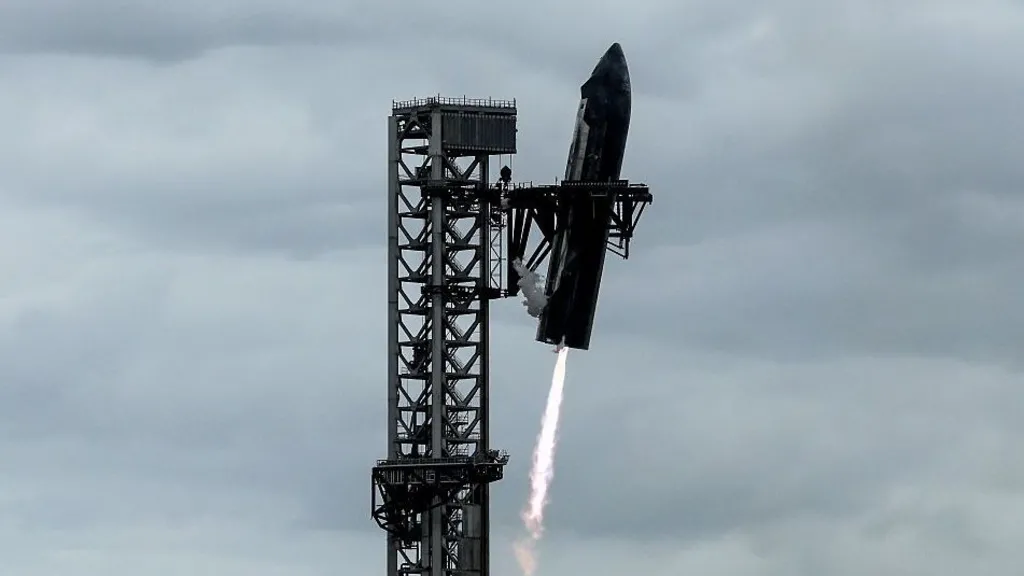
SpaceX is relying heavily on its next-generation Starship rocket to make deployment more economical. If the company can significantly reduce the cost of transporting equipment into orbit, it could improve the financial case for large-scale orbital infrastructure.
The FCC’s authorisation includes deployment milestones extending into the next decade. SpaceX must begin deployment by November 2033, with at least 100,000 satellites in orbit by November 2035 under the approval conditions.
These deadlines demonstrate that the project is intended as a long-term undertaking rather than an immediate replacement for conventional data centres.
There are also commercial uncertainties. The cost of producing and maintaining such a large network could be enormous, and the technology must deliver reliable performance to compete with established cloud computing services.
What Should British Consumers Expect?
For ordinary people in Britain, the announcement is unlikely to change daily technology experiences overnight.
Smartphones will not suddenly connect to orbital AI data centres in a completely different way, and existing cloud services will continue to rely heavily on terrestrial infrastructure.
However, the longer-term possibilities are fascinating.
Imagine using a voice assistant that can access powerful AI computing resources without depending entirely on data centres located in major cities. Consider businesses that need to analyse enormous datasets or scientific organisations that require additional computing capacity for complex research.
If orbital computing becomes practical, it could help create a more diverse global technology infrastructure.
At the same time, consumers should not overlook the importance of everyday hardware. Smartphones, tablets, laptops and connected devices still need dependable power to access digital services. A more advanced computing network does not remove the need for an efficient electronic device battery in the devices people use every day.
The future of technology will depend on improvements across the entire system, from orbital infrastructure and communication networks to the small components inside personal electronics.
A Bold Experiment in the Future of Computing
SpaceX’s Starmind project represents one of the most ambitious proposals to emerge from the rapidly developing AI industry. Its central idea is simple but revolutionary: if artificial intelligence needs more computing power than Earth can conveniently provide, why not move some of that infrastructure into space?
The potential benefits are attractive. Solar energy, new cooling approaches and large-scale satellite networks could eventually provide alternative ways to support the growing AI economy.
Yet major questions remain about affordability, technical reliability, orbital safety and the protection of scientific research.
For Britain, the announcement is a reminder that the future of artificial intelligence will not be shaped by software alone. It will also depend on electricity generation, advanced electronics, energy storage and the infrastructure connecting people to digital services.
One million satellites may sound like science fiction today, but the regulatory approval has made the idea a serious subject for international debate. Whether SpaceX can turn its extraordinary ambition into a working network remains to be seen.
What is already clear is that the race to power the next generation of artificial intelligence is no longer confined to Earth. The next major battle for computing capacity could take place hundreds of kilometres above our heads.