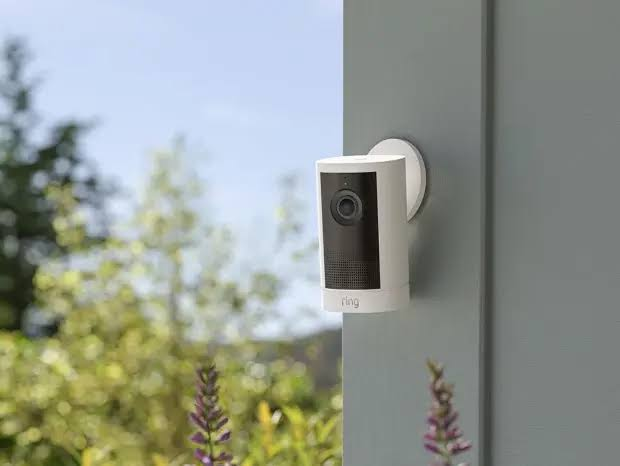
A New Chapter for Ring Home Security
Home security in the UK is becoming increasingly connected. From monitoring parcels left at the front door to checking what is happening in the garden after dark, smart cameras and video doorbells are moving from optional gadgets to everyday household technology.
Ring is now pushing that trend further with a major expansion of its security camera line-up. The latest generation includes new 4K and 2K models, giving homeowners more choices for indoor and outdoor monitoring. Among the new products is Ring’s first indoor 4K camera, while other models focus on wider coverage, better night-time visibility and flexible power options.
The timing is particularly interesting for the UK market. October is already a busy period for online shopping, parcel deliveries and home technology upgrades. Recent Amazon UK promotions have also put Ring video doorbells and other smart-home products firmly in front of British consumers.
As cameras become more capable, however, one practical issue remains just as important as image quality: keeping a device powered and ready when it matters.
Why Battery Life Matters More Than Ever
A security camera can have impressive resolution, intelligent alerts and colour night vision, but none of those features are useful if the device cannot stay powered.
This is especially important for homes where installing permanent wiring is difficult. Many British properties have brick walls, older layouts, rented accommodation or front entrances where running new cables would be inconvenient. Battery-powered security devices offer a much simpler alternative.
Ring has already expanded its battery-powered doorbell range with higher-resolution models. The company introduced its first battery-powered 2K and 4K video doorbells, including the Battery Video Doorbell Pro 2nd Gen, which offers Retinal 4K video and enhanced zoom.
For homeowners choosing this type of device, understanding the role of a Ring doorbell battery is therefore becoming just as important as comparing camera resolution, viewing angles and subscription features.
A dependable power source allows the doorbell to remain ready for unexpected visitors, delivery drivers and motion alerts throughout the day.
From Doorbells to Full Home Coverage
The biggest change in Ring’s latest strategy is that the company is no longer treating the front door as the only important part of home security.
The new range includes an Indoor Cam 4K, Outdoor Cam 4K Plus, Spotlight Cam 4K Plus and Floodlight Cam 4K Plus. Ring is also introducing a Pan-Tilt Indoor Cam 2K and a Dome Cam 4K aimed at business security.
This creates a much broader ecosystem.
A household could use a video doorbell to monitor deliveries, an indoor camera to keep an eye on a hallway, an outdoor camera to watch the garden and a floodlight camera to cover a driveway. Instead of relying on one device, homeowners can create several layers of protection.
That approach is particularly relevant in Britain, where homes vary dramatically. A city flat may need compact indoor monitoring, while a detached suburban property could benefit from outdoor cameras covering several entrances.
4K Is Changing Expectations
For years, consumers had to choose between convenience and image quality. Higher-resolution cameras were often associated with wired installations or more expensive equipment.
That distinction is becoming less clear.
Ring’s new range brings 4K video into more parts of its ecosystem, while its latest battery-powered doorbells also offer higher-resolution recording. The result is a shift in what consumers expect from a smart security camera.
A higher-resolution image can make it easier to distinguish details such as a parcel label, clothing or activity near the entrance. It can also provide more useful footage when users need to zoom into a recorded event.
However, higher resolution can also mean greater demands on power, connectivity and storage. That is why battery management remains an important part of the overall ownership experience.
October Shopping Adds Another Dimension
The timing of Ring’s latest product push is hard to ignore.
Amazon’s October shopping events have made smart-home technology particularly visible to British consumers. Recent Amazon UK promotions included substantial discounts on Ring products, including battery-powered doorbells and camera bundles.
When prices fall, consumers who previously considered a video doorbell a luxury purchase may decide that it is finally worth trying.
That creates a second-hand effect for the market. Once a homeowner installs one smart security product, adding another often becomes easier. A doorbell can become the starting point for a wider connected-home system.
The front door is usually the most obvious location, but the same app-based approach can then extend into other areas of the property.
The Battery Question Behind Smart Security
There is a temptation to focus entirely on camera specifications when buying a smart doorbell.
Resolution, night vision, motion detection and artificial intelligence features are easy to compare. Battery performance is less exciting, but it can have a much bigger impact on everyday convenience.
A doorbell that needs frequent charging can become frustrating, particularly during periods of heavy activity. A busy household with regular deliveries may trigger more motion events than a quiet property. Cold weather can also influence battery performance, making seasonal power management something UK users should keep in mind.
For this reason, buyers should consider not only the advertised battery life but also how frequently the device is likely to be activated.
A good Ring doorbell battery should be viewed as part of the overall security system rather than a minor accessory. The aim is simple: the doorbell should be ready when somebody actually approaches the property.
Smart Features Are Becoming More Important
Modern Ring devices are also moving beyond simply recording video.
Smart alerts can help users distinguish relevant activity from ordinary movement, while newer cameras introduce features designed to make monitoring more useful. Ring’s latest UK announcements highlight sharper video, intelligent alerts and broader camera coverage across different parts of the home.
The company’s Neighbours feature is another example of how connected security is expanding beyond an individual property. Ring has been preparing to bring its hyper-local Neighbours community feature to the UK, with features designed around local communication and finding lost pets.
That represents a broader change in how smart-home technology is being positioned.
The camera is no longer simply a device sitting above the front door. It can become part of a wider digital environment involving family members, neighbours, mobile notifications and cloud-based services.
Privacy Is Still Part of the Conversation
Greater connectivity also creates greater responsibility.
Smart cameras collect information about activity around homes, so British consumers are understandably paying more attention to privacy. Recent UK coverage has highlighted the legal and privacy considerations surrounding video doorbells and home security cameras.
Placement matters. A camera pointed directly at a private neighbour’s garden or into a shared area can create concerns that would not exist if it were focused solely on the homeowner’s property.
Features such as privacy zones, physical covers and secure account settings can therefore be just as important as image quality.
Ring’s latest Indoor Cam 4K, for example, includes a physical privacy lens cover and privacy-zone features.
For British households, smart security is increasingly about finding the right balance between visibility and privacy.
What British Buyers Should Look For
With so many new products arriving, choosing a smart doorbell or camera can quickly become confusing.
The first question should be where the device will be installed. A front-door camera has different requirements from an outdoor camera covering a driveway. The second is whether mains power is practical. If wiring is difficult, a battery-powered model can offer much greater flexibility.
Image quality should also match the location. A compact indoor camera may not need the same resolution as an outdoor device monitoring a large garden.
Buyers should also consider Wi-Fi coverage, notification reliability, storage options and subscription requirements.
Most importantly, consumers should think about long-term maintenance. Charging frequency, weather exposure and the condition of the Ring doorbell battery can all influence whether a supposedly convenient security system remains convenient after several months.
A More Connected British Home
Ring’s latest product expansion shows where the smart-home market is heading.
The goal is no longer simply to put a camera outside the front door. Instead, manufacturers are building interconnected systems that can cover multiple rooms, entrances and outdoor areas while delivering increasingly detailed video and smarter alerts.
For British consumers, this trend arrives at an interesting moment. Online shopping continues to drive demand for parcel monitoring, smart-home products are becoming more accessible, and new camera technologies are making higher-quality surveillance easier to install.
At the same time, consumers are becoming more aware of privacy, subscriptions and the practical realities of keeping connected devices running.
That makes power management an unexpectedly important part of the conversation. A smart security device needs more than an impressive camera sensor. It needs reliable connectivity, sensible software and dependable energy.
As Ring expands its range across the UK, the humble battery may remain one of the most important components behind the smart-home experience.
The Next Step for Smart Home Security
Ring’s new generation of cameras suggests that home security is becoming more flexible, more detailed and increasingly integrated.
For consumers, that is good news. There are now more ways to build a system around the actual layout of a home rather than forcing every property into the same setup.
But the best system is not necessarily the one with the highest resolution or the longest feature list. It is the one that works reliably every day.
For battery-powered doorbells, that means paying attention to power consumption, charging habits and replacement planning alongside video quality and smart features.
As UK households prepare for another busy shopping and delivery season, the humble video doorbell could become an even more familiar sight outside British homes. And behind every dependable battery-powered model is one simple requirement: enough power to make sure the camera is watching when it matters most.