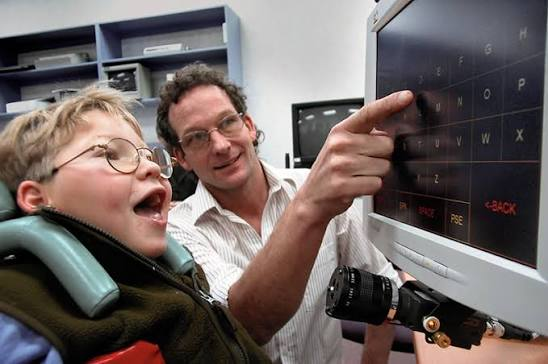
Imagine sitting in front of your computer, opening a website, replying to an email, watching a video and even writing a document without touching a keyboard or moving a mouse. Instead, you simply look at the part of the screen you want to use. A small movement of your eyes becomes a command, and your computer responds almost instantly.
It might sound like something from a science-fiction film, but eye-tracking technology is already making this experience possible. From specialist accessibility equipment to artificial intelligence-powered wearables, technology is gradually changing the way people interact with digital devices.
In the UK, where digital services play an increasingly important role in education, employment, healthcare and everyday communication, this development could have a particularly meaningful impact. The exciting question is no longer whether computers can understand where we are looking. It is how far this technology could go, and whether one day we might barely need our hands to use a computer at all.
The Computer Mouse Could Have a Surprising Rival
For decades, the keyboard and mouse have been the standard tools for controlling computers. Although touchscreen devices have introduced another way to interact with technology, most digital activities still depend on physical movements.
Eye-tracking technology offers a completely different approach.
Using specialised cameras and infrared sensors, an eye-tracking system identifies the position of a person’s eyes and calculates where they are looking. Software then translates those movements into commands that a computer can understand.
For example, looking at an icon might move a cursor towards it. Holding your gaze on a particular button for a short period can activate it, a technique commonly known as dwell clicking. Some systems also allow users to select items by blinking or using an additional switch.
The technology is not entirely new. Eye-gaze equipment is already used with Windows computers, tablets and communication devices. Organisations such as Tobii Dynavox provide specialist solutions that allow people with significant physical disabilities to access digital technology through eye movements.
What makes the idea increasingly exciting is the possibility of bringing this capability into smaller, more convenient devices.
Instead of attaching specialist equipment to a computer monitor, future systems could combine eye tracking with lightweight cameras, smart glasses and artificial intelligence. The result could be a more natural computing experience that follows the user’s attention rather than requiring constant physical interaction.
Why Britain Is Paying More Attention to Assistive Technology
One of the strongest reasons to develop eye-controlled computers is accessibility.
For people living with conditions that affect movement, operating a conventional keyboard or mouse can be difficult or even impossible. Tasks that most computer users take for granted, such as sending a message, searching for information or joining an online meeting, may require specialist equipment and considerable effort.
Eye-gaze technology can help remove some of these barriers.
In the UK, specialist services already recognise eye tracking as an important computer-access option. The Electronic Assistive Technology Service in Lincolnshire, for example, provides access solutions for eligible people with significant physical disabilities. These can include systems controlled through eye movements, head movements and other alternative input methods.
The possibilities extend beyond basic computer navigation.
Someone who cannot comfortably use their hands might be able to write messages, browse the internet, communicate through speech-generating software and participate in online activities using their eyes.
This is especially important because digital participation is increasingly connected to independence. Access to online banking, government services, education platforms and remote working opportunities can make a significant difference to everyday life.
For families, carers and healthcare professionals, technology that helps someone communicate more independently can also reduce some of the practical challenges associated with daily support.
Rather than treating eye tracking as an unusual computer feature, it makes more sense to view it as another way of giving people control over their digital lives.
Could Smart Glasses Take Eye Control Further?
Smart glasses could become one of the most interesting parts of this technological development.
Modern wearable devices already combine cameras, microphones, wireless connectivity and AI-powered software. Some can recognise objects, read visible text, describe surroundings and provide spoken answers to questions.
For someone walking through a British town, this could mean receiving information about a bus number, reading a restaurant menu or identifying an unfamiliar object without repeatedly reaching for a smartphone.
The Royal National Institute of Blind People (RNIB) highlighted the growing potential of AI smart glasses in September 2026, particularly for blind and partially sighted people. The organisation explained how hands-free access to information and descriptions of surroundings could support everyday independence.
However, there is an important distinction between recognising where someone is looking and allowing them to control an entire computer through eye movements.
Today’s AI glasses do not automatically provide full eye-controlled desktop computing. These are related but different technologies. Combining them successfully would require more advanced sensors, accurate tracking, suitable software and comfortable wearable designs.
Nevertheless, the possibilities are fascinating.
Imagine wearing lightweight glasses that recognise what you are looking at, display useful information through an integrated visual interface and allow you to select digital controls with subtle eye movements.
You might check a calendar notification while preparing breakfast, browse a shopping list while walking around a supermarket or control a presentation without standing beside a laptop.
For people who need assistive technology, this could make digital interaction more flexible. For everyday consumers, it could introduce an entirely new relationship with computers.
The Technology Behind a Simple Eye Movement
Making a computer respond to someone’s eyes sounds straightforward, but the engineering behind it is surprisingly complex.
First, the system needs to detect the eyes accurately. Small cameras capture information about eye position, while infrared illumination can help identify reflections and movement.
Next, specialised software processes this information to estimate the user’s gaze direction. It then maps that direction onto an area of a computer screen.
Artificial intelligence could make future systems more adaptable by helping them understand individual behaviour, distinguish intentional selections from casual glances and improve accuracy in different lighting conditions.
Calibration is another important part of the process.
People have different eye movements, facial characteristics and viewing habits. A system that works perfectly for one person may require adjustments for another. Some users may also experience involuntary eye movements, fatigue or difficulty maintaining a steady gaze.
This means future products will need more than impressive technical specifications. They must be comfortable, adaptable and reliable across different users and environments.
Battery performance is equally important, particularly for portable assistive devices that may be used throughout the day. A wearable computer that constantly needs charging could quickly become inconvenient.
Reliable power management and appropriately designed medical battery solutions are therefore relevant considerations in the wider development of portable healthcare and assistive electronics.
The challenge is to make these systems powerful enough to process information continuously without making the devices heavy, uncomfortable or expensive.
Could Eye-Controlled Computers Transform British Workplaces?
The workplace is another area where this technology could have an interesting future.
British businesses have become increasingly familiar with remote working, video conferencing and digital collaboration. Yet many everyday tasks still require employees to spend hours interacting with keyboards, mice and touchscreens.
Eye-controlled interfaces could offer additional ways to complete these activities.
Consider a graphic designer who needs to examine detailed images while keeping their hands occupied with other creative equipment. A researcher might benefit from navigating large collections of information without repeatedly switching between input devices. A worker with limited hand mobility could gain another route into digital employment.
In some situations, eye tracking could also make multitasking more convenient.
For example, someone presenting information on a large screen might select particular sections using their gaze while continuing to speak. A technician could potentially access instructions displayed on a connected device without needing to handle a separate controller.
However, this does not mean that traditional input devices will disappear overnight.
Typing long documents with eye movements can be slower than using a physical keyboard for many people. Similarly, selecting tiny icons can become tiring if the tracking system is not sufficiently accurate.
The most realistic future is likely to involve several input methods working together. Users could switch between voice commands, eye movements, keyboards, touchscreens and conventional mice depending on the task.
This flexibility would be especially useful in workplaces that want to make technology more accessible without forcing everyone to adopt the same method.
The Healthcare Possibilities Could Be Even Bigger
Healthcare is perhaps where eye-controlled technology could make its most meaningful contribution.
Hospitals and care environments often involve situations in which patients cannot easily communicate through conventional methods. People recovering from serious injuries or living with conditions that affect muscle control may struggle to operate ordinary digital devices.
Eye-gaze communication systems can provide another way to express needs, make choices and interact with others.
A patient could potentially select words or symbols on a screen, allowing software to convert those selections into spoken communication. With appropriate equipment, the same system might also provide access to entertainment, educational resources and communication platforms.
For people who spend extended periods using assistive equipment, reliability becomes essential. A device that stops working because its power supply is inadequate could interrupt an important communication channel.
That is why engineers must consider factors such as charging time, operating duration, safety and power stability when designing portable medical electronics.
A dependable medical battery can form part of the power infrastructure supporting these devices, although the exact battery requirements depend on the equipment and its intended use.
Future developments could also connect eye-tracking systems with hospital communication platforms, environmental controls and other assistive technologies.
For example, a person might use eye movements to request assistance, adjust certain room settings or communicate with healthcare staff through a digital interface.
These possibilities should not be confused with fully autonomous medical treatment. Eye tracking is an interaction technology, not a replacement for professional healthcare. Its value lies in helping people access information and communicate more effectively.
The Privacy Question Nobody Should Ignore
As eye-tracking technology becomes more sophisticated, privacy will become increasingly important.
Our eyes reveal more information than simply where we are looking. A system that continuously monitors gaze behaviour could potentially collect sensitive information about attention, habits and interactions with digital content.
For example, would users want advertisers to know which products they spend the longest time examining? Should employers be able to analyse how frequently employees look at particular sections of a screen? Could personal gaze data be stored or shared without users fully understanding what is happening?
These questions become even more complicated when eye-tracking technology is combined with cameras and AI-powered smart glasses.
The UK has already seen growing discussion around wearable technology and privacy. In September 2026, the Information Commissioner’s Office highlighted the importance of responsible design, transparency and public trust in AI-enabled smart glasses.
The RNIB has also raised concerns about the misuse of camera-equipped glasses, explaining that privacy safeguards must protect the public without preventing blind and partially sighted people from benefiting from assistive technology.
This is an important distinction.
A device designed to help someone navigate a street or read a bus timetable should not automatically be treated in the same way as equipment used for covert recording.
Manufacturers will need to make recording indicators visible, explain what information is collected and provide accessible privacy controls. Users should also have meaningful choices about whether gaze information is stored, processed or shared.
The future of wearable computing will depend not only on what these devices can do, but also on whether people feel comfortable using them in public.
What Could the Next Generation of Eye-Controlled Devices Look Like?
The next stage of development could involve combining several technologies into a single compact system.
Eye tracking might work alongside voice recognition, gesture controls and AI assistants. Rather than relying on one input method, a device could understand a combination of signals.
For instance, a user could look at a particular application and say a short command to open it. They might then use their gaze to select an item and voice recognition to confirm the action.
This combination could reduce accidental selections and make interfaces more natural.
Another possibility is improved integration with augmented reality. Instead of looking at a conventional computer monitor, users could interact with digital windows appearing within their field of vision.
A virtual workspace might contain documents, communication tools and reference materials arranged around the user. Looking at an individual window could bring it into focus, while voice commands or subtle gestures could control its contents.
For British students, this could eventually create new ways to interact with digital learning materials. For professionals, it might provide additional flexibility when working with complex information.
There is also potential for smaller and more energy-efficient hardware.
As wearable processors become more capable, manufacturers will need compact power systems that can support sensors, wireless communication and continuous processing. A suitable medical battery may be relevant to specialised healthcare-oriented versions, while mainstream consumer products will require their own carefully engineered power solutions.
The biggest challenge will be balancing performance, comfort, privacy and affordability.
Are We Ready to Stop Using Our Hands to Control Computers?
The idea of controlling an entire computer with eye movements is exciting because it challenges something we have accepted for generations: that interacting with technology requires our hands.
Eye-gaze systems already demonstrate that this assumption is not always true. They are helping people access computers, communicate and participate in digital activities in ways that would otherwise be difficult.
Meanwhile, AI-powered smart glasses are introducing new possibilities for hands-free access to information and everyday assistance.
There are still considerable obstacles. Tracking accuracy, fatigue, cost, battery life and privacy all need careful attention. Eye movements also cannot replace every function of a keyboard or mouse, particularly when precise text input is required.
Nevertheless, the direction is clear. Computers are gradually becoming more responsive to the way people naturally interact with the world.
Perhaps the most exciting future is not one in which everyone throws away their mouse and keyboard. Instead, it is one in which people can choose how they control their devices, whether through their hands, voices, eyes or a combination of all three.
For someone who has struggled to access a conventional computer, that choice could be life-changing. And for everyone else, it could make everyday technology feel a little more natural.
One day, opening an application might be as simple as looking at it. The mouse could still be sitting on the desk, but you might not need to touch it.