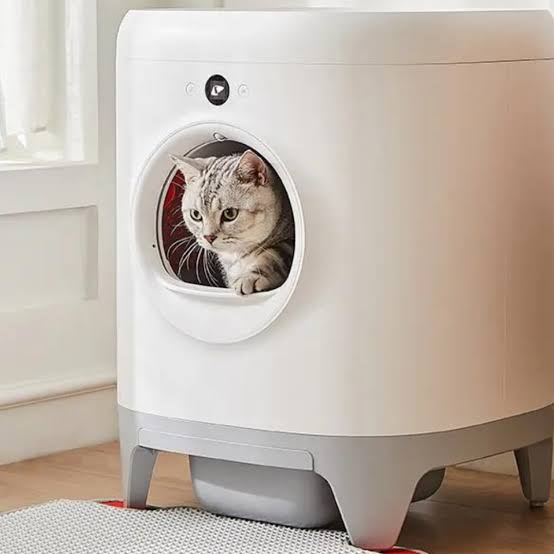
The Rise of Smart Cat Care in British Homes
For many people in Britain, sharing a home with a cat is one of life’s greatest pleasures. Cats bring companionship, entertainment and plenty of memorable moments. However, there is one daily responsibility that few owners genuinely enjoy: cleaning the litter tray.
Whether it is a busy professional living in London, a family in Manchester or someone working from home in Edinburgh, dealing with cat litter is an unavoidable part of pet ownership. It requires regular attention, creates unpleasant smells and can become particularly inconvenient when owners have a busy schedule.
Now, technology is offering a rather unexpected solution. Self-cleaning litter boxes are becoming an increasingly interesting part of the smart pet care market. Instead of requiring owners to remove waste manually after every visit, these electronic devices use sensors, rotating mechanisms and automated cleaning systems to handle much of the process.
The idea sounds almost futuristic. Your cat finishes using the litter tray, walks away, and the machine takes care of the mess. Some advanced models even connect to smartphone applications, allowing owners to monitor usage patterns and receive notifications.
With newer products such as the Litter-Robot 5 arriving in the UK market, the question is no longer simply whether automatic litter boxes exist. It is whether they can genuinely improve everyday life for British cat owners.
How Does a Self-Cleaning Litter Box Actually Work?
At first glance, an automatic litter box might look like an ordinary enclosed cat toilet. However, its internal mechanism is considerably more sophisticated.
Most models use sensors to detect when a cat enters and leaves the device. Once the animal has finished, the system waits for a designated period before beginning its cleaning cycle. This delay helps ensure that the cat has completely left the machine before anything starts moving.
Rotating models typically use a drum-shaped compartment. As the drum turns, clean litter passes through a filtering section while solid waste and clumps are transferred into a separate collection drawer.
Other designs use mechanical rakes that move across the litter surface, collecting waste and depositing it into a covered compartment.
The result is a cleaner litter surface without requiring the owner to scoop everything manually after each visit.
Different products offer different levels of automation. Some simply clean the litter, while more advanced versions provide app connectivity, weight monitoring and usage records.
This distinction matters because not every electronic litter tray is equally intelligent. A machine with an automatic cleaning mechanism does not necessarily have sophisticated health-monitoring capabilities.
For British households considering this technology, understanding the difference between basic automation and connected pet care is an important first step.
Why Are British Cat Owners Becoming Interested?
Convenience is probably the biggest attraction.
Modern British lifestyles often involve commuting, working irregular hours and balancing several household responsibilities. Even people who love spending time with their pets may find it difficult to maintain a perfectly consistent cleaning routine.
An automatic litter box can reduce the amount of repetitive work involved in daily cat care.
For someone living in a small flat, particularly in cities where space is limited, managing unpleasant litter smells can also be a priority. Many automatic models include enclosed waste compartments designed to contain odours more effectively.
However, convenience is only part of the story.
The growing interest in pet technology reflects a wider change in how people look after their animals. Owners increasingly expect household devices to provide useful information rather than simply perform one mechanical task.
Pet cameras, automatic feeders, GPS trackers and smart water fountains have already introduced technology into everyday pet care. Automatic litter boxes represent another step towards a connected home in which several devices help owners understand their animals’ routines.
A UK Petplan survey of dog and cat owners found that 17% of respondents used self-cleaning litter trays, while 37% used pet cameras. Among cat owners, the reported use of self-cleaning litter trays was 26%.
These figures suggest that automated pet care is already more than an unusual gadget experiment for some households.
From Basic Automation to Intelligent Cat Monitoring
One of the most interesting developments in this market is the introduction of monitoring features.
Some modern litter boxes can record how frequently a cat visits the tray, how long it spends inside and how its weight changes over time.
Why is this useful?
Cats cannot explain when something feels wrong. Changes in their everyday behaviour may therefore provide important clues that owners should pay attention to.
For example, a cat suddenly visiting the litter tray more frequently could indicate a change in its urinary habits. A noticeable change in weight may also deserve attention.
Connected litter boxes can help owners identify patterns that might otherwise go unnoticed.
Some products combine weight sensors with individual pet profiles, making them particularly interesting for multi-cat households.
The latest generation of smart pet devices is also beginning to incorporate cameras and more advanced recognition features. These additions can help owners distinguish between different animals and understand which cat has been using the machine.
However, it is important not to confuse monitoring with medical diagnosis. A litter box cannot determine whether a cat has a particular illness. Changes in toilet habits or weight should always be discussed with a veterinary professional when they cause concern.
Technology can provide useful observations, but it cannot replace proper veterinary care.
Litter-Robot 5 Brings a New Chapter to the UK Market
The British market received an interesting development in October 2026 when Whisker announced the European and UK launch of its Litter-Robot 5.
The new generation introduces several improvements designed to make automatic litter management more convenient.
One notable feature is WasteID technology, which distinguishes between urine and solid waste. The device also includes an enhanced weighing system, a larger interior and an updated display.
For households with several cats, these improvements could be particularly appealing.
The ability to monitor individual cats and observe their routines gives owners more information about what happens when they are not watching.
The product also demonstrates how pet technology is moving beyond simple mechanical automation. Instead of merely replacing a traditional litter scoop, manufacturers are attempting to create connected systems that provide ongoing information about household pets.
Of course, a premium automatic litter box is not a small purchase. With the Litter-Robot 5 announced at £899 in the UK, buyers need to consider whether its additional features justify the cost.
For some households, a simpler automatic litter tray may provide enough convenience without requiring such a substantial investment.
The important point is that consumers now have more choices across different price levels and feature sets.
What About Electricity, Charging and Everyday Reliability?
There is another practical consideration that buyers sometimes overlook: power consumption and electrical reliability.
Unlike a traditional litter tray, an automatic model depends on electronic components to operate its cleaning mechanism. Depending on the design, it may contain motors, infrared sensors, weight sensors, control boards and wireless communication modules.
This makes electrical design an important part of the overall user experience.
Most domestic automatic litter boxes are designed to remain connected to household power rather than operate like portable gadgets. Some models may offer backup arrangements, but consumers should never assume that every product includes an internal rechargeable battery.
This is also where the wider world of consumer electronics battery technology becomes relevant. As smart pet products become more sophisticated, manufacturers need to consider how electronic components maintain reliable operation, particularly when devices incorporate additional sensors and connected features.
For consumers, checking the manufacturer’s instructions about power requirements, backup operation and electrical safety is more useful than assuming that every automatic litter box works independently during an outage.
A reliable machine should also have appropriate safeguards to prevent its mechanism from operating while a cat is inside.
Is an Automatic Litter Box Suitable for Every Cat?
Probably not.
Cats are creatures of habit. Some happily investigate unfamiliar objects, while others become suspicious when a familiar part of their environment suddenly changes.
An automatic litter box can look intimidating to a nervous animal, especially if it has a rotating compartment, a motor or unfamiliar sounds.
Introducing one gradually is therefore essential.
Owners can begin by placing the new device near the existing litter tray while leaving the automatic cleaning function switched off. Allowing the cat to investigate it at its own pace may make the transition easier.
The old litter tray should remain available until the cat is consistently comfortable using the new one.
Age and weight restrictions are equally important.
Many automatic litter boxes specify minimum weight requirements because their sensors rely on detecting an animal accurately. Very young kittens may not meet these requirements, meaning automatic operation could be inappropriate.
Owners should always check the manufacturer’s instructions rather than relying on general assumptions.
Households with several cats should also consider whether the entrance, internal dimensions and waste collection capacity are suitable for their animals.
A large cat may find a compact enclosed design uncomfortable, while a timid cat may prefer a more open structure.
Ultimately, the best product is not necessarily the one with the most impressive technology. It is the one that suits the individual cat.
The Hidden Costs of Owning a Smart Litter Box
The purchase price is only one part of the financial calculation.
Automatic litter boxes can require specialised waste bags, replacement filters, compatible litter or other consumables. Some connected features may also depend on optional subscriptions.
These ongoing expenses can make a seemingly convenient product more expensive over several years.
British consumers should also consider the cost of replacement components. Motors, sensors and electronic control systems may eventually require maintenance or replacement.
This is particularly important for a device that operates repeatedly throughout the day.
Before buying, it is worth checking whether the manufacturer provides spare parts, customer support and a clear warranty policy in the UK.
A cheaper model may appear attractive initially, but limited support or expensive consumables could make it less economical over time.
There is also the question of internet connectivity.
Some products offer basic cleaning without a Wi-Fi connection, while others rely on smartphone applications for detailed monitoring and notifications.
Buyers should establish which functions remain available without an internet connection. Losing access to an app should not make an essential household device unnecessarily difficult to operate.
Privacy Matters When Your Cat’s Toilet Has a Camera
Connected pet devices can collect surprisingly detailed information.
A smart litter box may record when a cat visits, how long it stays and how its weight changes. Camera-equipped products may also capture images or videos of the surrounding area.
Although these features can be useful, they raise questions about personal privacy.
British households should pay attention to what information is collected, where it is stored and whether it is shared with third parties.
If a product includes a camera, its placement deserves particular consideration. Owners should avoid positioning it where it could capture private areas of the home.
It is also sensible to use strong account passwords and keep connected devices updated.
A smart litter box should make pet care easier, not introduce unnecessary concerns about household security.
As connected home technology continues to expand, consumers will increasingly need to consider privacy alongside convenience and price.
Could Smart Litter Boxes Become a Normal Household Appliance?
The idea of an automatic cat toilet might once have seemed excessive. However, the development of smart home technology is changing consumer expectations.
People already use robot vacuum cleaners to maintain floors, connected appliances to manage household tasks and smartphone applications to control lighting and heating.
Against this background, automating litter maintenance does not seem particularly unusual.
The next stage could involve better integration between pet cameras, feeders, water fountains and litter boxes.
Imagine a household system that records how much food a cat eats, how frequently it drinks and how often it uses the litter tray. Owners could receive a clearer picture of everyday routines without needing to observe every activity themselves.
Such a system could also make it easier to share useful information with a vet.
However, more connected devices do not automatically mean better pet care. Cats still need attention, playtime, clean surroundings and regular interaction with their owners.
No machine can replace those responsibilities.
The most successful products will probably be those that solve practical problems without making everyday pet ownership unnecessarily complicated.
Final Thoughts: Is It Time to Let a Robot Clean Your Cat’s Litter?
Self-cleaning litter boxes are an interesting example of how consumer technology is finding its way into unexpected parts of everyday life.
For busy British cat owners, they offer the possibility of reducing repetitive cleaning, controlling unpleasant smells and monitoring certain aspects of a pet’s routine.
The latest models demonstrate that the category is becoming increasingly sophisticated. Sensors, connected applications, automatic waste separation and weight monitoring are turning an ordinary household object into a much more advanced electronic device.
Nevertheless, buyers should approach the technology realistically.
Price, maintenance costs, safety requirements, privacy and individual cat preferences all deserve consideration before making a purchase.
A smart litter box will not eliminate every responsibility associated with owning a cat. It will not replace veterinary visits or provide the affection that pets need.
But if it can remove one of the least enjoyable household chores while helping owners pay closer attention to their animals, it may prove to be one of the more practical smart home investments.
Perhaps the future of pet technology is not about making cats smarter or more independent. It is about making life a little easier for the people who love them.