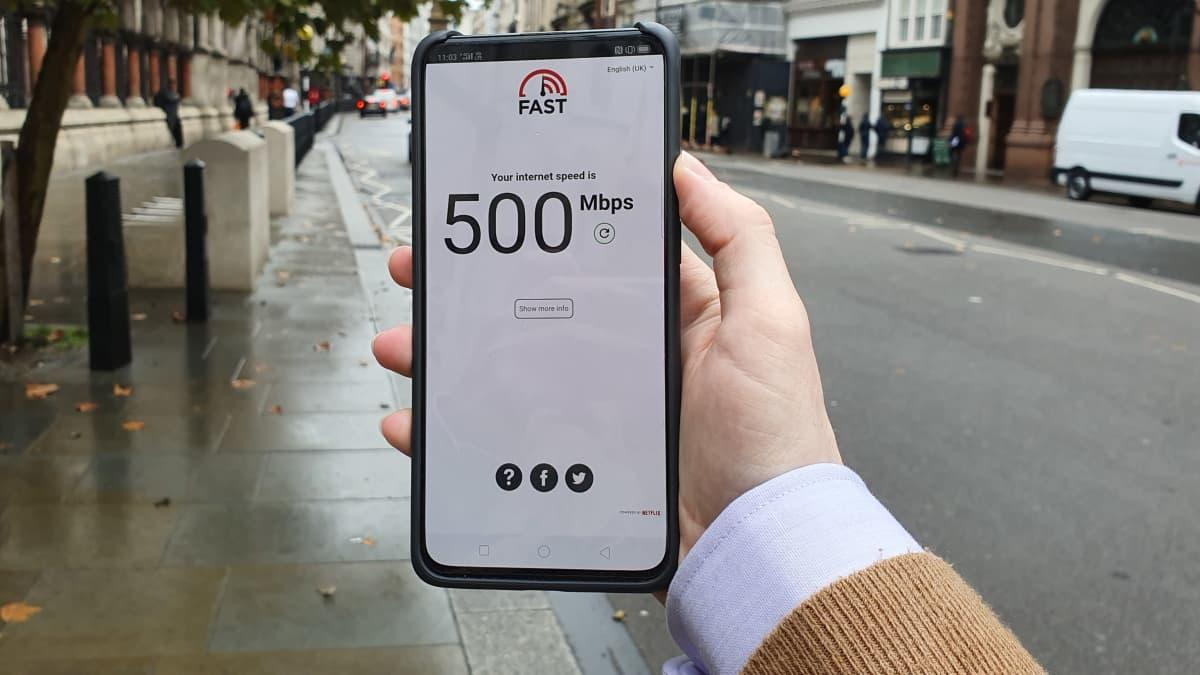
The 5G Promise Meets Britain’s Everyday Reality
For many people across the UK, having a 5G smartphone is supposed to mean faster downloads, smoother video calls and fewer frustrating moments waiting for websites to load. Yet the experience can change dramatically as soon as someone walks through their front door. A phone that displays several signal bars on a busy London street might suddenly struggle to load a simple webpage inside a flat, office or shopping centre.
It is an increasingly familiar problem. Consumers have invested in modern handsets and mobile contracts promising high-speed connectivity, but reliable indoor reception remains far from guaranteed. Whether someone lives in a Victorian terrace, works in a modern office or regularly travels through large shopping centres, the familiar 5G symbol does not always translate into a dependable connection.
The issue has attracted renewed attention in November 2026 following fresh research into indoor mobile performance. It raises an important question: if Britain’s mobile networks are becoming more advanced, why does getting a decent signal indoors sometimes feel harder than expected?
A New Study Highlights Britain’s Indoor Connectivity Problem
The latest discussion is not simply based on occasional complaints from frustrated smartphone owners. A study reported by UK telecommunications publication ISPreview on 16 November 2026, drawing on Ookla measurements, highlighted substantial differences between outdoor and indoor mobile performance.
One particularly striking finding concerned signal strength. Across the measured buildings in London, approximately one-third recorded signal levels below -105 dBm, a threshold associated with unreliable indoor service.
The study also highlighted the effect of weaker signals on connection speeds. International Speedtest measurements showed median 4G download speeds falling by around 65% as signal strength declined from -90 dBm to -110 dBm. Upload speeds experienced an even larger reduction of approximately 87%.
Although these figures concern 4G measurements rather than a direct measurement of every 5G connection, they illustrate a wider challenge facing mobile users: the quality of a network outside a building does not necessarily reflect the experience inside it.
For British consumers, this matters because smartphones are now used for far more than traditional calls. People depend on mobile connections for banking verification, work meetings, online shopping, navigation, streaming and accessing essential services.
A connection that works perfectly outdoors but becomes unreliable indoors can disrupt surprisingly ordinary activities.
Why British Buildings Can Block 5G Signals
One of the biggest reasons for weak indoor reception is something that smartphone manufacturers cannot solve through software updates alone: the physical structure of buildings.
Mobile signals travel through the air, but walls, windows, floors and insulation can weaken them. The materials used in modern construction can make a considerable difference.
Traditional British properties often feature thick brick or stone walls, slate roofs and multiple internal partitions. These characteristics can create obstacles for radio signals, particularly in older houses that were never designed with modern wireless connectivity in mind.
Newer buildings present a different challenge. Energy-efficient homes and commercial properties increasingly use insulated walls, specialist glazing and materials designed to reduce heat loss. These features help improve energy efficiency, but some can also reduce the strength of incoming mobile signals.
This creates an interesting contradiction. A newly constructed home might be warmer, quieter and more energy-efficient than an older property, yet its occupants could experience weaker mobile reception in certain rooms.
The problem can be particularly noticeable in basement flats, internal rooms and buildings surrounded by other tall structures.
Even moving a few metres can sometimes make a difference. A bedroom near an external window might receive a reasonable connection, while a kitchen separated by several walls struggles to maintain one.
Does Faster 5G Technology Make Indoor Reception Worse?
The relationship between 5G speed and signal penetration is another important part of the story.
Mobile networks use different radio frequency bands to deliver coverage and capacity. Lower-frequency signals generally travel further and penetrate buildings more effectively. Higher-frequency bands can offer greater capacity and faster speeds, but they are usually more vulnerable to obstacles.
This means that a phone connected to a high-frequency 5G service outdoors may not maintain the same experience after entering a building.
In some situations, the handset may switch to a lower-frequency band, another network technology or a different cell site. The connection might remain available, but the speed and consistency could change.
It is also important to understand that not every 5G connection is identical. Many existing services use non-standalone 5G, which relies partly on established 4G infrastructure. Standalone 5G uses a more independent network architecture and can support additional capabilities, but its availability remains dependent on local deployment.
Ofcom’s May 2026 Connected Nations update reported that overall outdoor 5G coverage had continued to expand. Coverage from individual operators ranged between 76% and 94%, while coverage from all operators had reached 64% of the UK landmass.
The same update showed that 5G standalone coverage was growing, although availability varied considerably between operators.
These figures demonstrate progress, but they should not be confused with a guarantee of strong indoor reception at every address.
Why the 5G Icon Does Not Tell the Whole Story
Many smartphone owners judge their connection by looking at the signal bars or the small 5G symbol displayed at the top of the screen.
Unfortunately, neither provides a complete picture.
The 5G icon indicates that a handset is using or has access to a 5G connection, but it does not guarantee a particular download speed. Signal bars are also simplified indicators rather than precise measurements of network performance.
A phone might display 5G while experiencing slow downloads because the local cell is congested. Equally, a device with a strong signal could still struggle if the network has limited capacity or the connection is affected by interference.
This is particularly relevant in busy British locations. Railway stations, shopping centres, stadiums, university campuses and office districts can experience heavy demand at certain times.
Imagine trying to upload photographs from a crowded shopping centre during a weekend sales event. The phone might show 5G, but hundreds of other people could be competing for network resources.
The result can be slower speeds, delayed messages and interrupted video calls.
In other words, a modern network symbol is not the same thing as a consistently good user experience.
Is Your Smartphone Part of the Problem?
Although network infrastructure and building materials are major factors, the smartphone itself can also influence indoor connectivity.
Different handsets support different frequency bands, antenna arrangements and network technologies. A relatively new phone may therefore perform differently from an older device, even when both use the same mobile operator.
Software also plays a role. Network updates can improve compatibility and connection management, while outdated settings may occasionally contribute to problems.
Consumers should also consider whether their mobile device supports the network bands used by their chosen operator. This can be particularly relevant for imported handsets or devices purchased from unfamiliar retailers.
Another overlooked factor is power consumption. When reception becomes weak, a phone may need to work harder to maintain its connection, repeatedly searching for available networks or adjusting its transmission power.
This can contribute to increased energy use and faster smartphone battery drain, particularly when someone spends long periods in an area with unstable reception.
However, poor reception is not automatically evidence of a defective battery. Battery health, screen brightness, background applications and general device age all influence how long a phone lasts between charges.
Understanding the difference can help users avoid replacing perfectly functional hardware when the real problem lies with the surrounding network.
Why Indoor Connectivity Matters More Than Ever
The importance of reliable indoor mobile coverage has increased as everyday activities become more dependent on connected devices.
Consider online banking. Many UK banks use text messages or other mobile-based verification methods when customers access accounts or approve certain transactions. If a phone cannot receive a verification message promptly, a routine payment can become unnecessarily stressful.
Remote and hybrid working create another challenge. Employees increasingly rely on smartphones as backup connections when home broadband becomes unreliable. A weak indoor signal can make this alternative much less useful.
Retail environments also depend on connectivity. Contactless payment systems, digital ordering platforms, stock management tools and customer service applications all benefit from dependable wireless infrastructure.
For students, unreliable connections can interrupt online learning, research and communication with educational platforms.
There is also a growing relationship between smartphones and other connected products. Smartwatches, wireless cameras, home security systems and other devices increasingly rely on stable internet access, even if they connect through Wi-Fi rather than directly through a mobile network.
As more services move online, indoor connectivity is becoming a practical part of everyday infrastructure rather than a luxury feature.
What Can UK Smartphone Owners Do About Weak Indoor Signals?
The good news is that there are several practical steps consumers can take before considering a new phone or changing their mobile contract.
The first is to check coverage from different providers. Ofcom’s mobile coverage checker allows users to compare predicted coverage from major UK operators in specific locations.
This is particularly useful before renewing a contract or moving home. A provider that performs well in one neighbourhood may not offer the same experience inside a property a few streets away.
Second, try moving closer to a window. Although this is not a permanent solution, it can help identify whether building materials are responsible for weakening the signal.
Third, enable Wi-Fi Calling if the mobile operator and handset support it. This feature allows compatible phones to make and receive calls over a Wi-Fi connection, reducing dependence on a weak indoor mobile signal.
It can be especially useful in properties with good full-fibre broadband but poor cellular reception.
Consumers should also check whether their phone has the latest software and carrier settings. Restarting the handset or briefly switching Airplane Mode on and off can sometimes help it reconnect to a more suitable cell.
For persistent problems, contacting the mobile operator is a sensible next step. Providers may be able to investigate local coverage problems or explain whether network upgrades are planned.
Signal repeaters and other specialist equipment are also possible solutions in certain circumstances. However, consumers should only use equipment that complies with Ofcom’s requirements rather than purchasing unapproved boosters online.
Could Better Building Design Help Solve the Problem?
One of the more interesting questions for Britain’s future connectivity is whether mobile reception should become a greater consideration in building design.
For years, energy efficiency has been a major priority for construction. Better insulation, improved glazing and reduced heat loss are important goals, particularly as households try to manage energy costs.
However, connectivity is also becoming essential.
Future homes will increasingly contain smart heating systems, security devices, connected appliances and other technologies. Residents will expect their phones and connected products to work reliably throughout the property.
The challenge is finding a balance between energy performance and wireless accessibility.
Architects, developers, mobile operators and local authorities could potentially work more closely to consider signal penetration during the planning and construction process.
Large commercial developments may also benefit from dedicated indoor mobile infrastructure, such as distributed antenna systems, where appropriate.
These approaches require investment, but they could help reduce the number of buildings where mobile users experience frustrating coverage problems.
Will Britain’s 5G Future Finally Improve Indoor Reception?
Britain’s mobile industry is making progress. Ofcom’s latest coverage figures show continued expansion, and operators are investing in network upgrades and newer 5G technologies.
However, expanding outdoor coverage and improving indoor reliability are not exactly the same task.
A mobile network can cover a large geographical area while still leaving individual rooms, basements and heavily insulated buildings with poor reception.
The challenge becomes even more important as people increasingly expect their phones to work as dependable tools for communication, payments, entertainment and productivity.
For consumers, choosing a suitable operator, checking local coverage and making use of Wi-Fi Calling can already make a noticeable difference.
At the same time, handset manufacturers need to continue improving antenna performance, network management and energy efficiency. Better connectivity should not come at the cost of unnecessarily rapid smartphone battery consumption.
The next stage of Britain’s 5G development should therefore focus on more than impressive outdoor speed tests. It should also consider the places where people actually spend their time.
The Real Test of 5G Is What Happens Behind Closed Doors
The success of mobile technology should not be measured only by how quickly a phone downloads a large file in an open space.
For ordinary British consumers, a more meaningful test is whether they can make a clear call from the kitchen, join a work meeting from the spare bedroom or complete an online payment without walking outside to find a signal.
As buildings become more energy-efficient and digital services become increasingly important, indoor mobile coverage deserves greater attention from the telecommunications industry.
The smartphone battery may be getting more advanced, and 5G networks may be getting faster, but neither improvement can fully compensate for a signal that struggles to pass through the walls of a home.
Ultimately, Britain’s next connectivity challenge is not simply bringing faster networks to more streets. It is making sure that those networks work where people live, work and spend their everyday lives.