The UK Is Rethinking What Care at Home Could Look Like
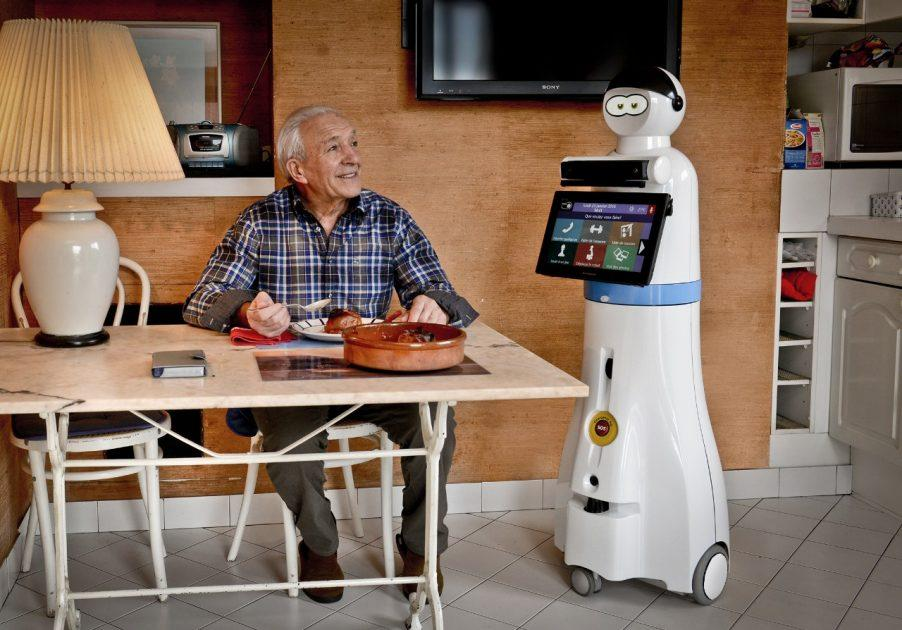
Imagine an older person living alone in a quiet British town. Their family lives several hours away, a care worker is due to arrive later in the afternoon, and remembering medication times has become increasingly difficult. Now imagine a small home-care robot offering a friendly reminder, checking whether the person has responded, and helping them contact a relative when they need support.
This is no longer just a science-fiction scenario. Home-care robots and digital care assistants are beginning to find practical roles in the UK, offering new ways to support older people and individuals with disabilities. As the country faces growing demand for social care, these technologies are attracting attention from care providers, researchers and policymakers.
The issue is particularly relevant in Britain, where the ageing population and pressure on adult social care have made independent living an important public concern. The question is no longer simply whether robots can perform useful tasks. It is whether they can help people remain safely in their own homes while preserving dignity, companionship and human connection.
Why Britain Needs New Approaches to Home Care
For many older people, staying at home is about much more than convenience. Familiar surroundings can provide emotional security, preserve established routines and help people maintain a sense of control over their lives.
However, independent living can become harder when mobility declines, memory problems develop or everyday activities require additional assistance. Family members may have to balance caring responsibilities with employment and their own households, while professional care services must manage limited time and resources.
England’s adult social care sector employed approximately 1.59 million people in 2023/24, according to the House of Commons Library. Recruitment and retention challenges have remained a concern, even as demand for support continues to rise.
Home-care robots cannot resolve every difficulty facing the sector, but they could help address some of the gaps between scheduled visits. A device that reminds someone about an appointment, provides a simple route to contact a carer or identifies when a person has not responded may offer meaningful assistance.
For families, the potential benefit is reassurance. For care workers, it could mean spending less time on repetitive reminders and more time on tasks that require professional judgement and personal attention.
What Can a Home-Care Robot Actually Do?
The phrase “care robot” covers a wide range of technologies. Some devices resemble small tabletop assistants with screens and speakers, while others use cameras, sensors or mobile platforms to interact with their surroundings.
The simplest systems focus on reminders and communication. They can announce medication schedules, encourage users to drink water, display appointments and facilitate video calls with relatives or carers. These functions may sound modest, but they can make daily routines easier for people who struggle with memory, hearing or visual impairments.
More advanced systems can connect with monitoring platforms. If a user fails to respond to a scheduled check-in, the system may notify a designated caregiver, depending on its configuration. Some devices can also support remote conversations, allowing care teams to check in without always making a physical visit.
Physical assistance robots represent another area of development. Depending on their design, they may help users retrieve objects, carry lightweight items or complete selected activities with greater independence. However, lifting a person after a fall or helping someone transfer safely from a bed to a chair requires far more sophisticated engineering and appropriate safeguards.
The most realistic vision is therefore not a single robot that does everything. It is a collection of tools designed around individual needs, with human carers remaining responsible for decisions that require empathy, experience and clinical judgement.
Britain’s Care Technology Is Moving Beyond Experiments
The UK has already seen examples of digital assistants entering real care settings. In a November 2025 report, The Independent described the use of GenieConnect robots to provide reminders, communication and support for people receiving care at home. The technology illustrates how relatively simple functions can become valuable when they are integrated into a person’s daily routine.
More recently, the UK Government announced £40 million in support for Robotics Adoption Hubs on 9 October 2026. The programme is intended to help businesses and public services adopt robotics and autonomous technologies, including innovations in healthcare and other sectors.
Although this initiative is not exclusively focused on domestic care robots, it reflects a wider effort to move robotics from research and development towards practical use. For home-care technology, successful adoption will depend on more than impressive demonstrations. Devices must be reliable, affordable and straightforward for older people to operate.
Care providers will also need to establish clear procedures for responding to alerts, maintaining equipment and explaining how information is collected. A robot is only useful when the people supporting its user know what it can do, what it cannot do and when human intervention is necessary.
The Technology Behind a Reliable Care Robot
A home-care robot combines several systems that must work together. Microphones and speakers enable conversation, while sensors may detect movement or help identify environmental hazards. Software manages reminders and communication, and wireless connections allow selected information to reach authorised care teams.
Power management is equally important. A device that must remain available throughout the day cannot depend on frequent, inconvenient charging. Depending on the design, engineers may need to balance operating time, processing performance, sensor activity, connectivity and physical size.
In medical and assistive technology, a medical battery can be relevant where the equipment is designed around healthcare applications and requires dependable portable power. The precise battery requirements vary according to whether a device is a home monitoring unit, a wearable health monitor or a more complex robotic system. A consumer companion robot should not automatically be classified as medical equipment simply because it is used by an older person.
Engineers must also consider how devices behave when power is running low. Clear battery indicators, dependable charging arrangements and appropriate low-power alerts can help prevent a device from becoming unavailable when someone expects assistance.
For systems that provide essential safety functions, battery failure cannot be treated as a minor inconvenience. Manufacturers and care providers should establish maintenance schedules, test backup arrangements where applicable and explain what users should do if the equipment stops working.
Can Robots Reduce Pressure on Carers?
One of the strongest arguments for home-care robots is that they could support care workers rather than replace them.
Consider a care worker responsible for several people across a large area. Each person may need reminders about appointments, meals, hydration or medication. A digital assistant could handle some routine prompts between visits, while a connected system might help the worker identify which users require additional attention.
This could make limited care resources more effective, provided that the technology is properly integrated into existing services. A reminder system is not a substitute for administering medication when physical assistance is required, and an automated check-in cannot establish someone’s full medical condition.
The distinction matters because efficiency figures alone do not tell the whole story. If a provider uses a robot to reduce unnecessary travel while maintaining suitable personal contact, the technology may improve the experience of care. If it is used to justify withdrawing essential visits, vulnerable people could be left without the support they need.
The best approach is to define clear responsibilities before introducing the technology. Providers should specify which tasks can be automated, which require a trained worker and how urgent alerts will be handled.
Companionship Matters as Much as Practical Assistance
Loneliness is another challenge that home-care robots are designed to address. For someone who spends long periods alone, a device that offers conversation, encourages activities or makes it easier to contact family may provide welcome interaction.
Yet companionship is difficult to measure. A robot may help a person feel more connected, but a scripted response cannot fully reproduce the understanding that comes from a trusted friend, relative or care worker.
Design choices will influence whether people accept these devices. Voice controls need to be clear, interfaces should accommodate visual or hearing difficulties, and instructions should avoid technical language. Personalisation can make an assistant more useful, but users should retain control over its behaviour and the information it stores.
Care organisations should also ask older people what they actually want. Some may welcome regular digital check-ins, while others may find an always-present device intrusive. Offering a choice is essential to ensuring that technology supports independence rather than imposing a new routine.
Privacy and Safety Must Come First
A robot operating inside someone’s home occupies a particularly sensitive position. Depending on its features, it may process voice recordings, movement information, health-related reminders or details about daily routines.
That creates questions about consent, data storage, access permissions and cybersecurity. Users need to understand what information is collected, why it is needed, who can access it and how they can change their preferences.
Researchers have also warned that home-based care robots need clearer safety and ethical rules. A report highlighted by Loughborough University in July 2025 argued that domestic robots operate in unpredictable environments and require safeguards suited to homes, where children, pets and people unfamiliar with the technology may be present.
Safety considerations extend to hardware. A mobile robot should avoid creating trip hazards, and a device must not make unsupported claims about detecting medical emergencies. Where healthcare functions are involved, a suitable medical battery may form part of the power system, but dependable operation also requires appropriate testing, charging protection and a clear response plan for faults.
Manufacturers should design for failure as carefully as they design for normal operation. Users must know how to summon human assistance if a connection is lost, a sensor malfunctions or the robot becomes unavailable.
Will Home-Care Robots Be Affordable for British Families?
Cost will determine how widely these technologies are adopted. A basic reminder device may be relatively accessible, whereas a sophisticated mobile robot with advanced sensors and integrated monitoring could require a much larger investment.
The purchase price is only one part of the calculation. Families and care providers must consider subscriptions, maintenance, connectivity, repairs, replacement parts and the time needed to train users. Public services will also need evidence that a system improves outcomes rather than simply transferring costs from one budget to another.
For some households, the most practical solution may be a combination of existing smart-home devices and a dedicated care platform. For others, a specialised robot could be worthwhile if it provides functions that ordinary phones and voice assistants cannot reliably deliver.
Public funding and carefully designed trials could help establish which approaches offer genuine value. Any evaluation should consider user satisfaction, safety, independence and the workload of professional carers, rather than relying solely on the number of visits saved.
What the Future Could Look Like
Over the coming years, home-care robots may become better at recognising individual routines, communicating naturally and connecting with approved health and care services. Improvements in sensors, artificial intelligence and wireless connectivity could make systems more responsive to changes in a person’s everyday behaviour.
However, more advanced technology does not automatically mean better care. A system that produces too many false alarms may overwhelm staff, while one that misses important warning signs could create a dangerous sense of security. Reliable performance and clear accountability will matter more than novelty.
Portable equipment may also become more energy-efficient, helping devices operate for longer between charges. Where a system has a genuine medical purpose, the choice of medical battery and associated power-management technology will need to reflect its intended use, safety requirements and expected operating conditions.
The UK will need collaboration between technology developers, care providers, regulators, local authorities and the people who use these products. Practical trials should test not only whether a robot works in a controlled setting, but whether it remains useful in ordinary homes with different layouts, routines and levels of digital confidence.
Independence Should Remain the Real Goal
Home-care robots offer Britain a promising way to rethink support for an ageing population. They can help with reminders, communication and selected daily tasks, potentially giving older people greater confidence while helping care workers focus on human needs.
But the measure of success should not be how human-like a robot looks or how many tasks it can automate. It should be whether people feel safer, retain control over their lives and receive the right support when they need it.
Technology can extend the reach of care, but it cannot replace the value of trust, compassion and human judgement. If Britain develops and adopts home-care robots with those principles in mind, they could become a useful part of a more flexible and person-centred care system.