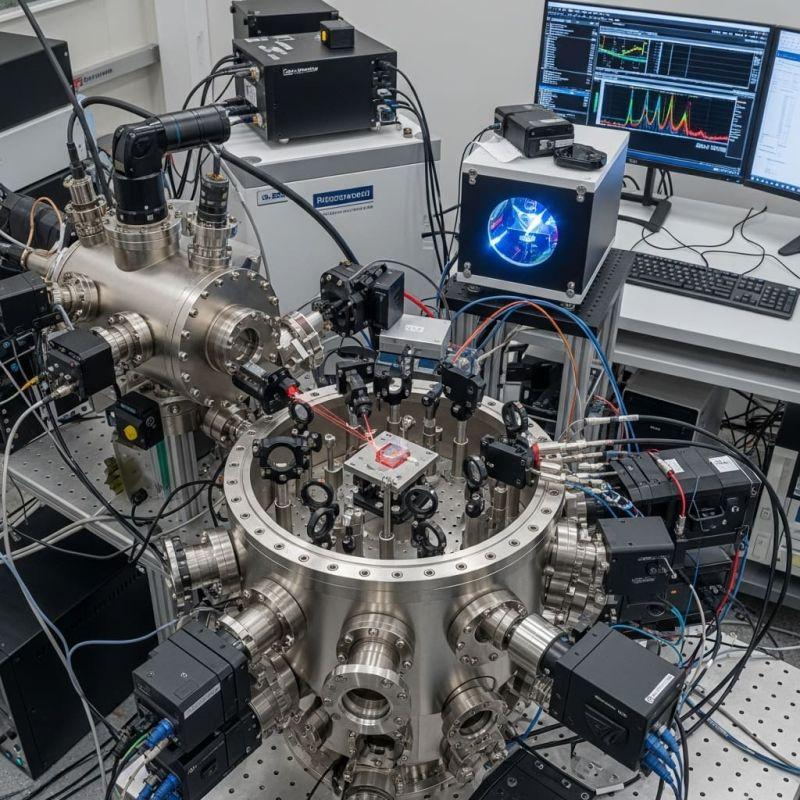
Britain’s Quantum Revolution Is Moving Beyond the Laboratory
Quantum technology is moving closer to everyday life in the United Kingdom, with potential applications ranging from faster medical diagnosis to more reliable railway services. What once appeared to belong exclusively in university laboratories is increasingly being developed into practical equipment designed to address some of the country’s most persistent challenges.
In October 2026, the UK government announced support worth £50 million for businesses developing quantum technologies. The programme aims to help British innovators turn advanced research into commercially useful products, including railway monitoring systems, portable eye scanners and improved radio signal detection equipment. The initiative also supports the country’s ambition to become a world leader in quantum sensing by 2030.
The announcement is particularly significant because it connects scientific innovation with problems that people experience directly. NHS waiting lists, railway disruption, infrastructure resilience and the need for more precise measurements all create opportunities for advanced sensing technology.
However, developing a breakthrough in physics is only one part of the journey. Engineers must also make these systems compact, dependable, energy-efficient and suitable for real-world environments. As quantum devices move towards practical deployment, the supporting electronics, measurement instruments and portable power solutions will become increasingly important.
What Makes Quantum Sensors Different?
Conventional sensors are already used throughout modern industry. They measure temperature, pressure, vibration, magnetic fields and numerous other physical properties. Quantum sensors build on the behaviour of atoms and other quantum systems to achieve exceptionally sensitive measurements in selected applications.
Their potential advantage lies in detecting subtle changes that conventional instruments may struggle to distinguish. Depending on the design, a quantum sensor could help engineers identify a developing fault, improve navigation accuracy or collect more detailed information about biological processes.
These capabilities are relevant to several British industries. Transport operators need better information about railway infrastructure, healthcare professionals require more accessible diagnostic tools, and energy companies must monitor increasingly complex systems.
Quantum technology will not automatically replace existing equipment. Each application must demonstrate that it offers meaningful advantages in accuracy, cost, reliability or accessibility. Nevertheless, the latest funding represents an important step towards testing whether promising laboratory discoveries can deliver measurable public benefits.
For manufacturers, the challenge is to turn sensitive scientific instruments into practical products that technicians and healthcare professionals can operate confidently.
Smarter Railway Monitoring Could Reduce Disruption
Railway reliability remains a major concern for commuters and businesses across Britain. A technical fault affecting tracks or signalling equipment can disrupt services, create congestion and leave passengers facing unexpected delays.
Traditional inspection methods remain essential, but identifying the precise location of a developing problem can require time, specialist personnel and careful investigation. Advanced sensing could make this process more efficient by providing more accurate information about where an issue has occurred.
One of the projects receiving support is led by West Midlands-based MoniRail. Its quantum monitoring system is being developed to pinpoint faults in railway tracks and signalling equipment, including locations where GPS signals may not be available.
If successfully developed and deployed, this technology could help maintenance teams identify problems more quickly and direct their attention towards the areas that need intervention. Earlier detection could also support preventive maintenance, potentially reducing the likelihood of minor faults developing into larger operational problems.
The practical requirements are demanding. Equipment used around railway infrastructure must tolerate vibration, changing weather conditions, dust and repeated transport between inspection locations. Engineers also need reliable measurement tools to calibrate sensors, verify performance and investigate faults.
Portable diagnostic instruments are particularly useful when maintenance teams work away from permanent laboratories. A suitable test equipment battery can support field measurements when technicians cannot rely on convenient access to mains electricity. For railway operators, dependable portable power is therefore part of the wider equipment ecosystem that enables effective inspection and maintenance.
Quantum monitoring alone will not eliminate railway delays. Its value will depend on measurement accuracy, integration with existing systems, maintenance procedures and the ability of operators to respond to the information collected.
Portable Quantum Eye Scanners Could Support the NHS
Healthcare provides another compelling example of how advanced sensing could move from specialist research facilities into more accessible settings.
The NHS faces sustained pressure to provide timely appointments while managing demand for diagnostic services. Eye examinations are particularly important because they can help clinicians identify conditions that may require further investigation or treatment.
A project involving Bristol-based Siloton is developing a handheld quantum eye scanner intended to make advanced eye diagnostics more accessible beyond specialist hospital environments. Smaller and potentially more affordable equipment could create opportunities for screening in community settings, subject to successful development and clinical adoption.
Portable diagnostic devices could offer practical advantages. They may be easier to transport, require less dedicated space and help healthcare teams provide examinations in locations where conventional equipment is difficult to install.
For patients, improved accessibility could mean fewer barriers to initial screening. For clinicians, portable systems could provide additional options for collecting diagnostic information and deciding whether a patient needs specialist assessment.
It is important, however, to distinguish technological promise from established clinical performance. New scanners must undergo appropriate testing and validation before their results can be relied upon in routine care. Their accuracy, usability, safety and ability to integrate with clinical workflows will all influence adoption.
Power management is another consideration. Portable medical instruments may be used in examination rooms, community clinics or temporary screening locations. Their batteries must provide dependable operation while meeting the relevant requirements for the device.
A well-designed test equipment battery can help power supporting measurement instruments used during development, calibration and performance verification. Such instruments can help engineers evaluate electrical behaviour and confirm that diagnostic equipment operates consistently under different conditions.
The broader opportunity is not simply to make medical technology smaller. It is to make reliable diagnostic capabilities available to more people without compromising clinical standards.
Measurement Equipment Is Essential to Commercialising Quantum Technology
Behind every advanced sensor is a process of development, testing and verification. Even a promising prototype must demonstrate that it can produce repeatable results outside carefully controlled laboratory conditions.
Engineers may need to measure electrical signals, assess power consumption, evaluate temperature sensitivity and investigate how components behave under different operating conditions. These tasks require specialised instruments capable of delivering accurate results.
The requirements become more complicated when equipment is designed for mobile use. A portable instrument may experience temperature changes, mechanical shocks, fluctuating workloads and long periods away from charging facilities. Each factor can affect how reliably the complete system performs.
Battery selection must therefore account for more than nominal capacity. Engineers need to consider operating voltage, discharge characteristics, expected runtime, charging requirements, physical dimensions and compatibility with the instrument’s electronics.
For example, a measurement device used for short laboratory checks may have very different power requirements from one carried by a railway technician throughout a working day. Likewise, an instrument used to verify sensitive medical electronics may need a stable power supply to support consistent testing procedures.
Selecting a test equipment battery requires an understanding of the equipment’s electrical specifications and intended working environment. The correct solution should match the manufacturer’s requirements rather than simply offering the highest advertised capacity.
Reliable power can improve the practicality of field testing, but it cannot compensate for poorly designed measurement circuits, inadequate calibration or unsuitable environmental protection. A successful instrument depends on the complete system working together.
The Growing Importance of Compact and Energy-Efficient Electronics
Quantum sensors are attracting attention partly because some applications could benefit from smaller and more portable equipment. However, reducing the size of a scientific instrument introduces engineering trade-offs.
Smaller devices have less internal space for batteries, heat management, shielding and supporting electronics. Designers must balance portability with runtime, measurement accuracy, durability and ease of maintenance.
Energy efficiency is especially important when equipment must operate for extended periods without charging. Reducing unnecessary power consumption can help extend operating time, while efficient electronic components can reduce heat generation and simplify thermal management.
Battery technology is one element of this development process. Different chemistries offer different combinations of energy density, discharge performance, operating temperature range, cycle life and safety characteristics. The appropriate choice depends on the specific application.
Rechargeable lithium-ion batteries are common in portable electronic instruments, although other battery technologies may be suitable for particular requirements. There is no universal battery solution for every quantum sensing application.
Manufacturers must also consider the practicalities of servicing and replacement. Equipment deployed across hospitals, railway networks or industrial sites may need to remain available for years. Clear maintenance procedures and compatible replacement components can help reduce downtime.
As British technology companies move from prototype development towards commercial production, these details will become increasingly important. A device that performs impressively in a laboratory must also be practical to manufacture, transport, maintain and use.
Beyond Healthcare and Railways: A Wider Range of Applications
The latest quantum funding programme reflects a broader interest in technologies that can improve measurement, navigation and communication.
Quantum radio systems are one example. Oxfordshire-based ColdQuanta UK is developing a compact mobile system designed to locate radio signals accurately. Potential applications include infrastructure protection, defence and emergency response, although performance and deployment requirements will determine where the technology proves most useful.
Other quantum projects focus on navigation and timing systems that could provide alternatives when satellite-based signals are disrupted or unavailable. Reliable timing is important to telecommunications, financial infrastructure and other systems that depend on precise coordination.
Quantum sensing may also support environmental monitoring and industrial inspection. More sensitive measurement techniques could help researchers investigate emissions, identify structural changes or collect information from locations that are difficult to access using conventional equipment.
These possibilities illustrate why the supporting electronics industry matters. Sensors do not operate independently of their surroundings. They require control systems, data processing, communication interfaces, calibration procedures and dependable power.
Portable measurement equipment can help engineers verify these components throughout development and deployment. As new applications emerge, manufacturers will need to adapt their testing processes to the performance and reliability requirements of each device.
Commercial success will ultimately depend on whether these systems solve practical problems more effectively than existing alternatives.
Skills, Supply Chains and the Road to Commercial Deployment
Funding can accelerate research, but the UK’s long-term ambitions also depend on a skilled workforce and a reliable supply chain.
Quantum technology combines several disciplines, including physics, electronics, software engineering, materials science and precision manufacturing. Companies developing commercial products need people who can connect these fields and translate scientific discoveries into equipment that customers can use.
The government’s October announcement also highlighted support for specialist training and the development of domestic quantum supply chains. These measures are intended to help British businesses build the technical capabilities needed to commercialise new technologies.
For equipment manufacturers and component suppliers, the opportunity extends beyond the quantum sensor itself. Demand may develop for precision electronics, optical components, measurement instruments, power-management systems and specialised servicing.
Quality assurance will remain essential. Suppliers must provide components that meet relevant specifications, while equipment developers need clear procedures for verifying performance and investigating failures.
Battery suppliers serving professional instruments should pay particular attention to accurate technical documentation, electrical compatibility and dependable product quality. These factors matter when devices are used for scientific measurements, infrastructure inspections or medical equipment development.
The expansion of quantum technology could therefore create opportunities across a wider industrial ecosystem. However, those opportunities will depend on actual procurement, product readiness and successful deployment rather than research funding alone.
What Britain’s Quantum Push Means for the Future
The UK’s £50 million quantum technology package signals a move towards practical applications of advanced sensing. Railway monitoring systems could help maintenance teams locate faults, portable eye scanners could improve access to diagnostic services, and new radio technologies could strengthen the ability to locate signals in challenging environments.
None of these outcomes is guaranteed. The projects must still overcome technical, commercial and operational challenges before their benefits can be fully assessed. Even so, the direction is significant: quantum innovation is increasingly being evaluated against real-world needs rather than scientific potential alone.
The next stage will require close cooperation between researchers, manufacturers, infrastructure operators, healthcare professionals and suppliers of supporting technologies.
Reliable measurement, careful calibration, energy-efficient electronics and appropriate battery solutions will all contribute to the development process. These elements may receive less attention than the quantum breakthrough itself, but they help determine whether an innovation can work consistently outside the laboratory.
For Britain, the opportunity is to build an industry that does more than produce impressive research. It is to develop technologies that improve public services, support skilled employment and strengthen industrial capabilities.
If the current projects deliver on their promise, quantum sensing could become an increasingly practical part of the UK’s technological future, helping turn complex scientific discoveries into useful tools for healthcare, transport and beyond.