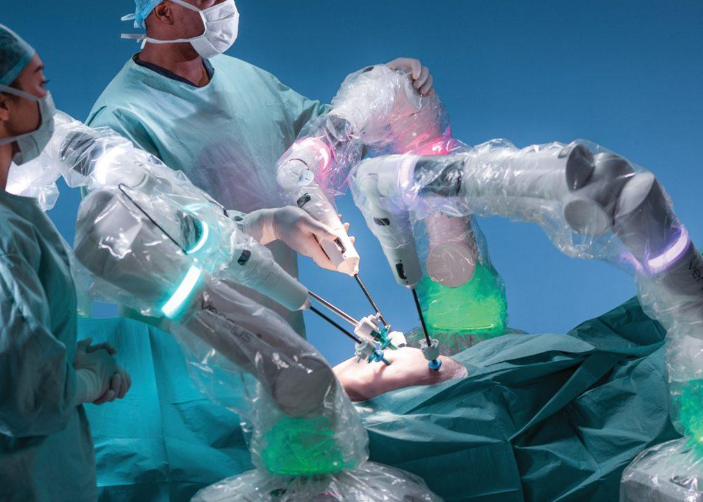
A New Chapter for Robotic Surgery in the UK
Robots are moving beyond science fiction and into one of the most demanding environments imaginable: the operating theatre. Across the United Kingdom, advances in surgical robotics are creating new opportunities to improve precision, support medical teams and help patients recover from certain procedures more quickly.
The development has gained fresh momentum in October 2026, following the UK government’s announcement of new Robotics Adoption Hubs backed by £40 million. The programme includes support for robotic-assisted surgery, with the aim of helping businesses and public services turn promising technologies into practical solutions. A dedicated National Surgical Robotic Adoption Hub is among the projects receiving support.
The initiative comes at an important time for the National Health Service (NHS), which faces sustained pressure to deliver high-quality care while managing staff shortages, waiting lists and limited resources. Robotic technology is not a universal solution to these challenges, but it could become an increasingly valuable part of the country’s healthcare infrastructure.
The central question is no longer simply whether robots can assist surgeons. It is how hospitals can introduce these systems safely, train staff effectively and ensure that patients across different regions benefit from innovation.
Why Surgical Robots Are Attracting Attention
Surgical robots are designed to help clinicians perform selected procedures with greater control and precision. Depending on the system and operation, a surgeon may use a console to manipulate specialised instruments while viewing a magnified, high-definition image of the surgical area.
These platforms do not necessarily operate independently. In many established systems, the surgeon remains in control of the instruments, making decisions throughout the procedure. The robot translates the surgeon’s movements into carefully controlled actions, helping the clinical team work within a confined surgical space.
For some minimally invasive operations, robotic assistance can support smaller incisions, reduced blood loss and shorter recovery periods. Outcomes vary according to the procedure, the patient’s condition, the experience of the surgical team and the particular technology used. Robotic surgery is not automatically better than conventional surgery in every situation.
Nevertheless, the potential benefits are significant enough to attract growing attention from hospitals, researchers and technology companies.
In the UK, the opportunity extends beyond purchasing sophisticated machines. Hospitals also need training facilities, technical support, maintenance arrangements and clear procedures for evaluating clinical outcomes. These practical requirements are precisely where the new adoption hubs could make a difference.
NHS Investment Creates Opportunities for Wider Adoption
On 9 October 2026, the government announced a £40 million investment supporting new Robotics Adoption Hubs across the country. The programme is intended to help organisations understand, test and introduce robotics rather than leaving individual hospitals and businesses to navigate complex purchasing decisions alone.
Newcastle is particularly relevant to the healthcare side of this initiative. Newcastle Hospitals announced that its surgical training centre had secured £7.4 million to establish a national hub supporting NHS organisations as they introduce robotic surgery.
The centre is expected to help hospitals assess their readiness, train clinical teams and evaluate whether robotic technology offers meaningful benefits in their local settings. This matters because acquiring a robot is only one part of a much larger process.
Hospitals must consider operating theatre space, compatible instruments, staff availability, maintenance costs, software updates and the long-term financial implications of each system. They must also decide which procedures are most likely to benefit and how patients will be selected.
The scale of the opportunity is considerable. Newcastle Hospitals reports that robotic-assisted surgery in England increased from 3,099 recorded procedures in 2011–12 to more than 41,000 in 2023–24. NHS England has projected that approximately 500,000 operations a year could be supported by robotic technology by 2035.
These figures illustrate the potential for substantial growth, although future adoption will depend on clinical evidence, investment, training capacity and the ability of hospitals to deliver consistent results.
The Technology Behind the Operating Theatre
A modern surgical robot is more than a mechanical arm. It is a coordinated system involving cameras, imaging equipment, precision instruments, control software, sensors and communication interfaces.
High-resolution visual systems allow surgeons to examine the operative area in detail. Mechanical components translate movements into controlled instrument actions, while software helps coordinate the system’s functions. Depending on the platform, additional technologies may assist with positioning, instrument tracking or the presentation of information during a procedure.
This complexity creates opportunities for engineers as well as clinicians. Reliable operation depends on carefully designed electronics, predictable power delivery and effective monitoring of critical components.
Battery technology can also play a role in the wider surgical environment. Portable monitors, handheld diagnostic instruments, wireless sensors and emergency medical equipment may require independent power sources to remain useful when they are moved between rooms or deployed away from fixed sockets.
For manufacturers, a medical battery is therefore not simply a consumable component. Its suitability can affect operating time, device availability, portability and the reliability of equipment used by healthcare professionals.
However, not every surgical robot runs on a battery. Many large platforms rely on mains electricity, and their power arrangements differ from those of portable medical devices. Understanding this distinction is essential when discussing the relationship between surgical automation and medical power technology.
Portable Medical Devices Become Part of the Robotics Ecosystem
The expansion of robotic surgery is taking place alongside broader digital changes in healthcare. Hospitals increasingly depend on connected monitoring equipment, portable ultrasound systems, mobile diagnostic devices and electronic tools that help clinicians collect and review patient information.
These devices can support workflows before, during and after surgery. A portable monitor, for example, may help staff track a patient’s condition during transport, while a handheld diagnostic instrument can support assessments in different clinical settings.
Reliable power becomes particularly important when equipment must be moved frequently or used in locations where immediate access to charging is not guaranteed. Staff need to know how long a device can operate, how much time remains before recharging is required and whether a depleted power source can be replaced without disrupting essential work.
A suitable medical battery must be matched to the device’s electrical requirements, expected workload and operating environment. Capacity alone does not determine performance. Voltage compatibility, discharge characteristics, charging controls, temperature tolerance, service life and safety protections all matter.
Healthcare equipment manufacturers must also consider how power systems behave as they age. Battery degradation can reduce available runtime, making scheduled inspection and replacement planning important for devices whose availability affects clinical workflows.
These considerations are especially relevant as hospitals combine traditional medical equipment with newer connected technologies. A reliable power strategy can help maintain continuity, although it cannot replace proper equipment maintenance, clinical procedures or backup arrangements.
Artificial Intelligence Could Extend the Capabilities of Surgical Robotics
Artificial intelligence is another area attracting attention in medical technology. AI-based systems can potentially help clinicians interpret images, organise information, plan procedures and identify patterns that may be difficult to detect quickly through manual review alone.
In surgical settings, these capabilities must be developed with particular care. A system that assists with planning or highlights relevant information has a different role from one that directly controls an instrument. Each application requires appropriate clinical validation, risk assessment and human oversight.
For the NHS, the immediate opportunity may lie in carefully selected applications that complement existing expertise. Digital tools could support training simulations, improve access to procedural information or help teams analyse performance after an operation.
Robotics adoption hubs could help hospitals and technology developers assess these possibilities in practical environments. Rather than introducing new systems simply because they are technologically impressive, organisations can evaluate whether a particular tool solves a genuine clinical problem.
Data protection is equally important. Medical information is sensitive, and connected devices must be designed to protect patient confidentiality and resist unauthorised access. Hospitals will need to consider cybersecurity alongside performance, reliability and cost.
The most successful innovations are likely to be those that integrate naturally into clinical practice without creating unnecessary complexity for already busy medical teams.
Safety, Training and Trust Remain Essential
Even the most advanced surgical equipment cannot deliver good outcomes without skilled professionals and robust operating procedures.
Surgeons require appropriate training to understand a robotic platform’s controls, limitations and emergency procedures. Operating theatre staff must also know how to prepare equipment, respond to technical problems and coordinate their responsibilities during an operation.
Hospitals need clear plans for unexpected interruptions, including equipment faults and power problems. Depending on the device, this may involve alternative instruments, backup electrical supplies, system checks and manufacturer-supported maintenance.
Portable devices introduce their own practical considerations. Their power sources must be inspected, charged and replaced according to manufacturer guidance. Staff should not assume that a battery with sufficient nominal capacity will necessarily provide the required runtime under every clinical condition.
The selection of a medical battery must therefore account for the equipment’s approved specifications and safety requirements rather than relying solely on price or advertised capacity. For regulated medical equipment, compatibility and traceability are especially important.
Patient trust also depends on transparency. Hospitals should explain why a robotic approach is being considered, what alternatives are available and what benefits and risks are relevant to the individual procedure. Technology should support informed clinical decisions, not replace them.
Can Robotic Surgery Help Reduce NHS Pressure?
One of the strongest arguments for surgical automation is the possibility of improving efficiency across selected procedures. If a suitable minimally invasive operation enables a patient to recover more quickly, it may reduce the need for extended hospital care and help that person return to everyday activities sooner.
However, shorter recovery does not automatically translate into lower overall costs. Robotic platforms can require substantial upfront investment, specialist training, maintenance contracts and dedicated instruments. Hospitals must compare these costs with measurable clinical benefits and the resources required by alternative approaches.
The impact on waiting lists will also depend on more than the number of robots available. Surgical capacity is influenced by staffing, theatre schedules, anaesthesia services, recovery beds and follow-up care. A new machine cannot solve every bottleneck in the treatment pathway.
This is why evaluation matters. Hospitals need evidence showing which procedures benefit most, whether outcomes remain consistent across different patient groups and how the technology affects the full cost of care.
The new UK adoption hubs could support this process by helping healthcare organisations learn from practical demonstrations and share experience. Better-informed purchasing decisions may reduce the risk of expensive equipment being acquired without a clear implementation plan.
What the Future Could Look Like for British Healthcare
The next phase of medical robotics in Britain is likely to involve a wider network of technologies rather than a single type of surgical machine. Robotic assistance may work alongside digital imaging, connected monitoring, AI-supported planning and portable diagnostic equipment.
For patients, the most meaningful advances will be measured in practical outcomes: safer procedures, appropriate access to innovative treatments, reduced disruption to daily life and a better overall care experience.
For hospitals, success will depend on combining technical innovation with training, maintenance, evidence-based decision-making and reliable infrastructure. For manufacturers, it will require systems that are not only advanced but also dependable, serviceable and compatible with real clinical workflows.
The government’s October 2026 initiative provides a new framework for helping organisations move from experimentation towards practical adoption. Its long-term impact will depend on how effectively the hubs support clinicians, whether hospitals can fund implementation and whether measurable improvements emerge from the technologies introduced.
Surgical robots will not replace the judgement, experience or compassion of medical professionals. Their value lies in helping those professionals perform specific tasks more effectively when evidence supports their use.
Britain’s challenge is to make that promise meaningful across the healthcare system. If investment, training and responsible implementation progress together, robotic technology could become an increasingly useful part of modern NHS care, bringing engineering innovation closer to the everyday needs of patients and clinicians.