A New Chapter in Britain’s Home Coffee Culture
For many people in the UK, coffee is more than just a drink. It is part of the morning routine, a reason to take a break during a busy afternoon and sometimes the highlight of a weekend breakfast. Whether someone prefers a strong espresso before catching the train, a smooth lungo while working from home or a milky cappuccino on a quiet Sunday, making good coffee at home has become increasingly appealing.
However, convenience has always come with a small compromise. Single-use coffee capsules make preparing a drink incredibly easy, but they also leave behind packaging that needs to be collected, sorted and disposed of. Even when recycling schemes are available, not everyone finds the process straightforward.
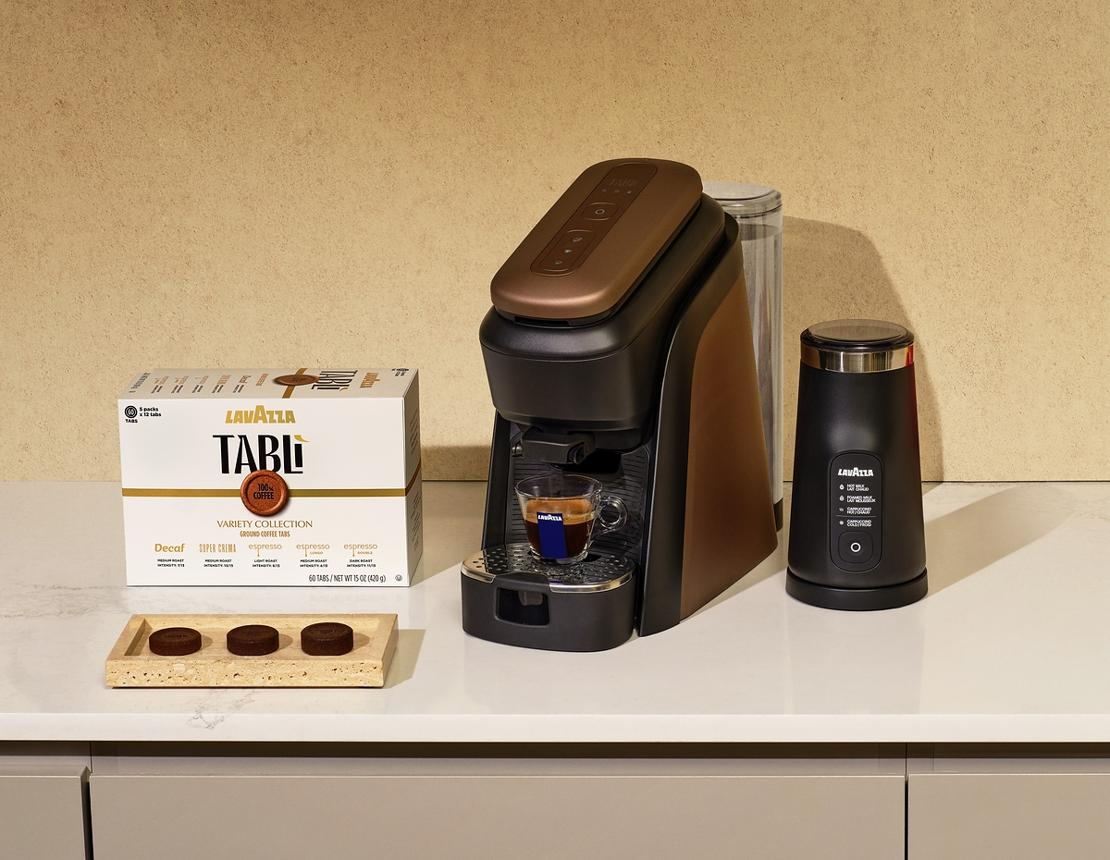
Now, Italian coffee brand Lavazza is offering a different approach with its Tablì coffee machine. Instead of relying on conventional plastic or aluminium capsules, the machine uses compressed coffee tabs made entirely from coffee.
The idea sounds surprisingly simple: what if the coffee itself could take the place of the capsule?
This unusual approach has attracted attention in the British home coffee market, where consumers are increasingly interested in products that combine convenience, attractive design and more thoughtful material choices. Rather than asking people to abandon their favourite single-serve coffee machines, Lavazza is attempting to change one of the most familiar parts of the experience.
What Makes the Lavazza Tablì Different?
At first glance, the Tablì looks like a modern single-serve espresso machine. It has a compact vertical design, a water tank at the back and a straightforward brewing interface. Its most interesting feature, however, is the coffee tab that goes inside it.
Traditional coffee capsules normally contain ground coffee inside a protective shell. Depending on the system, that shell may be made from plastic, aluminium or a combination of different materials.
Tablì takes another route. Its coffee tabs are made from compressed ground coffee, without a separate capsule, coating or binding material.
This means the coffee itself holds its shape during handling and brewing. Users do not need to measure loose grounds or worry about spilling coffee across the kitchen worktop. They simply take a tab from its packaging, place it into the specially designed machine and select their preferred drink.
It is a clever combination of an old-fashioned coffee ingredient and a modern convenience-focused appliance.
The system is designed specifically for Lavazza’s own Tablì tabs, so it is not a universal machine that accepts ordinary coffee capsules from other manufacturers. That distinction matters because anyone considering the purchase will need to be comfortable with using a dedicated coffee format.
Nevertheless, the concept offers an interesting alternative for people who enjoy capsule-style brewing but would like to reduce the amount of material left behind after every cup.
How Does the Coffee Brewing Process Work?
One of the biggest questions surrounding a new coffee machine is whether its unusual technology makes everyday use more complicated.
Fortunately, Tablì is designed to keep the process straightforward.
The machine uses a distinctive bean-shaped slider and a servo-assisted piston system. Users open the brewing area, insert a coffee tab and allow the mechanism to position it for brewing. Once the coffee has been prepared, the used tab is collected inside the machine.
There is no need to grind beans, weigh coffee or clean a loose filter after every drink.
Lavazza also includes its Crema Plus technology, which is designed to produce a rich, velvety layer of crema on top of the espresso. For coffee lovers who enjoy the appearance and texture of a café-style shot, this is an important part of the experience.
The machine offers several drink options, including single espresso, double espresso and lungo. This gives users some flexibility without overwhelming them with dozens of complicated settings.
Its heat-up time is approximately 35 seconds, according to Lavazza’s product information. That is particularly useful during busy mornings when nobody wants to spend several minutes waiting for a machine to become ready.
The water tank holds approximately 1.2 litres, while the machine has a rated power consumption of 1,450 watts. These specifications make it clear that Tablì is designed as a proper mains-powered kitchen appliance rather than a portable coffee gadget.
Is It Actually a Better Choice for the Environment?
The environmental question is probably the most interesting part of the Tablì story.
Coffee capsules have transformed home brewing, but their popularity has also created a considerable waste challenge. Millions of single-serve drinks mean millions of used capsules, each containing a small amount of coffee residue and packaging material.
Some manufacturers have introduced recycling programmes, while others have developed capsules made from alternative materials. However, recycling still requires consumers to separate and dispose of used products correctly.
Lavazza’s approach is different because the Tablì tab is made entirely from coffee.
After brewing, the remaining coffee material can be placed in an appropriate food-waste collection system. For households with a suitable composting arrangement, used coffee grounds may also have a second life.
This could make the disposal process more convenient for people who already separate food scraps from their general rubbish.
However, it is important not to confuse a coffee-only tab with a completely packaging-free product. The tabs still arrive in protective packaging, and consumers should check local recycling and food-waste collection rules rather than assuming every component can go into the same bin.
The machine itself also requires electricity, water and materials to manufacture. Its overall environmental impact will depend on how long it lasts, how frequently it is used and what it replaces.
Even so, removing the conventional capsule from the brewing process is an interesting development. It demonstrates how relatively small changes in product design can potentially make everyday consumer habits less wasteful.
How Much Does a Cup of Tablì Coffee Cost?
Price is another important consideration for British consumers, particularly when supermarket coffee, café drinks and home brewing are all competing for attention.
The Lavazza Tablì machine entered the UK market with a recommended retail price of around £199. Coffee tabs were initially listed at £5.49 for a box of 12 single-dose tabs, with double-dose versions costing more.
That means the initial coffee cost is relatively easy to understand. A box of 12 single servings works out at approximately 46 pence per drink using the original listed price.
Actual retail prices and promotions can vary, so shoppers should check current offers before purchasing.
For comparison, buying a coffee from a high-street café can cost considerably more, particularly when ordering speciality drinks with alternative milk or additional flavourings. A home coffee machine may therefore appeal to people who regularly purchase takeaway coffee.
However, the purchase price is only one part of the calculation.
Buyers should also consider the cost of replacement tabs, how frequently they drink coffee and whether they are happy to remain within Lavazza’s dedicated coffee system.
There is also a practical difference between buying a machine that accepts widely available capsules and choosing one that requires its own specific coffee format.
The Tablì may be attractive to people who value simplicity, but shoppers who enjoy experimenting with different coffee brands might prefer a more open brewing system.
Smart Features Bring Coffee Into the Connected Kitchen
Perhaps unexpectedly, the Tablì is not just about coffee preparation. It also reflects the growing popularity of connected kitchen appliances.
The machine supports Wi-Fi connectivity and works with a dedicated app. According to Lavazza, users can personalise aspects of their coffee experience, manage machine settings and receive alerts relating to usage and maintenance.
Compatibility with Amazon Alexa and Google Home also gives it a place within the wider smart-home ecosystem.
Imagine preparing breakfast while asking a voice assistant to help manage your morning routine. Your phone could become a convenient way to interact with the coffee machine, while other connected devices help organise lighting, music and household schedules.
This is where the wider development of consumer electronics battery technology becomes relevant. Smartphones, wireless smart speakers and other connected accessories rely on dependable rechargeable power to keep these experiences available throughout the day.
As more kitchen products become connected, consumers are no longer choosing appliances based only on their ability to heat, blend or brew. Software compatibility, wireless connectivity and the quality of the companion app are becoming part of the purchasing decision.
Of course, smart features are only useful when they make everyday life easier. A coffee machine should still be simple to operate even if someone never opens its app.
That balance between traditional functionality and digital convenience will be important for the future of connected kitchen appliances.
Could Capsule-Free Coffee Become the Next Big Trend?
Lavazza is not the only company exploring alternatives to traditional coffee capsules.
The British market has already seen interest in other capsule-free concepts, including CoffeeB’s coffee-ball system. These products suggest that manufacturers are beginning to question whether the conventional capsule is the only way to deliver a convenient single-serve coffee experience.
This competition could encourage more experimentation.
Future coffee machines might use compressed coffee discs, alternative natural materials or entirely different brewing mechanisms. Some could focus on improving flavour consistency, while others may prioritise easier cleaning and simpler waste disposal.
There is also room for more personalisation.
Connected machines could potentially offer additional drink profiles, help users track their coffee consumption or provide clearer information about the ingredients and origin of their coffee. These features could make home brewing feel more tailored without requiring people to become professional baristas.
At the same time, manufacturers will need to avoid making simple products unnecessarily complicated.
A coffee machine with dozens of menus and settings is not necessarily better than one that produces an excellent drink with a single button press. For many households, convenience remains the main reason for choosing a single-serve system in the first place.
The challenge is to make the next generation of coffee appliances both innovative and genuinely practical.
What Should British Buyers Consider Before Purchasing?
The Tablì is an interesting product, but it will not automatically suit every coffee drinker.
First, consider the type of coffee you enjoy. The machine is primarily designed for espresso-based drinks, including single espresso, double espresso and lungo. People who prefer large filter coffees or frequently experiment with different brewing methods may want a more versatile machine.
Second, think about the coffee supply. Because Tablì uses its own specially designed tabs, buyers need to check availability, pricing and the range of blends before committing to the system.
Third, consider milk-based drinks. The machine does not include an integrated steam wand, so anyone who regularly prepares cappuccinos, flat whites or lattes will need a separate milk frother.
Kitchen space is another consideration. Although the machine has a relatively narrow width of approximately 16.5 centimetres, its overall height and depth should be checked against the available worktop space.
Finally, smart connectivity may be a bonus, but it should not be the deciding factor. A reliable brewing experience, easy cleaning and reasonable running costs are arguably more important.
These considerations help explain why a product can be innovative without being the perfect choice for every household.
The Future of Home Coffee Could Be Simpler
The Lavazza Tablì is an interesting example of how consumer technology can evolve by rethinking something that people have used for years.
Instead of making coffee machines bigger, more complicated or filled with unnecessary features, Lavazza has focused on changing the format of the coffee itself.
The result is a machine that aims to preserve the speed of capsule brewing while reducing the amount of material left behind after each drink.
It also reflects a broader change in the British kitchen. Modern appliances are increasingly expected to combine practical design, digital connectivity and more considered use of resources.
As connected devices become more common, the supporting technology matters too. From smart-home accessories to smartphones and wireless controls, reliable consumer electronics battery solutions help keep the wider digital kitchen running smoothly.
Whether Tablì becomes a mainstream success will depend on coffee quality, the availability of its tabs, long-term running costs and how many households are willing to adopt a new brewing format.
One thing is already clear: the humble coffee capsule is no longer the only idea worth exploring.
For British coffee lovers, that could mean more choice, more interesting kitchen gadgets and a fresh reason to rethink the first cup of the day.
And if future machines can deliver excellent coffee with less packaging and no extra fuss, the morning routine might become a little more enjoyable for everyone.
A Small Innovation With Bigger Possibilities
It is easy to overlook the technology behind an everyday cup of coffee. Yet modern coffee machines combine heating systems, pumps, sensors, electronic controls and carefully designed brewing mechanisms to deliver consistent results.
These developments belong to a wider consumer technology landscape in which convenience and thoughtful design increasingly go hand in hand.
The next generation of connected kitchen appliances may become even more personalised, with better software, more intuitive controls and improved energy management. Their development will also create new opportunities for the wider consumer electronics battery industry, particularly as phones, smart displays and wireless kitchen accessories become more closely connected.
For now, Lavazza’s capsule-free experiment offers a fascinating glimpse of what everyday appliances could look like when manufacturers challenge familiar designs.
Sometimes, the most interesting innovation is not a machine that does more things. It is one that finds a smarter way to do something we already love.