Britain’s Hidden Underwater World Is Closer Than Ever
Britain is famous for its dramatic coastlines, charming seaside towns and spectacular ocean views. From the rugged cliffs of Cornwall to the sheltered bays of Dorset and the rocky shores of Scotland, the country’s relationship with the sea has always been an important part of its identity. Yet, while millions of people enjoy walking along beaches, sailing or swimming in coastal waters, much of the marine world remains hidden beneath the surface.
That is beginning to change. Underwater cameras are giving scientists, photographers, divers and ordinary nature enthusiasts an extraordinary opportunity to discover what happens beneath Britain’s waves. Creatures that were once difficult to observe can now be filmed in their natural habitats, while underwater landscapes can be documented in remarkable detail.
The technology is also arriving at an interesting moment. Marine conservation has become an increasingly important subject in Britain, with growing attention being paid to protected habitats, changing sea temperatures and the health of coastal ecosystems. Recent initiatives encouraging coastal communities to contribute photographs and observations are creating new opportunities for public participation.
So, could underwater cameras become one of the most exciting tools for exploring and protecting Britain’s coastline?
A New Perspective on Britain’s Coastal Wildlife
One of the biggest advantages of underwater cameras is their ability to reveal marine life that people would otherwise rarely encounter.
A walk along a British beach might reveal seabirds, rock pools and perhaps a seal appearing briefly above the water. However, beneath the surface, an entirely different world exists. Crabs move between rocks, fish shelter among seaweed, and small marine creatures occupy spaces that are almost impossible to observe from land.
Modern underwater cameras make these scenes accessible without requiring everyone to become an experienced scuba diver.
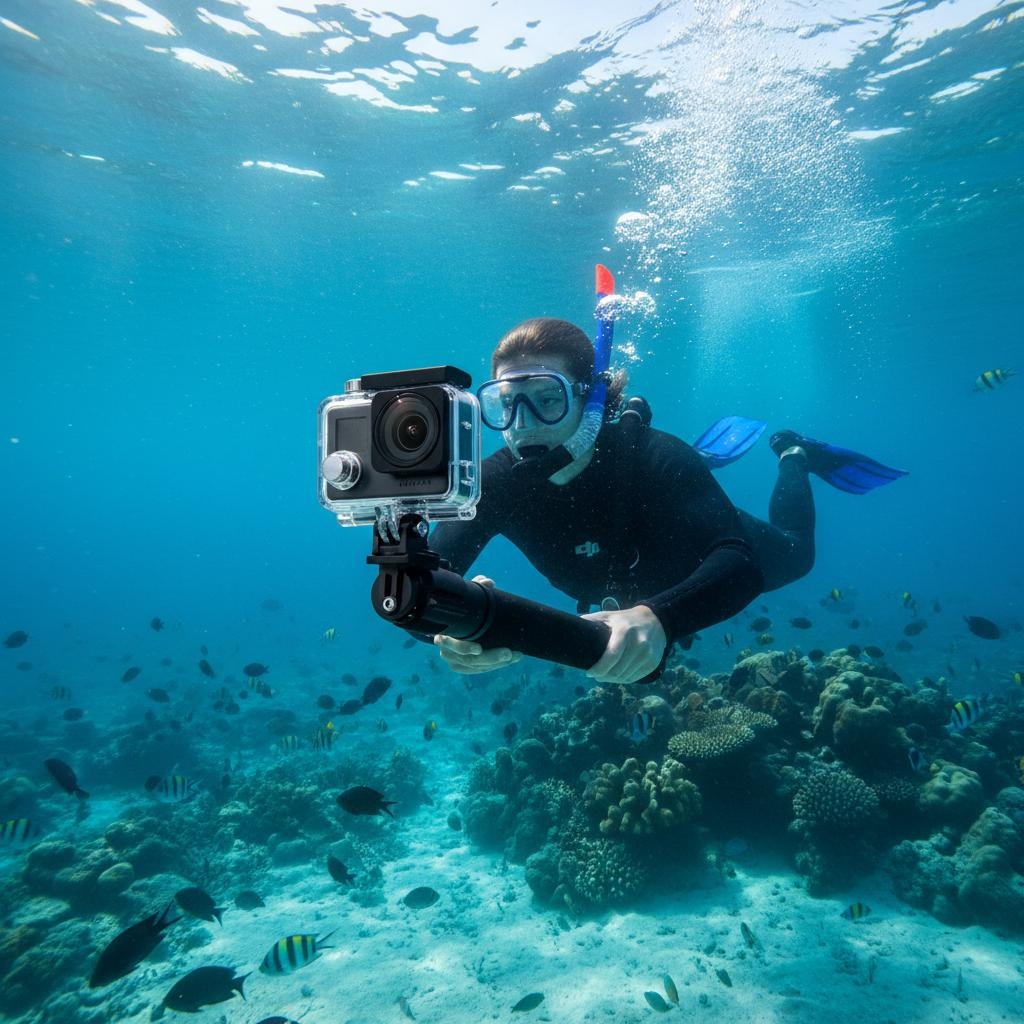
Compact waterproof cameras can be attached to diving equipment, mounted on specialised underwater housings or used during snorkelling trips. More advanced systems can record footage for extended periods, allowing researchers to study animal behaviour without constantly disturbing the environment.
This is particularly interesting around places such as the Jurassic Coast in Dorset, where rocky seabeds and underwater habitats provide opportunities for marine observation.
Even a relatively short recording can reveal surprising behaviour. A camera positioned near a rocky reef might capture a crab searching for food, a fish defending its territory or an octopus exploring its surroundings.
For anyone interested in Britain’s wildlife, these discoveries make the coastline feel like an enormous natural documentary waiting to be filmed.
Why the Latest Underwater Technology Matters
Underwater photography has developed considerably beyond the simple waterproof cameras that holidaymakers once carried to swimming pools.
Today’s equipment can offer high-resolution video, improved low-light performance, image stabilisation and sophisticated waterproof housings. Some specialist systems can also operate remotely, allowing researchers to observe marine habitats without remaining directly beside the camera.
This matters because many marine animals are easily disturbed by human activity. A diver approaching too quickly might cause a fish to disappear into a rocky crevice or prevent a shy creature from behaving naturally.
Remote underwater camera systems offer another approach. They can be positioned in suitable locations and left to collect footage while people monitor the results from a safer distance.
Some professional underwater installations even use remotely controlled movement, allowing operators to adjust the viewing angle and follow activity without physically entering the water.
For independent explorers, the most attractive development is the growing variety of compact equipment. A lightweight action camera, a reliable waterproof housing and a suitable mounting system can provide an accessible introduction to underwater photography.
However, choosing the right equipment requires more thought than simply checking the maximum recording resolution. Battery endurance, water resistance, storage capacity and ease of operation are equally important.
Blue Planet III Is Renewing Britain’s Interest in the Ocean
Few television programmes have made the underwater world as fascinating to British audiences as the BBC’s Blue Planet series.
The return of Blue Planet III in November 2026 is particularly interesting because it arrives during a period when people are becoming increasingly aware of artificial intelligence and digitally generated images.
The production team has highlighted the importance of authentic wildlife footage, with the new series featuring innovative underwater filming techniques and remarkable examples of animal behaviour.
Among the technological developments is a specialised underwater CCTV system known as the Stonefish camera. The programme also uses creative equipment designed to capture scenes that conventional filming methods might struggle to record.
These innovations demonstrate that underwater cameras are no longer simply accessories for holiday photography. They are becoming important tools for understanding marine ecosystems.
For British viewers, this creates an exciting connection between entertainment and real-world exploration. A spectacular sequence showing an octopus interacting with its environment might inspire someone to investigate the marine life around their nearest beach.
It could also encourage more people to support local conservation projects, participate in wildlife surveys or explore coastal environments responsibly.
The most exciting possibility is that the technology used by professional filmmakers could gradually inspire more accessible equipment for everyday enthusiasts.
From Cornwall to Scotland: Britain’s Underwater Photography Opportunities
Britain offers an extraordinary variety of coastal environments, making it an appealing destination for underwater photography.
Cornwall is particularly attractive because of its rocky coastline, sheltered coves and varied marine habitats. Areas around Falmouth, St Ives and the Lizard Peninsula offer opportunities to explore underwater landscapes, although conditions can change quickly depending on tides and weather.
Dorset provides another fascinating setting. Its coastline includes distinctive geological formations, rocky shorelines and habitats that attract a variety of marine species.
Scotland offers a completely different experience. Its sea lochs, islands and sheltered coastal waters can provide opportunities to observe kelp forests, seabirds and marine mammals.
Further north, the Scottish islands are especially interesting for photographers who want to capture the relationship between marine wildlife and dramatic natural landscapes.
Of course, underwater exploration is not always easy. Visibility can vary considerably, especially after storms or periods of heavy rainfall. Strong currents, cold temperatures and changing tides can also affect photography conditions.
That is why planning matters. Before taking equipment into the water, photographers should check local conditions, understand the limitations of their gear and choose locations appropriate to their experience.
For beginners, guided snorkelling sessions or organised coastal wildlife activities can be a much safer starting point than attempting unfamiliar diving locations alone.
The Battery Challenge Behind Every Great Underwater Shot
There is one practical issue that can quickly ruin an otherwise perfect underwater photography session: running out of power.
Imagine discovering a beautiful stretch of kelp forest, positioning a camera beside a rocky reef and waiting patiently for marine wildlife to appear. Just as a curious fish swims into view, the recording stops because the camera has run out of energy.
It is an irritating situation, particularly when reaching the equipment means ending the session, returning to shore or repeating a difficult setup.
Unlike ordinary photography on dry land, underwater recording introduces additional complications. A camera may be enclosed in a waterproof housing, attached to a diving rig or mounted in a position that is inconvenient to access.
This makes planning power consumption especially important.
A suitable camera battery needs to support the demands of the equipment while remaining compatible with the specific camera model. Video recording, high-resolution settings, wireless connections and screen usage can all influence how quickly available power is consumed.
Photographers should also remember that cold water and low temperatures can affect battery performance. A camera that performs well during a warm summer afternoon might behave differently during a chilly autumn expedition along the Scottish coast.
For longer sessions, carrying properly stored spare power sources and checking remaining charge before entering the water can make a significant difference.
The key is to think about power management before the adventure begins rather than discovering its importance halfway through a recording.
Underwater Cameras Could Help Protect Marine Habitats
Perhaps the most important development is the growing connection between underwater photography and marine conservation.
Britain has numerous marine protected areas, but protecting them requires a better understanding of what is happening beneath the surface.
Seagrass beds, rocky reefs, kelp forests and other marine habitats support complex ecosystems. They provide shelter, feeding opportunities and breeding grounds for different species.
However, these environments can be difficult to monitor continuously using traditional methods.
Underwater cameras offer a way to collect visual evidence over time. Researchers can compare footage from different seasons, identify changes in habitat conditions and observe how marine animals use particular locations.
This information can help build a more complete picture of coastal ecosystems.
In September 2026, the UK’s Marine Management Organisation launched its Your Coast – Explore, Enjoy, Protect campaign, inviting coastal communities and marine enthusiasts to contribute knowledge and evidence about recreational activities and protected marine habitats.
The initiative specifically highlights the potential value of photographs and observations from divers, snorkellers and other people who regularly explore coastal waters.
That creates an interesting opportunity for underwater photographers. Their images can become more than personal souvenirs. When collected responsibly and shared with appropriate researchers or conservation organisations, they may contribute useful information about marine environments.
A photograph of a seagrass meadow or a recording of wildlife around a rocky reef could help document what exists in a particular location.
Citizen Science: When Everyday Explorers Become Marine Observers
The idea of citizen science is becoming increasingly important in environmental research.
Instead of relying exclusively on professional scientists, conservation projects can involve people who regularly visit beaches, rivers and coastal environments.
Underwater cameras make this approach especially appealing because visual observations are easy to understand and can provide useful supporting evidence.
For example, a snorkeller might notice that a familiar stretch of coastline contains more seaweed than it did during a previous visit. A diver might photograph an unusual marine animal. Someone exploring a rock pool might discover an unexpected change in the number of small creatures living there.
These observations do not automatically establish scientific conclusions, but they can provide valuable starting points for further investigation.
The Natural History Museum’s community science work on healthy coasts also encourages people to investigate kelp along Britain’s shores. Its Underwater Forests survey uses public participation to build a better understanding of kelp distribution.
This is particularly relevant because kelp forests support numerous marine species and can influence coastal environments.
An underwater camera can complement this kind of activity by documenting the appearance and condition of habitats.
The more people become comfortable recording and sharing observations responsibly, the more opportunities there may be to connect everyday coastal experiences with scientific research.
What Should You Look for in an Underwater Camera?
For anyone considering underwater photography, choosing equipment can feel overwhelming.
There are inexpensive waterproof action cameras, dedicated underwater cameras and advanced systems designed for professional divers. The right option depends on how frequently the equipment will be used and what the photographer wants to capture.
For casual snorkelling, a compact camera with a suitable depth rating and straightforward controls may be sufficient.
People interested in underwater wildlife photography may benefit from better image quality, improved low-light performance and more reliable stabilisation.
Serious divers should pay particular attention to the complete waterproof housing system. The camera’s own water resistance does not necessarily mean it is suitable for every diving depth or underwater environment.
Battery performance deserves equal attention. A second camera battery can be useful for longer photography sessions, but it should always be a compatible model that meets the manufacturer’s specifications.
Storage is another consideration. High-resolution video can occupy considerable space, especially when recording long underwater sequences.
A fast, sufficiently large memory card helps reduce interruptions and makes it easier to capture unexpected moments.
Finally, controls should be easy to operate with wet hands or diving gloves. Complicated menus are frustrating when the best photographic opportunity might last only a few seconds.
The Challenges of Filming Beneath British Waters
Despite the excitement, underwater photography around Britain comes with some distinctive challenges.
Water clarity is one of the biggest issues. Unlike tropical destinations with exceptionally clear water, many British coastal locations can experience reduced visibility because of sediment, plankton and changing weather conditions.
Lighting can also be difficult. Water absorbs and scatters light, making underwater scenes appear darker and less colourful than they would on land.
A camera with good low-light performance can help, although artificial lighting must be used carefully to avoid disturbing marine wildlife.
There is also the question of environmental responsibility.
Photographers should never chase animals, damage fragile habitats or disturb nesting and feeding areas simply to obtain a better image.
Following local guidance, respecting marine protected areas and maintaining an appropriate distance from wildlife are essential.
Equipment must also be maintained carefully. Saltwater can damage exposed components, connectors and seals, so cleaning and checking equipment after each session is important.
For longer expeditions, photographers should think about power requirements in advance. A spare camera battery may provide extra flexibility, but all electrical accessories and charging arrangements must be appropriate for their intended use.
Good underwater photography is not simply about capturing the most dramatic image. It is about recording the natural world without unnecessarily interfering with it.
Could Underwater Cameras Change the Future of British Coastal Tourism?
Underwater cameras could also create new opportunities for Britain’s coastal tourism industry.
Traditional seaside tourism often focuses on beaches, boat trips, coastal walks and water sports. Underwater photography introduces another way for visitors to experience these destinations.
Imagine a guided snorkelling experience where visitors explore a sheltered bay and later watch their own recordings of fish moving through underwater vegetation.
A diving centre could offer introductory photography sessions, helping beginners understand how to capture marine life without disturbing it.
Coastal museums and visitor centres could also use underwater footage to explain local ecosystems, showing visitors what exists beneath beaches they might otherwise see only from above.
There is potential for virtual experiences too. High-quality underwater recordings could allow people who cannot swim or dive to explore marine habitats through large displays, interactive installations or immersive digital experiences.
This could be especially valuable for families, schools and visitors with limited mobility.
For coastal communities, the opportunity is not only about selling more equipment or offering new activities. It is also about encouraging visitors to understand the natural environments that make these destinations special.
The Future: More Discovery, Better Evidence and Bigger Adventures
Underwater cameras are changing the way people experience Britain’s coastline because they connect curiosity with technology.
What was once the exclusive territory of professional divers and marine researchers is becoming increasingly accessible to ordinary people.
As cameras become more compact, recording quality improves and remote monitoring systems develop, there will be more opportunities to observe marine life without constantly entering sensitive habitats.
The combination of visual technology, community participation and environmental research could become particularly important as British marine ecosystems respond to changing conditions.
There are still limitations. Poor visibility, equipment costs, battery endurance and challenging weather can all restrict underwater photography. Not every exciting discovery will produce perfect footage, and not every photograph will provide useful scientific evidence.
Nevertheless, the direction is promising.
Britain’s coastline is much more than a beautiful view from a clifftop. Beneath the waves lies a fascinating world filled with wildlife, geological features and ecosystems that deserve greater attention.
The next time someone visits Cornwall, Dorset or a remote Scottish beach, the most interesting discovery might not be waiting on the sand.
It could be just beneath the surface, waiting for an underwater camera to reveal it.