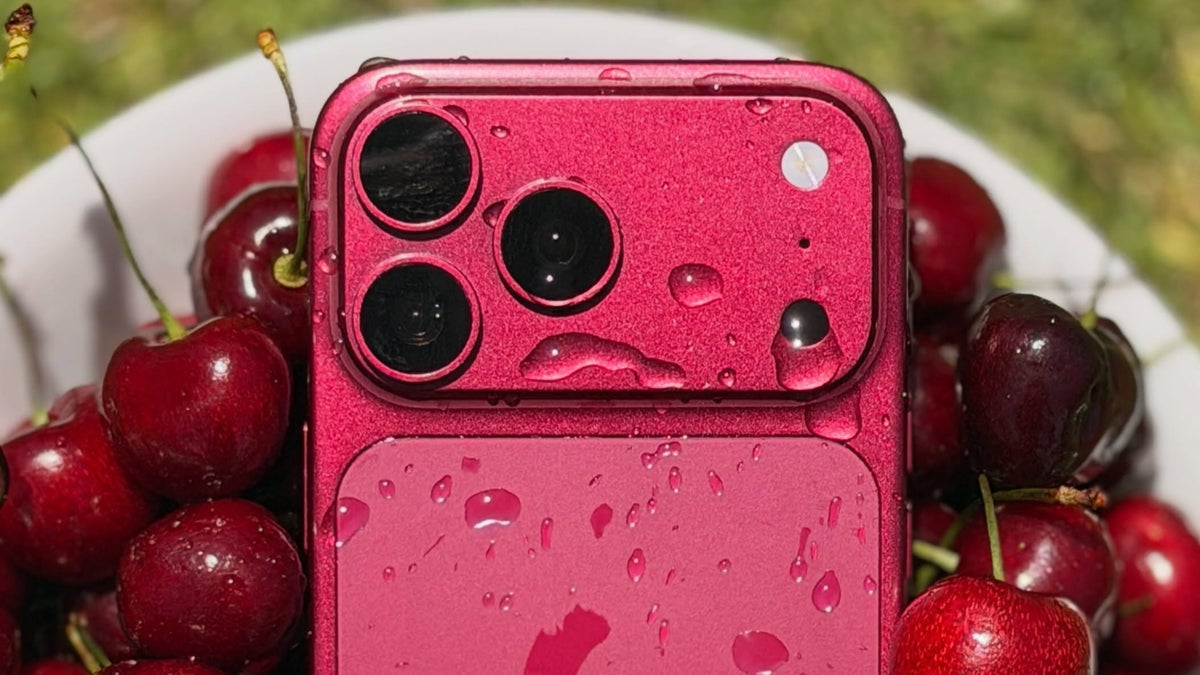
A New iPhone Arrives at an Interesting Moment
The arrival of the iPhone 18 Pro has given Britain’s smartphone market plenty to talk about this autumn. Apple launched the new Pro models in September, with the iPhone 18 Pro starting at £1,199 in the UK. While the price is higher than previous generations, Apple is positioning the phone as much more than a routine annual update.
The biggest talking point is the camera. For the first time, Apple’s main iPhone camera features a variable aperture, giving users greater control over how much light enters the lens and how much of a scene remains in focus. Alongside the new camera system, the phone introduces Apple’s A20 Pro chip, improved thermal management and longer battery life.
That combination matters in Britain, where smartphones are increasingly expected to serve as cameras, gaming devices, communication tools, work assistants and entertainment screens all at once.
The iPhone 18 Pro arrives at a time when consumers are also becoming more selective about expensive upgrades. A premium phone has to demonstrate meaningful improvements rather than simply offer a faster processor or a slightly different design.
Camera Technology Becomes the Main Attraction
Photography is arguably the strongest reason to pay attention to the iPhone 18 Pro.
Apple has introduced a 48MP Fusion Main camera with variable aperture. Instead of relying on a fixed aperture, the camera can adjust between different settings depending on the scene. It can open wider in darker environments and narrow the aperture when greater depth of field is useful.
For everyday British photography, that could prove surprisingly useful.
Consider a typical weekend in London. A user might photograph a bright street scene in the morning, take portraits inside a dim pub in the afternoon and capture an evening landscape beside the Thames. These situations demand different approaches to exposure and depth of field.
The iPhone 18 Pro attempts to handle those differences more intelligently.
The wider aperture can help bring more light into the camera in darker surroundings, while narrower settings can keep more elements in focus. Apple says the camera can open as wide as ƒ/1.48 and narrow to ƒ/4, giving users considerably more flexibility than earlier iPhone generations.
This is particularly interesting for people who have started treating their smartphones as serious photography equipment.
A More Creative Phone for Enthusiasts
Apple’s camera improvements are not only about automatic photography.
The new Pro Controls allow users to manually adjust settings such as aperture, shutter speed and white balance. A histogram is also available for users who want more information when controlling exposure.
That brings the iPhone closer to the experience of a traditional camera.
For British content creators, photographers and small businesses, this could be particularly attractive. A café owner could shoot promotional images without carrying a dedicated camera. A travel creator could record video while moving around the UK. A student could produce social-media content using a device already in their pocket.
Third-party camera applications are also beginning to take advantage of the variable-aperture hardware. Halide, for example, has introduced more detailed aperture control for the iPhone 18 Pro, allowing photographers to explore settings beyond Apple’s simplified presets.
That suggests the new camera may become more capable over time as developers discover new ways to use it.
Battery Life Matters More Than Ever
Camera improvements are impressive, but they can also increase the demands placed on a smartphone.
High-resolution photography, 4K video recording, gaming, navigation and AI-powered features can all consume significant energy. This makes battery performance a crucial part of the iPhone 18 Pro experience.
Apple says the new Pro models deliver a major improvement in battery life, supported by the efficiency of the A20 Pro chip and redesigned battery technology. The iPhone 18 Pro can provide up to 36 hours of video playback in eSIM-only configurations, while the Pro Max can reach up to 45 hours under Apple’s stated testing conditions.
For British commuters, that could be particularly useful.
A person travelling from Manchester to London, for example, may spend hours listening to music, watching video, checking messages and using maps. Someone commuting every day may also rely heavily on their phone for digital tickets, banking, navigation and work communication.
When a premium phone is expected to do all of this, dependable power becomes just as important as processing speed.
As phones age, battery condition also becomes a major part of the ownership experience. Consumers comparing repair options or keeping an older iPhone for several years may therefore pay closer attention to the quality and condition of an iPhone battery rather than judging a phone only by its processor and camera.
Faster Charging Adds Another Advantage
Battery capacity is only part of the story.
How quickly a phone can recover power can make an equally important difference. Apple says the iPhone 18 Pro can reach 50% charge in around 15 minutes with wired charging under its specified conditions.
That could change how users think about charging during a busy day.
Instead of leaving the phone connected for a long period, a short charging session before leaving home could provide enough power for several hours of normal use. For commuters, travellers and people working away from a desk, this convenience can be more valuable than simply having a larger battery.
It also reinforces a broader trend in the smartphone industry: consumers increasingly expect premium devices to combine performance with efficient power management.
The A20 Pro Makes the Upgrade More Than a Camera Story
The camera may be the most visible upgrade, but the processor is another important part of Apple’s strategy.
The iPhone 18 Pro uses the A20 Pro, which is designed to deliver higher sustained performance while improving thermal management. Apple has paired the chip with a redesigned vapour chamber intended to dissipate heat more effectively.
This matters because smartphones are doing increasingly demanding tasks.
Gaming is one obvious example. Modern mobile games can place heavy demands on CPU and GPU performance, particularly when users play for extended periods. Video editing and computational photography create another workload.
Artificial intelligence is also becoming a major source of processing demand.
The iPhone 18 Pro runs iOS 27 and introduces Apple’s latest AI-related capabilities, including Siri AI. Apple is emphasising a combination of on-device processing and Private Cloud Compute for tasks that require additional computing resources.
The result is a phone designed not simply to run today’s applications, but to handle increasingly sophisticated software over several years.
Is the Higher UK Price Justified?
The biggest question for British shoppers may be much simpler: is the iPhone 18 Pro worth £1,199?
That depends heavily on what phone a person currently owns.
Someone upgrading from an older iPhone could see a much more substantial improvement. Better cameras, a brighter display, improved performance, longer battery life and new AI capabilities can collectively make the new model feel significantly different.
The situation is less straightforward for owners of recent Pro models.
The iPhone 16 Pro, for example, remains a powerful device. Recent comparisons suggest that the iPhone 18 Pro offers meaningful improvements in battery life, performance and camera flexibility, but not every user will notice the same benefits.
For someone who mainly sends messages, browses the web and takes occasional photographs, keeping an existing Pro model for another year may make financial sense.
For photographers, gamers, creators and heavy users, however, the new hardware is easier to justify.
The British Photography Market Is Changing
One reason the iPhone 18 Pro is attracting attention is that smartphone photography continues to blur the boundary between phones and dedicated cameras.
British consumers have access to a huge range of mirrorless cameras and compact cameras, but carrying a separate camera is not always convenient. A smartphone offers immediate connectivity, editing, cloud backup and social-media sharing.
The iPhone 18 Pro pushes that idea further.
Its variable aperture gives users a feature traditionally associated with more advanced camera systems. Manual controls give enthusiasts greater creative freedom, while computational photography handles much of the complexity behind the scenes.
For many people, that combination may be more attractive than purchasing a separate camera simply for everyday photography.
Long-Term Ownership Becomes Part of the Conversation
The UK’s cost-of-living environment also makes long-term smartphone ownership increasingly important.
A £1,199 phone is a significant purchase, so buyers may expect it to remain useful for several years. That means software support, physical durability, battery health and performance consistency all matter.
The battery is especially important in this equation.
Even if the processor remains fast and the camera continues to perform well, declining battery capacity can eventually affect the everyday experience. For people intending to keep their phones for several years, understanding battery health and responsible charging habits can therefore be just as important as choosing storage capacity.
An ageing iPhone battery does not necessarily mean the phone itself has become obsolete. In many cases, battery maintenance or replacement can extend the useful life of a device and delay a costly upgrade.
That is an increasingly relevant consideration for environmentally conscious British consumers as well.
Privacy Adds Another Dimension
Apple is also trying to make privacy part of the iPhone 18 Pro story.
The company’s AI strategy places considerable emphasis on processing information on the device where possible, while Private Cloud Compute is used when additional processing power is required.
The issue is becoming increasingly important as more consumer devices become AI-enabled.
British consumers are already discussing privacy in relation to smartphones, smart glasses, home cameras and other connected products. Recent debate around camera-equipped smart glasses has highlighted concerns about people being recorded without their knowledge, with restrictions already affecting some environments in Britain.
Against that background, Apple’s emphasis on privacy may become an important selling point for consumers who want advanced AI features without completely abandoning control over personal information.
A More Serious Rivalry in the Premium Phone Market
The iPhone 18 Pro is not competing in isolation.
Samsung’s Galaxy S26 Ultra and Google’s latest Pixel Pro models are also targeting consumers who want advanced cameras, AI features and high-end performance. Recent camera comparisons have highlighted different philosophies: Apple’s iPhone 18 Pro tends to prioritise natural-looking images and consistency, while Samsung continues to emphasise zoom capability and a more stylised photographic look.
This competition is good news for British consumers.
Instead of choosing between a few broadly similar premium smartphones, shoppers now have several distinct approaches to photography, AI and design.
The result is a more interesting market in which software, cameras and battery efficiency are becoming just as important as screen size or processor specifications.
What the iPhone 18 Pro Says About the Future
The most interesting aspect of the iPhone 18 Pro may not be any single specification.
Its camera, processor, AI features, thermal system and battery technology show how smartphones are evolving into increasingly sophisticated all-purpose computers.
Photography is becoming more adjustable. AI is becoming more deeply integrated. Performance is becoming more sustained. Battery efficiency is becoming more important.
For British consumers, that means the definition of a premium smartphone is changing.
A flagship phone can no longer rely solely on a faster chip or a higher-resolution camera. It needs to provide a balanced experience that works throughout a long day, survives demanding workloads and remains useful for years.
The iPhone 18 Pro appears designed around exactly that idea.
A Compelling Upgrade, But Not for Everyone
The iPhone 18 Pro is an ambitious step forward for Apple’s traditional smartphone design. Its variable-aperture camera gives photography enthusiasts something genuinely new to explore, while the A20 Pro, improved cooling and stronger battery performance address some of the practical demands of modern smartphone users.
But the £1,199 starting price means British shoppers will naturally ask whether they really need the latest model.
For owners of older iPhones, the answer may be easier. For recent Pro users, the decision is more complicated.
Either way, the iPhone 18 Pro has succeeded in generating discussion because its improvements go beyond cosmetic changes. It represents Apple’s attempt to make the smartphone a more capable camera, AI assistant, entertainment device and creative tool without sacrificing everyday usability.
And as consumers become more conscious of how long their devices can realistically last, details such as battery health will continue to influence purchasing decisions. For many existing owners, taking care of an iPhone battery could be just as important as deciding when to buy Apple’s next flagship.