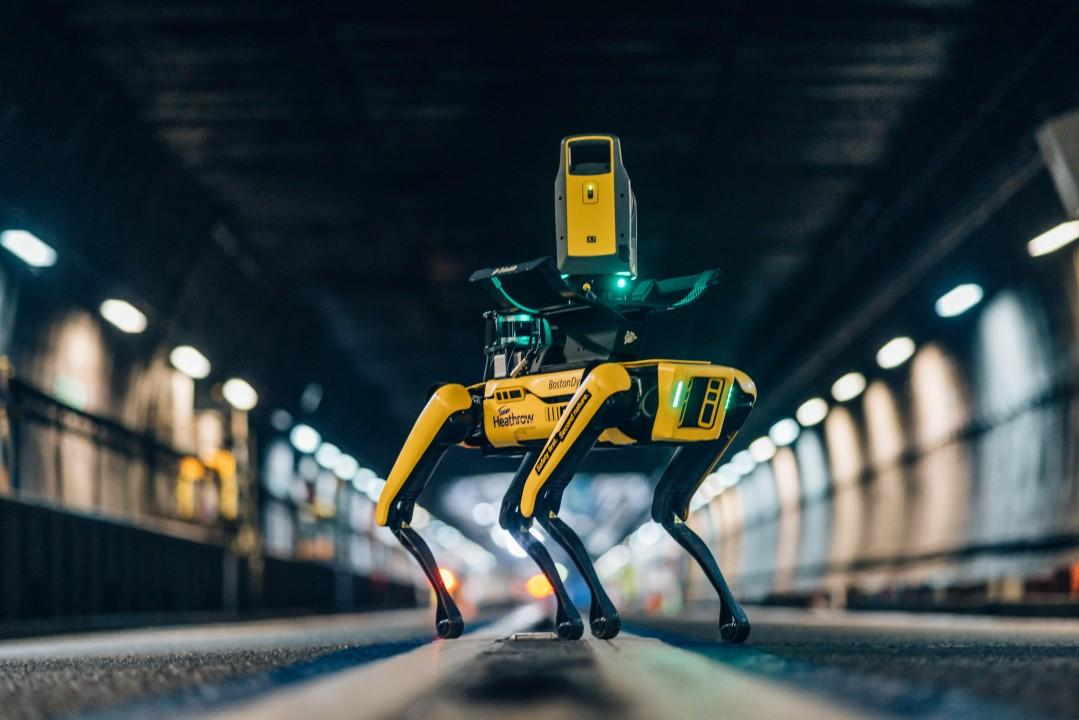
A Four-Legged Visitor Beneath London’s Busy Streets
London’s Underground is famous for its crowded platforms, historic stations and complicated network of tunnels. Every day, millions of passengers travel beneath the capital, rarely thinking about the enormous amount of engineering work required to keep trains running safely. However, a rather unusual visitor is now attracting attention beneath London’s streets: a robot dog equipped with advanced laser-scanning technology.
In November 2026, Transport for London (TfL) and technology company Createc began a trial involving Spot, a four-legged robot developed by Boston Dynamics. The machine has been fitted with specialised scanning equipment and is being tested on the Elizabeth line, including station platforms and railway tunnels. Its mission is to collect detailed information about railway structures and help engineers understand their condition.
The development sounds like something from a science-fiction film. Yet it raises a very practical question for Britain’s transport system: could robot dogs eventually become regular members of railway maintenance teams?
For passengers, the idea might seem entertaining. For railway engineers, however, it could represent an important change in how infrastructure is inspected, maintained and protected.
Why Are Railway Engineers Interested in Robot Dogs?
Railway maintenance is not simply about repairing broken equipment when something goes wrong. Engineers must regularly inspect tunnels, platforms, cables, structural surfaces and other essential infrastructure to identify potential problems before they become serious.
Traditional inspections can involve difficult working conditions. Some locations are narrow, poorly lit or challenging to access. Engineers may also need special safety arrangements when working close to operational railway infrastructure.
This is where four-legged robots could make a difference.
Unlike wheeled machines, a robot dog can move across uneven surfaces and navigate certain obstacles. Its compact design also makes it suitable for environments where larger inspection equipment might struggle.
Spot carries laser-scanning technology that measures surrounding surfaces and creates detailed digital maps. Engineers can use these records to understand the physical condition of railway structures and compare information collected during different inspections.
Rather than sending someone into every potentially hazardous location, railway operators could use a robot to gather initial information remotely.
That does not mean human inspectors are no longer necessary. Instead, the technology offers another way to collect information before engineers decide whether closer examination or maintenance is required.
What Can a Robot Dog Actually See Inside a Tunnel?
The most interesting part of this technology is not necessarily its appearance but the information it can collect.
Spot’s laser-scanning equipment can measure distances and capture the geometry of its surroundings. The resulting information can be processed into detailed digital representations of tunnels and other railway structures.
Imagine an engineer examining a tunnel wall after an inspection. Instead of relying entirely on handwritten notes or a limited collection of photographs, they could review a digital record containing measurements of the surrounding surfaces.
If another scan is completed weeks or months later, the two sets of information can be compared.
This could help engineers identify changes that deserve further investigation, such as possible structural movement or surface deterioration.
The robot does not independently decide that a tunnel is unsafe. Its purpose is to collect reliable information that trained professionals can interpret.
This distinction is important because railway infrastructure requires careful technical judgement. A small change in a structure does not automatically indicate a serious problem, and engineers must consider the wider condition of the asset before recommending repairs.
Nevertheless, better information could make inspections more efficient and help maintenance teams prioritise their work.
Could Robot Dogs Make London’s Railway Safer?
Safety is probably the strongest argument for introducing robots into railway inspections.
London’s transport infrastructure includes many environments where working conditions can be demanding. Tunnels, underground service areas and restricted maintenance spaces may expose workers to physical hazards.
A robot can enter selected locations first, collect images and measurements, and send the information back to a human operator.
This approach could reduce the need for staff to enter certain difficult spaces simply to carry out an initial visual inspection.
It may also help maintenance teams understand what equipment or protective measures they need before arranging a more detailed examination.
Britain has already explored similar ideas elsewhere in its railway infrastructure. Network Rail has worked with robotic technology to inspect difficult-to-access drainage structures beneath railway tracks. Its robot dog, known as Eric, has been used to capture photographs and videos inside railway culverts.
These structures can be particularly awkward to inspect because they are narrow and located underneath operational railway lines.
The experience suggests that robotic inspection is not merely an experimental idea designed to attract attention. It has practical applications in railway maintenance.
For London, the Elizabeth line trial offers another opportunity to investigate how advanced robots might support the people responsible for keeping the transport network operating.
The Technology Behind the Four-Legged Railway Inspector
A robot dog may look relatively simple from the outside, but its inspection capabilities depend on several different technologies working together.
First, mobility is essential. The robot needs to maintain its balance, navigate different surfaces and move through an environment without constantly requiring human intervention.
Second, sensors provide information about the surroundings. Cameras can capture visual details, while laser scanners measure distances and help create digital maps.
Third, communication systems allow engineers to monitor the robot and retrieve collected information.
Finally, the machine needs dependable electrical power.
This last requirement is particularly important because railway inspections may involve long working sessions, repeated movements and several different electronic systems operating simultaneously.
The equipment carried by the robot can also require its own power-management arrangements. Portable diagnostic instruments used by engineers face similar challenges. A handheld measurement device, electronic analyser or portable inspection instrument needs a dependable test equipment battery to operate correctly during fieldwork.
For railway maintenance teams, reliable power is not an insignificant detail. If a measurement instrument stops working halfway through an inspection, technicians may need to repeat part of the process.
As railway operators introduce more sophisticated inspection technology, power reliability will remain an important consideration alongside sensor accuracy and data quality.
Will Robot Dogs Replace Human Railway Workers?
The arrival of robotic inspectors naturally raises questions about employment.
Britain’s railway industry depends on a large workforce, including engineers, technicians, maintenance specialists and safety professionals. If robots can perform certain inspection tasks, could some traditional jobs eventually disappear?
The more realistic possibility is that the responsibilities of railway workers will change.
Robots are particularly useful for repetitive data collection and accessing locations that are difficult or inconvenient for people. However, they cannot automatically replace the experience and decision-making abilities of qualified engineers.
A machine can collect thousands of measurements, but someone still needs to determine what those measurements mean.
For example, an engineer may need to decide whether a particular change requires immediate attention, whether additional testing is necessary or whether the structure can remain in service.
Robotic systems also require people to operate, maintain, configure and troubleshoot them.
This could create demand for different skills, including robotics maintenance, sensor calibration, digital mapping and data analysis.
For younger people considering careers in engineering, the development might make railway technology more attractive. Instead of imagining railway maintenance as entirely traditional mechanical work, they could see opportunities involving robotics, software and advanced electronics.
The future railway workforce may therefore include people who understand both physical infrastructure and digital inspection systems.
The Hidden Challenge: Batteries and Reliable Electronic Equipment
While the robot dog’s movements attract attention, its supporting electronics are just as important.
Modern inspection systems rely on cameras, processors, sensors, communication modules and other electronic components. Each must receive a stable power supply if the machine is expected to collect useful information.
Battery performance can influence how long a robot operates, how frequently it needs charging and how effectively it completes an inspection.
The same principle applies to the instruments used by engineers on the ground.
Portable testing devices are often needed in locations where convenient mains power is unavailable. Their batteries must support dependable operation, particularly when technicians are working against limited maintenance windows.
A suitable test equipment battery can therefore be an important component in keeping portable measurement and diagnostic equipment available during railway inspections.
There are several considerations when selecting batteries for this type of equipment. Voltage compatibility, capacity, physical dimensions, charging requirements and operating temperature all matter.
A battery with a higher capacity is not automatically suitable for every instrument. The manufacturer’s electrical specifications must always be checked.
Maintenance teams also need to consider battery condition. Ageing cells, unexpected power loss or inconsistent charging can affect the reliability of electronic measurements and inspection procedures.
As railways adopt more digital tools, maintaining the power systems behind those tools will become increasingly important.
Could This Technology Spread Across the UK?
London is an interesting place to test robotic inspection technology because its railway infrastructure is extensive and operationally complex.
However, the potential applications are not limited to the capital.
Britain has railway tunnels, bridges, drainage structures and maintenance facilities across the country. Some are located in rural areas, while others are surrounded by densely populated communities.
Many structures also have long histories. Older railway infrastructure may require particularly careful monitoring because engineers need to understand how it changes over time.
Robots could help gather more consistent information from selected locations, allowing inspection teams to compare records and identify areas that deserve attention.
Other transport operators may also become interested if trials demonstrate practical benefits.
However, introducing robots across an entire network would involve more than purchasing machines. Operators would need to assess safety requirements, train staff, establish operating procedures and ensure that collected information can be integrated into existing maintenance systems.
The technology must also prove dependable in different environments, including wet conditions, dusty spaces and locations with limited communications coverage.
The Elizabeth line project is therefore an important opportunity to learn how the technology performs under real railway conditions.
What Could Go Wrong With Robotic Railway Inspections?
Despite their potential, robot dogs are not perfect.
One challenge is navigation. Railway tunnels can contain obstacles, uneven surfaces, equipment and environmental conditions that may affect a robot’s movement.
Another concern is data quality. Laser scanners and cameras must collect accurate information, and engineers need confidence that the results are suitable for technical assessments.
Connectivity can also be a problem. Underground environments may make communication more difficult, meaning robots need reliable ways to store information and transmit it when possible.
There is also the question of cost. Advanced robotic systems require investment, training, maintenance and technical support. Railway operators must determine whether these expenses are justified by improvements in safety, inspection quality or operational efficiency.
Cybersecurity deserves attention as well. Connected inspection equipment may generate and transmit large quantities of infrastructure data. Operators must protect these systems against unauthorised access and ensure that digital inspection records remain trustworthy.
Finally, robots should never become an excuse to reduce essential human oversight. Railway safety depends on professional judgement, established procedures and accountability.
The best outcome would be a system in which machines handle suitable inspection tasks while experienced engineers remain responsible for important decisions.
Could a Robot Dog Become a Familiar Face on London’s Railway?
For now, Spot’s appearance on the Elizabeth line is a trial rather than proof that robot dogs will become permanent railway employees.
Nevertheless, it offers an interesting glimpse into how Britain’s transport infrastructure could evolve.
Passengers might eventually become accustomed to seeing robotic inspection machines in railway stations, maintenance depots or restricted engineering areas. What currently looks unusual could become another part of everyday infrastructure management.
The biggest benefit may not be that robots can walk like animals. It is that they can bring advanced sensors into places where collecting reliable information has traditionally been difficult.
That could help railway teams identify problems earlier, plan maintenance more effectively and reduce the need for people to enter certain hazardous environments.
For the engineers responsible for Britain’s railways, the robot dog is not a replacement for professional expertise. It is another tool that could make their work safer and more informed.
As these systems develop, reliable electronic components will remain essential. From robotic sensors to handheld diagnostic instruments, dependable test equipment battery solutions will continue to support the equipment used throughout modern inspection work.
So, could Spot become the railway’s newest employee?
Perhaps not in the traditional sense. It will not collect a salary, enjoy a cup of tea during a break or complain about the early morning commute.
But if a four-legged machine can help engineers keep London’s tunnels safer and its trains moving, it may well deserve an honorary railway uniform.