Football Is About More Than What We See
For millions of football supporters across the United Kingdom, matchday is an experience filled with unforgettable moments. The roar of the crowd, the tension before a penalty, the excitement of a last-minute goal and the celebrations after a dramatic victory are all part of the magic of the beautiful game.
But what if someone cannot see the action unfolding on the pitch?
For blind and partially sighted supporters, following a football match can involve considerably more than simply listening to a commentator. Understanding where the ball is, which player has possession, how an attack is developing and whether a team is approaching the penalty area can be difficult when conventional broadcasting relies heavily on visual information.
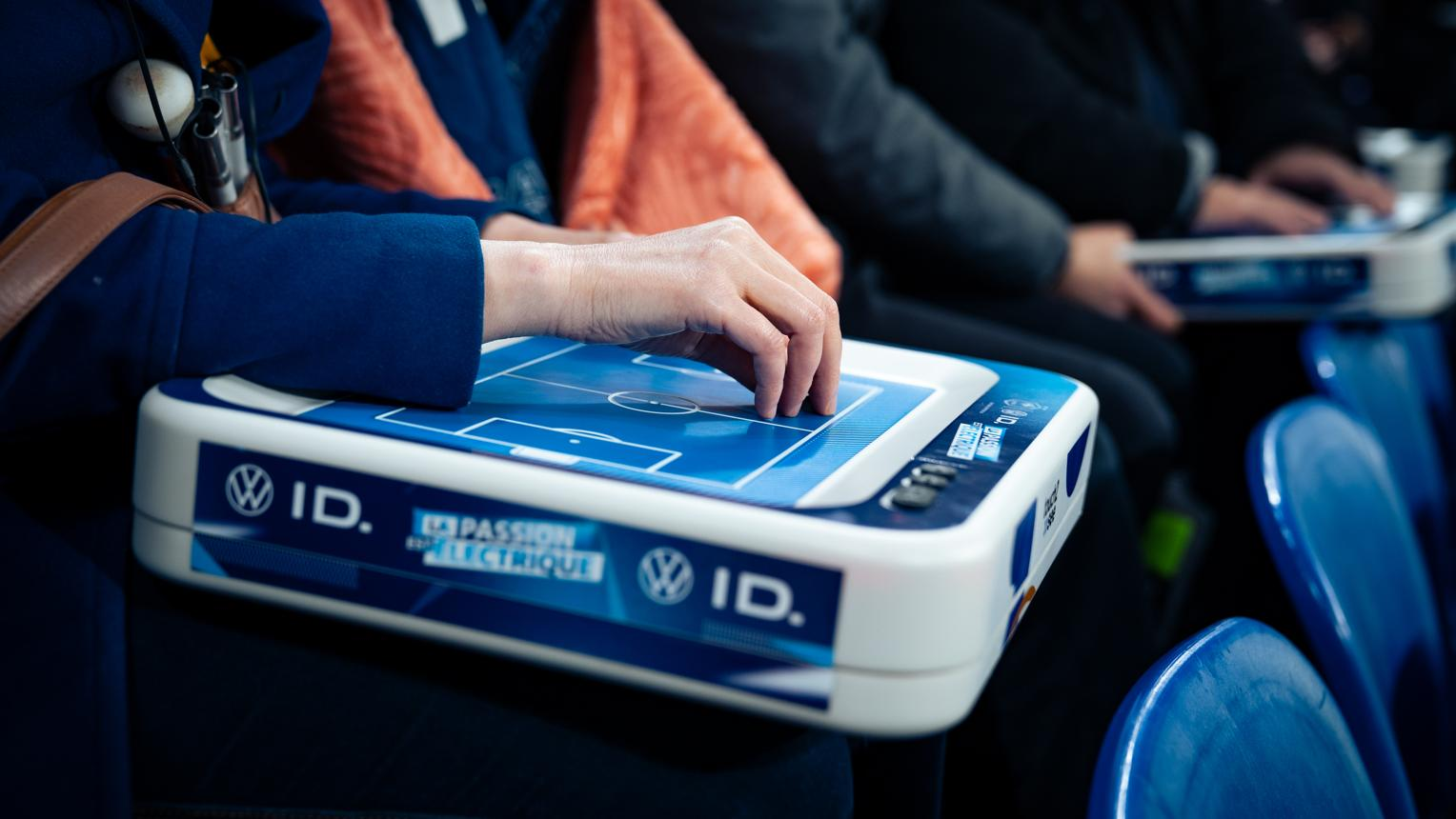
Now, an exciting area of technology could help change that experience. Haptic tablets, which translate movement and sporting events into physical sensations, offer a new way for visually impaired fans to follow live matches.
Instead of relying exclusively on spoken descriptions, supporters could use their fingertips to explore a miniature football pitch, follow the movement of the ball and feel vibrations representing important moments.
It sounds futuristic, but the technology is already moving beyond the experimental stage. With accessibility becoming an increasingly important subject in British football, could touch-based match experiences eventually become a familiar feature at stadiums across the country?
How Does a Haptic Football Tablet Work?
The basic idea behind a haptic sports tablet is surprisingly simple.
Imagine a small device resting on your lap. Its surface represents a football pitch, complete with raised markings that allow users to identify the touchlines, penalty areas, centre circle and goals.
A moving tactile marker represents the football. As players pass the ball across the real pitch, tracking technology sends information to the device, allowing the marker to reproduce the movement.
Users can follow the marker with their fingers and develop an understanding of how the match is progressing.
The experience can become even more interesting through vibration feedback. Different vibration patterns can communicate important events, including tackles, passes, corners and goals.
Some systems use specialised sensors, cameras and artificial intelligence to analyse what is happening on the pitch. The information is then transmitted to the handheld device, ideally with very little delay.
This combination of physical interaction and live data creates something quite different from traditional audio commentary.
Rather than simply being told that a striker is approaching the penalty area, a supporter may be able to follow the ball’s movement directly through touch.
For someone who cannot see the match, that additional information could make the entire experience more engaging.
Why This Technology Matters to British Football Fans
Football has a particularly important place in British culture. From Premier League stadiums to local football grounds, supporters build strong emotional connections with their clubs.
Following a team is often a lifelong commitment, shared between parents, children, friends and entire communities.
However, stadium experiences have not always been equally accessible to everyone.
Blind and partially sighted supporters may depend on companions to explain the action, or use audio commentary that does not always provide enough detail to recreate the movement of players and the ball.
This does not mean they cannot enjoy football. The atmosphere, crowd reactions and familiar sounds of a stadium are already valuable parts of the experience. Nevertheless, having more independent ways to follow the actual match could make a significant difference.
In the UK, Crystal Palace has already demonstrated how technology can improve access for visually impaired supporters.
The club introduced GiveVision headset technology at Selhurst Park, using a private 5G network to deliver enhanced live images to users with sight loss. The system allows supporters to adjust visual settings, including zoom and contrast, helping them follow the action more clearly.
The story of Crystal Palace supporter Neale Ormston, who returned to enjoying live football through this technology, demonstrates why accessibility innovations matter.
Haptic tablets could offer another approach. Instead of enhancing the images available to someone with limited sight, they provide a tactile representation of the game itself.
Both approaches highlight an important idea: technology should give supporters more ways to experience football, rather than expecting everyone to enjoy it in exactly the same way.
From the Football Pitch to the Fingertips
One of the most fascinating features of haptic technology is its ability to turn complex sporting information into something people can physically explore.
A football match involves dozens of players moving constantly across a large pitch. Tracking every movement through spoken descriptions alone can be challenging.
A tactile display can simplify that information.
For example, a supporter might feel the ball moving from the defensive half towards the centre circle. When possession changes, a different vibration pattern could provide an additional signal. As an attack develops, the movement of the tactile marker could help users understand the direction of play.
A goal could trigger a distinctive vibration, allowing supporters to recognise the moment even before the stadium erupts into celebration.
Some systems also combine touch with audio-described commentary. This is particularly useful because the two formats provide different kinds of information.
Audio can explain which players are involved, describe tactical decisions and communicate the atmosphere. The tactile interface can provide a more direct understanding of spatial movement.
Together, these technologies could create a richer picture of the match.
The potential is not limited to football, either. Similar systems can be adapted to basketball, tennis, rugby and other sports where tracking the movement of a ball or player is important.
Artificial Intelligence Could Make the Experience Even Better
Artificial intelligence could play an important role in the next generation of accessible sports technology.
Modern football produces enormous quantities of digital information. Cameras, tracking systems and other sensors can collect information about player positions, ball movement and match events.
AI systems could help process this information and identify the moments that matter most to supporters.
For example, a future haptic platform might recognise when a team begins a dangerous counterattack or when a player enters a particularly important area of the pitch.
Instead of communicating every movement with equal intensity, the system could prioritise meaningful events.
Personalisation could also become possible.
Some users may prefer more detailed information about passing movements and tactical positioning. Others might simply want to follow the ball and receive clear signals when a goal or major event occurs.
An intelligent application could allow users to choose their preferred level of detail.
There is also potential for improved voice interaction. Supporters might ask for a quick explanation of the current formation or request information about a particular player.
However, developers should avoid overwhelming users with constant notifications. The objective is to make football easier to follow, not to turn every moment into a complicated technical demonstration.
Why Tablets Need Reliable Battery Performance
Although the software and tactile technology attract most of the attention, the hardware supporting these devices is equally important.
A supporter attending a football match may spend several hours travelling to the stadium, waiting for kick-off and following the game. The device therefore needs enough power to operate throughout the entire experience.
A dependable tablet battery is essential for maintaining consistent performance during live sporting events.
If a device runs out of power during an important attack or shortly before a penalty, the user could lose access to an important part of the match.
Manufacturers must therefore consider several factors when designing accessible sports tablets.
First, battery capacity should be appropriate for the device’s screen, sensors, wireless connections and vibration motors. Haptic feedback can involve repeated physical activity inside the device, while continuous data connections may also consume energy.
Second, power management should be intelligent. A device could reduce unnecessary background activity when the user is following a match, preserving energy for essential functions.
Third, charging should be convenient. Stadium operators might eventually provide dedicated charging facilities or organised equipment collection points for supporters who borrow devices during matches.
These considerations are particularly important because accessibility equipment should be dependable. Users need to feel confident that the technology will work when they need it.
Could Stadiums Become More Inclusive Through Connected Technology?
The development of haptic tablets also raises an interesting question about the future of football stadiums.
Stadium accessibility is not just about providing equipment. It involves creating an environment where supporters with different needs can participate comfortably and independently.
Connected technology could help stadium operators provide a more personalised matchday experience.
For example, a venue might offer accessible devices through its customer service department, allowing supporters to reserve them before arriving.
Once inside the stadium, users could connect to a dedicated network that delivers live match information with minimal delay.
Staff could also provide demonstrations before kick-off, helping first-time users understand the controls and vibration patterns.
Mobile applications might eventually allow supporters to customise their devices, choose audio description settings and receive practical information about accessible entrances and facilities.
For British football clubs, these developments could become part of a wider investment in inclusive stadium experiences.
The technology would not need to replace existing services. Instead, it could complement audio commentary, accessible seating, staff assistance and other facilities.
This is particularly important because different supporters have different preferences. A combination of options is likely to be more useful than a single solution.
The Challenges That Developers Still Need to Solve
Despite its exciting possibilities, haptic sports technology faces several practical challenges.
The first is accuracy.
A tactile device must reproduce the movement of the ball reliably. If there is a significant delay between what happens on the pitch and what the user feels, following a fast-moving game could become confusing.
Developers need reliable tracking systems and efficient data transmission to minimise latency.
The second challenge is usability.
A device with too many vibration patterns or complicated controls could become difficult to understand, particularly for someone using it for the first time.
Designers should work closely with blind and partially sighted supporters throughout the development process. Their feedback is essential for creating interfaces that feel natural and intuitive.
Cost is another consideration.
Advanced sensors, specialised motors and wireless communication technology can increase manufacturing expenses. Football clubs will need to consider whether devices can be provided affordably and maintained over several seasons.
Finally, compatibility matters. A system designed for one sport or stadium may require adjustments before it can work elsewhere.
Developers must also consider software updates, equipment durability and data security.
Solving these problems will determine whether haptic devices remain interesting innovations or become widely adopted accessibility tools.
Beyond Football: A New Opportunity for Accessible Entertainment
The possibilities of tactile technology extend far beyond the football stadium.
Imagine a blind tennis fan following the movement of a ball across a digital court, or a basketball supporter feeling how possession changes between teams.
Similar interfaces could potentially help people explore maps, understand educational diagrams and interact with digital entertainment.
Museums might use tactile displays to explain complex visual exhibits. Schools could introduce interactive learning tools that allow students to explore geographical information through touch.
There may also be opportunities for gaming developers.
Video games traditionally rely heavily on visual displays, but more advanced haptic interfaces could create new ways to experience virtual environments.
For example, players might use tactile feedback to understand movement, direction or important events without depending entirely on a conventional screen.
The wider lesson is that accessibility technology does not necessarily need to be limited to specialist applications. Innovations developed to remove barriers for one group can sometimes create interesting experiences for many other people.
Could Haptic Tablets Become a Regular Feature of British Stadiums?
The future of accessible sports technology looks promising, but widespread adoption will depend on collaboration between technology companies, football clubs, broadcasters and supporters.
Some international developments already demonstrate what is possible. OneCourt, for example, has expanded its tactile sports technology into professional basketball and is now bringing its devices to selected NHL hockey events.
Meanwhile, British football has its own examples of innovation, including Crystal Palace’s visual enhancement technology and the growing discussion around more accessible matchday experiences.
These developments suggest that stadium entertainment could become more flexible and inclusive over time.
For manufacturers, improving the next generation of devices will involve more than simply adding new features. Lightweight construction, comfortable surfaces, responsive controls and a reliable tablet battery will all contribute to the experience.
A successful product should be easy to learn, comfortable to use and dependable throughout an entire event.
Football clubs will also need to make sure supporters know that these facilities exist. Even excellent technology cannot help people who are unaware that they can access it.
Partnerships with disability organisations and supporter groups could help bridge that gap.
Making Sure Nobody Misses the Magic of the Game
Football is an emotional experience. It is about anticipation, rivalry, friendship and the unforgettable moments that bring thousands of people together.
For blind and partially sighted supporters, the opportunity to follow the movement of the ball through touch could open another exciting way to participate in that experience.
Haptic tablets will not replace the atmosphere of a packed stadium, the sound of supporters singing or the excitement of a dramatic goal. Instead, they could add another layer of information that makes the game more accessible and engaging.
The next stage of development will depend on listening to the people who use these devices, improving their accuracy and making them available in more venues.
As artificial intelligence, wireless networks and tactile interfaces continue to develop, the possibilities will become even more interesting.
Perhaps one day, following a football match will no longer depend on having perfect eyesight or relying on someone else to explain every important moment.
A moving ball, a carefully designed vibration and the roar of the crowd could be enough to bring the beautiful game closer to everyone.
And that would be a technological achievement worth celebrating.