For years, the robot vacuum has been the friendly little machine that quietly travelled around British homes, collecting crumbs while everyone else got on with their day. But in 2026, that simple image is beginning to look outdated.
The latest generation of domestic robots is becoming more capable, more autonomous and increasingly connected to the wider smart home. Robot vacuums can now map rooms, recognise obstacles, mop floors, return to their docks, empty their own dustbins and adjust cleaning behaviour according to the environment. Some premium models are even exploring ways to deal with thresholds and other physical obstacles that once stopped them in their tracks.
For British households, this raises an entertaining but surprisingly serious question: what happens when a robot vacuum stops being just a vacuum?
From Cleaning Gadget to Household Robot
The first generation of robot vacuums had a fairly simple mission: move around, bump into things, collect dirt and eventually run out of power.
Today’s machines are considerably more sophisticated.
Modern models can create digital maps of a home and use sensors to recognise furniture, stairs and other obstacles. Many can divide a property into rooms, allowing users to send the robot directly to the kitchen after dinner or to the hallway after a rainy walk with the dog. Some models combine vacuuming and mopping, while premium docking stations can automatically empty dust, wash mop pads and refill water.
That matters in Britain because everyday homes are rarely perfect laboratories for robots.
A typical home might have carpets, wooden floors, rugs, narrow hallways, furniture legs, cables and the occasional pair of slippers sitting exactly where a robot does not want them. The ability to understand these surroundings is therefore becoming just as important as raw suction power.
Recent 2026 testing has highlighted how quickly this category is developing, with some models offering extremely high suction power, sophisticated mapping and increasingly autonomous maintenance.
Why British Homes Are Interesting for Robot Makers
The UK is an especially interesting market for domestic robotics because smart technology has already become part of everyday household life.
A 2025 Aviva study found that 79% of British adults owned at least one smart technology product in the home, while 15% said they planned to buy a robot vacuum in the following year.
That suggests the robot vacuum is no longer an exotic gadget reserved for technology enthusiasts.
For busy households, the attraction is obvious. Imagine returning home after a long commute and finding that the kitchen has already been vacuumed. Imagine a robot quietly cleaning pet hair while the family watches television. Or imagine scheduling cleaning around school runs, working hours and weekend plans without remembering to press a button.
This is where convenience becomes the real selling point.
The question is no longer simply whether a robot can clean a floor. It is whether the machine can fit naturally into the rhythm of a British household.
The Battery Is Still the Hidden Hero
There is one component that rarely gets the same attention as artificial intelligence, LiDAR or suction power: the battery.
A robot can have excellent navigation and impressive software, but none of those features matter if it cannot stay powered long enough to finish its job.
For this reason, the vacuum robot battery remains a critical part of the overall experience. A healthy battery allows a robot to clean larger areas, return to its charging dock when necessary and continue scheduled cleaning without constant intervention.
Battery performance also becomes increasingly important as robots become more ambitious. A machine that only vacuums for a short period has different energy requirements from one that vacuums, mops, navigates multiple rooms and performs additional automated functions.
This creates an interesting challenge for manufacturers: the smarter the robot becomes, the more important efficient power management becomes too.
The End of the “Robot That Gets Stuck”?
Anyone who has owned an early robot vacuum probably has a story.
The robot disappears under a sofa.
It becomes trapped against a chair.
It eats a charging cable.
Or it spends ten minutes repeatedly attempting to climb a rug.
These funny moments reveal one of the biggest challenges facing domestic robotics: the real world is messy.
AI and advanced sensors are helping modern robots understand their surroundings more effectively. Instead of simply detecting that something is in front of them, newer systems are increasingly designed to identify objects and decide how to respond.
That could mean avoiding cables, slowing down near delicate objects or choosing another route when a particular area is inaccessible.
At IFA 2026, AI, robotics and smarter homes are expected to be major themes, reflecting a broader shift from gadgets that simply respond to commands towards devices that can make more decisions independently.
The ultimate goal is simple: fewer moments when the owner has to rescue the robot.
Could One Robot Eventually Do Everything?
This is where things become much more interesting.
Today, consumers generally buy different smart devices for different jobs. A robot vacuum cleans the floor. A robot lawn mower cuts the grass. A security camera watches the front door. A smart speaker answers questions.
But the next generation of home robotics could move towards multifunctional machines.
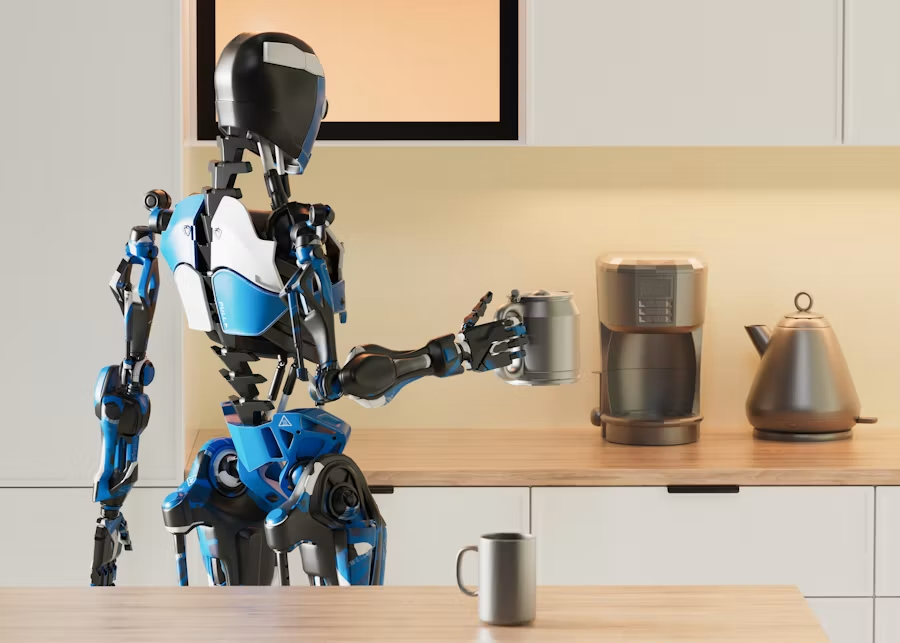
Imagine a domestic robot that knows when the kitchen floor needs cleaning, notices that the washing machine has finished, checks whether a door has been left open and reminds you that the shopping delivery has arrived.
The technology is moving in this direction, although truly general-purpose home robots are still a long way from becoming ordinary household appliances.
The idea of multifunctional domestic robots is already being discussed within the smart-home industry, where future systems could potentially combine cleaning, assistance and monitoring rather than relying on a separate robot for every task.
The robot vacuum could therefore become an important stepping stone towards something much bigger.
Stairs Could Be the Next Big Challenge
There is one obvious obstacle that has frustrated robot vacuums for years: stairs.
A robot that can move across a flat floor is useful. A robot that can independently move between floors would be considerably more useful.
New developments in the European market suggest manufacturers are beginning to think seriously about this problem. Dreame, for example, has demonstrated a stair-climbing concept designed to transport compatible robot vacuums between floors.
For British homes with multiple levels, this could be a major development.
Instead of buying one robot for each floor, homeowners could eventually have one intelligent cleaning system capable of managing the entire property.
That sounds futuristic, but the direction of travel is clear: robots are being designed to deal with more of the physical complexity of real homes.
Power Management Will Become More Important
Greater autonomy will inevitably create greater demands on power.
Sensors, cameras, processors, motors and communication systems all consume energy. Add vacuuming, mopping and automated docking functions, and battery management becomes a complicated engineering problem.
This is another reason the vacuum robot battery deserves more attention.
For consumers, battery health can influence cleaning coverage, charging frequency and long-term usability. For manufacturers, battery efficiency affects everything from product design to software algorithms.
A smart robot does not necessarily need the biggest possible battery. It needs to use its available energy intelligently.
That means future robot vacuums may become better at deciding when to increase suction, when to reduce power, when to return to the dock and when a particular cleaning task can wait.
In other words, intelligence could help the battery last longer without simply making the battery physically larger.
What About Pet Owners?
Britain’s love of pets creates another major test for household robots.
Dog and cat hair can quickly turn an ordinary cleaning task into a serious challenge. Hair can become trapped around brushes, while food bowls, toys and other pet accessories create obstacles.
This is one area where the next generation of robots has plenty of room to improve.
A genuinely intelligent domestic robot should be able to recognise a pet’s bowl, avoid disturbing it and identify areas where more cleaning is required. It should also be able to distinguish between harmless objects and things that could cause a problem.
That could make AI-powered navigation more valuable than simply increasing suction power.
For many British households, the best robot will not necessarily be the one with the highest headline specification. It may be the one that understands the home best.
The Price Question
Of course, smarter robots are not necessarily cheaper.
Self-emptying docks, advanced sensors, better navigation systems and stronger motors can push premium models into expensive territory. Recent UK-facing guides show a market ranging from relatively affordable robot vacuums to sophisticated machines with highly automated docking stations.
This creates an interesting split in the market.
Budget buyers may prefer a straightforward robot that handles everyday dust and crumbs. Meanwhile, technology enthusiasts may be willing to pay significantly more for a machine that can vacuum, mop, navigate complex rooms and manage much of its own maintenance.
As competition increases, however, features that once belonged exclusively to premium models could gradually become standard.
That is exactly what happened with smartphone cameras, fingerprint sensors and wireless connectivity. What once seemed futuristic eventually became normal.
The Robot Vacuum May Be Just the Beginning
The most fascinating thing about today’s robot vacuum boom is that the vacuum itself may not be the final product.
It could be the first widely accepted form of household robotics.
British consumers are already becoming comfortable with smart speakers, connected lights, security cameras, smart appliances and robot vacuums. As these systems become better connected, the home itself can begin to function as a coordinated digital environment.
The robot vacuum could then become more than a cleaner. It could become one of the mobile devices moving through that environment.
And that brings us back to the humble battery.
The vacuum robot battery may not be the headline feature that attracts shoppers, but it quietly determines how long a robot can work, how often it needs to recharge and how effectively it can complete its tasks.
The future of home robotics will not be decided by AI alone. It will depend on a combination of intelligence, sensors, motors, software, connectivity and dependable energy.
Welcome to the Next Generation of Home Robots
For years, the dream of a robot doing household chores sounded like science fiction.
Today, a small robot quietly cleaning a British living room is hardly surprising.
The surprising part is how quickly the technology is expanding beyond that simple task.
Tomorrow’s household robots may climb stairs, recognise objects, communicate with other smart devices and manage increasingly complex routines. They may still make mistakes, bump into furniture and occasionally get confused by a stray sock. But every generation is becoming more capable.
The era of the robot vacuum may therefore be coming to an end — not because people no longer want robot vacuums, but because the humble floor-cleaning machine is becoming something much bigger.
The next home robot will not simply ask, “Where should I vacuum?”
It may ask, “What else can I do for you?”