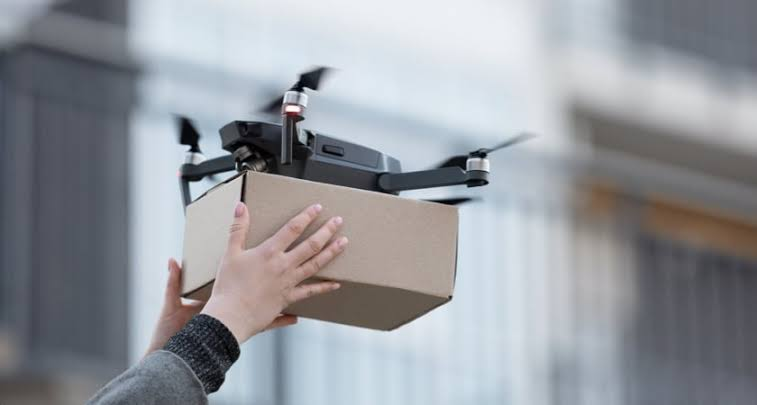
For years, autonomous technology in Britain seemed like something that belonged to science-fiction films. Delivery drones flew over futuristic cities, robots carried parcels along spotless pavements, and self-driving vehicles navigated busy streets without anyone touching the steering wheel.
In 2026, that picture is beginning to look much more familiar.
Across the UK, drones, autonomous delivery robots and self-driving vehicles are moving from controlled demonstrations into real-world trials and commercial services. Darlington has become a major location for drone delivery, while autonomous delivery robots have already been tested in Yorkshire. At the same time, London has taken a major step towards autonomous transport with the launch of its first commercial robotaxi service.
The technology is developing quickly, but the biggest question is no longer whether autonomous machines can work. It is whether Britain can build the infrastructure, regulations and public trust needed to make them part of everyday life.
The UK Is Entering a New Era of Autonomous Technology
Britain has long been known for its strong research base and technology sector, but autonomous systems are now becoming increasingly visible outside laboratories.
The UK’s drone industry is expanding across several areas, including logistics, emergency services, infrastructure inspection and advanced aviation. In May 2026, the UK government announced almost £50 million of support for drone and advanced air mobility technology, including measures designed to improve regulation and security.
That matters because regulation has often been one of the biggest barriers to large-scale drone deployment.
The Law Commission also published recommendations in May 2026 aimed at creating clearer rules for remotely piloted and autonomous uncrewed aircraft. Its recommendations are intended to provide a safer and more predictable legal framework for future drone operations.
For consumers, these developments could eventually mean faster deliveries, more efficient services and entirely new ways of using technology.
But there is another important factor: hardware.
An autonomous machine may have sophisticated cameras, sensors, processors and navigation software, but none of those systems can function without reliable energy. For drones in particular, battery performance can determine how far they can travel, how long they can remain airborne and how efficiently a delivery network can operate.
Darlington Shows What Drone Delivery Could Look Like
One of the most interesting examples of Britain’s autonomous future is taking shape in Darlington.
Amazon began operating its Prime Air drone delivery service in the UK from its Darlington fulfilment centre. The location represents the company’s first Prime Air operation outside the United States, and selected customers within a defined radius can receive eligible products by drone.
The idea is remarkably simple. Instead of sending a van several miles through traffic to deliver a small package, an autonomous aircraft can travel directly through the air.
For lightweight products, this could dramatically change the economics of last-mile delivery.
Imagine ordering an urgent household item in the afternoon and watching a small aircraft leave a nearby fulfilment centre. Rather than waiting for a traditional delivery vehicle to navigate traffic, the drone could potentially reach the destination in a fraction of the time.
Of course, this requires much more than an aircraft and a parcel.
The drone needs accurate navigation, obstacle detection, communications systems and sophisticated software. It also needs a dependable drone battery capable of supporting the aircraft throughout its flight while maintaining enough reserve energy for safety.
Battery technology therefore becomes a crucial part of the delivery equation.
Why Battery Performance Matters More Than It Seems
When people discuss drones, they often focus on cameras, artificial intelligence and autonomous navigation. Battery technology tends to receive less attention.
Yet the battery can be one of the most important components of the entire system.
A delivery drone has to carry its own weight, its cargo and all the hardware required for autonomous operation. Every additional gram affects energy consumption. Strong winds, cold temperatures and repeated take-offs can also influence flight performance.
This creates a difficult engineering balance.
A larger battery may provide more energy, but it also adds weight. A smaller battery can reduce weight but may limit flight range. Engineers therefore need to optimise energy density, weight, charging speed, thermal management and long-term reliability at the same time.
For commercial operators, consistency is just as important as maximum capacity.
A drone that performs extremely well on a calm summer afternoon but loses significant range in cold or windy weather would be difficult to integrate into a dependable delivery network. The UK presents its own challenges, from unpredictable weather to densely populated urban areas.
As drone services expand, the drone battery is likely to become an increasingly important part of discussions about range, safety and operating costs.
Delivery Robots Are Bringing Autonomy Down to Street Level
Drones are not the only autonomous machines appearing in Britain.
On the ground, delivery robots are also being tested as a potential solution for last-mile logistics.
Evri has experimented with autonomous delivery robots in Barnsley, where residents were able to receive parcels through a monitored robotic delivery service. The trial explored whether small electric robots could provide consumers with additional delivery options while supporting the company’s wider sustainability goals.
This is particularly interesting because delivery robots solve a different problem from drones.
A drone can travel quickly through the air, but it has to operate within aviation and safety constraints. A pavement robot moves much more slowly, but it can interact directly with the local environment and potentially deliver parcels to homes without requiring a traditional van.
The concept could be especially useful in compact urban neighbourhoods, university campuses, business parks and residential developments.
However, the technology also raises difficult questions.
What happens when a robot encounters a wheelchair user? How should it behave around children? Can it safely navigate narrow pavements? Who is responsible if it blocks a footpath or causes an accident?
These are not simply technical questions. They are social and regulatory questions.
Britain Is Already Thinking About Robot Rules
The UK’s government is actively considering how autonomous delivery robots should operate in public spaces.
In July 2026, the UK Parliament addressed questions surrounding autonomous delivery robots and personal delivery devices. The government said it intended to trial pavement robots and examine their effects on pedestrians, particularly vulnerable road users, before permanent regulations are introduced.
That cautious approach reflects a broader British pattern.
The UK wants to encourage innovation, but it also wants new technologies to fit into existing public spaces without creating unnecessary risks.
This could become one of the defining challenges of the autonomous technology boom.
A machine can be technically capable of navigating a pavement, but that does not automatically mean people will accept it there.
Public trust may ultimately prove just as important as artificial intelligence.
London Is Becoming a Testing Ground for Autonomous Transport
The growth of autonomous technology is not limited to drones and delivery robots.
London has now entered the robotaxi era.
In September 2026, Uber and British AI company Wayve launched London’s first commercial self-driving taxi service. The initial fleet is small, and human safety drivers remain involved, but the launch represents a major milestone for autonomous transportation in Britain.
The significance goes beyond taxis.
London is one of Europe’s most complicated driving environments, with dense traffic, cyclists, pedestrians, narrow roads and constantly changing conditions. If autonomous technology can demonstrate reliable performance there, the lessons could be valuable for other cities.
Wayve’s technology also highlights a broader change in the autonomous industry. Modern systems increasingly rely on artificial intelligence to interpret their surroundings rather than depending entirely on highly detailed pre-programmed maps.
The same philosophy is appearing across autonomous machines.
Drones need to understand their surroundings. Delivery robots need to identify obstacles. Vehicles need to anticipate other road users.
In each case, artificial intelligence is becoming a bridge between raw sensor data and real-world decisions.
Drones Could Transform More Than Parcel Delivery
It would be easy to associate British drone development only with online shopping.
The potential market is much larger.
Drones can be used for infrastructure inspections, agricultural monitoring, environmental surveys, emergency response and industrial operations. They can reach areas that may be difficult, dangerous or expensive for humans to access.
For example, inspecting a tall structure traditionally requires specialised equipment and trained workers. An autonomous drone equipped with cameras and sensors could potentially collect visual data much more efficiently.
Emergency services could also benefit.
A drone could provide an aerial view of an incident before emergency personnel arrive. In remote locations, unmanned aircraft could potentially transport small but important supplies.
The value of these applications comes from combining autonomy with mobility.
A stationary robot can perform useful tasks, but a drone can travel across obstacles, roads and terrain without needing physical infrastructure.
That flexibility is one reason governments and technology companies are paying increasing attention to autonomous aircraft.
The Energy Challenge Will Grow With Autonomy
As drones become more intelligent, their energy requirements may also increase.
Modern autonomous aircraft can carry cameras, navigation systems, communication equipment, processors and other sensors. Each system consumes energy.
At the same time, customers expect drones to travel farther and carry more useful payloads.
That creates a technological race.
Battery manufacturers need to improve energy density without creating excessive weight. Charging systems need to become faster. Battery management systems need to monitor temperature, voltage and remaining capacity accurately.
For operators, another consideration is the number of flight cycles.
A commercial drone may fly repeatedly every day. A battery that loses performance rapidly after repeated charging could increase maintenance costs and reduce fleet availability.
This means choosing a suitable drone battery is not simply about selecting the highest capacity available. Reliability, compatibility, thermal performance, charging behaviour and expected service life can all influence the economics of autonomous operations.
Could Autonomous Delivery Reduce Road Traffic?
One of the most attractive arguments for autonomous delivery is efficiency.
Britain’s cities face persistent congestion. Delivery vehicles make thousands of journeys every day, often carrying relatively small parcels.
If some deliveries could be completed by drones or small autonomous robots, companies might reduce the number of traditional vehicle journeys required for certain types of orders.
The environmental impact, however, is more complicated.
An electric delivery robot may consume relatively little energy, but its production still requires materials and manufacturing resources. Drones also consume energy during flight, and their environmental benefits depend on how they are powered and how efficiently they are integrated into logistics networks.
The greatest advantage may therefore come from smarter logistics rather than replacing every delivery van.
A future system could combine several technologies.
Large vans could transport groups of parcels to local hubs. Autonomous robots could handle short neighbourhood deliveries. Drones could cover selected routes where aerial transport makes sense.
Instead of one technology replacing another, Britain could develop a layered delivery network.
The Human Element Still Matters
Autonomous technology is often described as a way to remove people from the process.
In reality, the next stage of automation may create a different relationship between humans and machines.
Robotaxi services currently use safety drivers. Drone operations require monitoring and technical support. Delivery robots need maintenance and fleet management. Engineers are required to design, test and improve autonomous systems.
Even as machines become more capable, people remain responsible for setting goals, monitoring performance and dealing with unusual situations.
This could create new jobs as well as disrupt existing ones.
Britain’s challenge will be ensuring that workers have opportunities to develop the skills needed for an increasingly automated economy.
The country’s investment in autonomous systems suggests that this transition is already becoming a strategic priority. The government announced more than £5 billion in funding for drones and autonomous systems across the armed forces over four years, including investment in a new Uncrewed Systems Centre in Swindon.
Although defence applications differ greatly from consumer delivery, the underlying technologies often overlap.
Navigation, sensors, communications, batteries, artificial intelligence and autonomous decision-making are relevant across multiple industries.
What Will the British Sky Look Like Next?
The most exciting part of Britain’s autonomous technology story is that nobody knows exactly how quickly adoption will happen.
Drones may become a familiar sight above selected communities. Delivery robots could gradually become common on pavements. Robotaxis could expand beyond London’s early services.
But there will also be limits.
Weather can disrupt drone operations. Batteries have physical limitations. Regulations can slow deployment. Public acceptance cannot be guaranteed. Cybersecurity and privacy will remain important concerns.
The technology therefore needs to develop alongside society.
The UK government’s investment in drone infrastructure and regulation suggests that policymakers increasingly see autonomous systems as part of Britain’s future rather than simply an experimental technology. At the same time, recent commercial trials show that the transition is already moving from theory to reality.
The Autonomous Future Is Already Taking Shape
Britain’s autonomous technology revolution will probably not arrive as one dramatic moment.
Instead, it will happen gradually.
A drone delivery here. A pavement robot there. A self-driving taxi in London. An automated warehouse in the Midlands. A new AI system helping emergency services or infrastructure operators.
Each development may seem small on its own. Together, however, they represent a fundamental change in how goods, people and information move around the country.
For consumers, the most visible changes may be faster deliveries and smarter transport. For businesses, autonomy could create new efficiencies and entirely new services. For engineers, it will create demanding challenges in artificial intelligence, robotics, communications and energy storage.
And behind many of those developments will be technologies that consumers rarely see.
Among them, the humble battery could prove surprisingly important.
As autonomous machines become smaller, smarter and more capable, every gram of weight and every minute of operating time matters. Better energy storage could therefore help determine how far Britain’s drone economy can go.
The future of autonomous technology may be flying above our heads, travelling along our pavements and moving through London’s streets.
And in the UK, that future is no longer just a futuristic idea. It is already beginning to operate in the real world.