Ring’s Next Chapter in the UK Smart Home Market
Smart doorbells have gradually moved from being a niche gadget for tech enthusiasts to becoming a familiar part of everyday life in Britain. Now Amazon-owned Ring is preparing to take that idea further with the expansion of its Neighbours community feature in the UK.
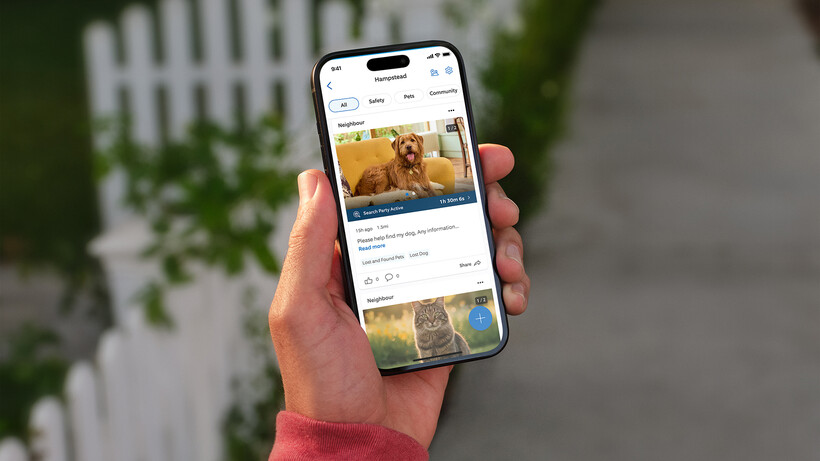
The service is scheduled to become available in the UK through the Ring app from October 2026. Unlike a conventional social network, Neighbours is designed around local safety updates, community information, lost pets and events happening close to home. Importantly, users do not need to own a Ring device to participate.
That distinction could make the British launch more significant than a simple software update. It positions Ring not only as a smart doorbell brand but also as a potential platform for neighbourhood communication.
For British households already using connected security devices, the development raises an interesting question: how far should a smart doorbell evolve beyond the front door?
From Doorbell Camera to Community Platform
The traditional smart doorbell has a relatively straightforward purpose. It detects movement, records activity and allows homeowners to see who is approaching their property.
Modern Ring products, however, are becoming considerably more sophisticated. In 2026, the company expanded its range with battery-powered 2K and 4K video doorbells, bringing higher-resolution video to installations that do not require a wired power connection. Amazon says its latest Battery Video Doorbell Pro can provide 4K video and enhanced zoom capabilities.
The arrival of Neighbours adds another layer.
Instead of viewing security as something that happens entirely within one household, the platform is designed to encourage residents to exchange information about their local area. Users can customise their neighbourhood radius and receive updates that are relevant to their surroundings.
This could be particularly useful in Britain’s densely populated towns and cities, where neighbours may live only a few metres apart but rarely communicate directly.
A lost dog, an unusual incident, a suspicious package or a local safety warning can become a community conversation rather than an isolated event.
Why the UK Launch Matters
The British launch comes at a time when smart-home technology is becoming increasingly connected.
Consumers are no longer buying individual gadgets simply because they are convenient. Doorbells, cameras, speakers, phones, watches and home-security sensors increasingly operate as parts of larger ecosystems.
Ring’s UK strategy reflects that transition.
The company has already promoted community-focused initiatives in Britain, including its NeighbourGood Café Tour with Crimestoppers, which aims to combine smart-home technology with local community engagement.
Neighbours takes the idea online.
The service can be accessed through the Ring app, and Ring says users can customise notifications and manage the locations associated with their Neighbours experience. The company also provides tools for lost-pet posts and local updates.
That makes the app potentially useful even for people who have never purchased a Ring doorbell.
Privacy Becomes Part of the Conversation
The expansion is also arriving alongside a wider debate about privacy.
Smart cameras are different from many other consumer electronics because they can capture people who are not the owners of the devices. A person walking past a house does not necessarily know that a camera is recording nearby.
This becomes more complicated as software becomes capable of analysing video rather than simply storing it.
Ring has introduced AI-powered features that can provide descriptions of events captured by cameras. Its wider ecosystem has also attracted attention because of features involving familiar faces and AI-assisted searches.
The central issue is therefore not simply whether a camera records video. It is increasingly about what happens after the video has been recorded.
Who can access it? How long is it retained? What information can software extract from it? And what control do people have over footage containing people who happen to pass by?
These questions are likely to remain part of the British discussion as connected security technology becomes more sophisticated.
The Importance of Battery-Powered Security
There is another part of this technology story that can easily be overlooked: power.
The growth of battery-powered doorbells has made smart security considerably easier to install. Homeowners do not necessarily need to run new wiring through walls or hire an electrician simply to place a camera beside a front door.
That flexibility is particularly attractive for renters, older properties and homes where the ideal camera position is far from an existing electrical connection.
However, a wireless security device depends heavily on its battery.
A doorbell that is disconnected because its battery is empty cannot provide notifications when somebody approaches. For users who rely heavily on continuous security alerts, battery management therefore becomes part of the overall smart-home experience.
This is why products such as a ring doorbell battery can be more important than they initially appear. The quality of a smart security system is not determined only by its camera resolution or software features; dependable power is equally fundamental.
Higher Resolution Means Higher Expectations
Ring’s move toward 2K and 4K video is another important development.
Higher-resolution footage can make it easier to identify details around a front door, such as parcels, clothing, vehicles or activity at a greater distance. Ring’s latest battery-powered models are designed to combine higher-resolution video with flexible installation.
But higher-quality video can also change consumer expectations.
Once homeowners become accustomed to clearer footage, they may expect their cameras to remain available whenever they need them. This places additional emphasis on energy management.
A modern smart doorbell has to balance several demands simultaneously: video quality, motion detection, wireless connectivity, notifications and standby time.
For households considering a replacement ring doorbell battery, understanding that balance is increasingly important. A security camera may be technologically advanced, but it still needs sufficient energy to support the features people depend on every day.
Lost Pets Become a New Use Case
One of the more distinctive aspects of Ring’s community strategy is its focus on lost pets.
Neighbours allows community members to share information about missing animals, while Ring’s Search Party concept has been designed to help locate lost dogs using participating cameras.
The technology has attracted attention because it demonstrates how a network of consumer cameras can potentially be used for purposes beyond conventional home security. Ring says the system can notify participating camera owners when a possible match is detected, while the camera owner can decide whether to share footage.
For British pet owners, that could be an appealing example of technology solving a very ordinary problem.
A missing dog does not necessarily stay within one street. It may travel through several neighbourhoods in a short period of time. A community-based system therefore has an obvious practical advantage over relying on a single household’s camera.
At the same time, the wider concept demonstrates why privacy remains such an important part of the conversation.
What British Consumers May Expect Next
The UK launch could encourage consumers to think differently about what they want from home-security technology.
A few years ago, a smart doorbell was primarily a way to answer the front door remotely. Today, consumers can expect higher-resolution video, intelligent notifications, app-based communication and increasingly sophisticated software.
The next stage could involve even deeper integration between security cameras, smartphones, smart speakers and other connected-home products.
Imagine receiving a notification about a delivery, viewing the camera feed on a phone, communicating with a visitor remotely and then receiving a community alert about an incident nearby. These functions already exist in different forms, but their integration could make the smart home feel much more like a single connected system.
The challenge will be ensuring that convenience does not come at the expense of transparency.
Battery Life Still Matters
For all the attention surrounding AI and community features, one basic issue remains unchanged: hardware needs power.
A battery-powered doorbell is expected to operate through changing weather, repeated motion events, wireless communication and regular video recording. Heavy activity can affect how frequently the device needs to be recharged.
This makes battery condition a practical part of smart-home ownership.
When choosing a ring doorbell battery, consumers may therefore want to consider compatibility, capacity, expected usage and how frequently the doorbell is triggered. A household near a busy pavement may experience significantly more motion events than a property located on a quiet private road.
The difference may seem small on paper, but over months of daily use it can become noticeable.
A New Kind of Neighbourhood Technology
Ring’s UK expansion represents something broader than the arrival of another feature in a smartphone app.
It reflects a shift in the smart-home industry from isolated devices towards connected neighbourhood ecosystems.
The idea is attractive because many everyday problems are inherently local. Missing pets, suspicious activity, lost parcels and community warnings all depend on information being available at the right place and at the right time.
But the same connectivity that makes these services useful also creates new questions about data, consent and personal privacy.
Britain’s response to Neighbours will therefore be interesting not simply because Ring is launching a new service, but because the country is becoming a testing ground for how smart-home technology interacts with real communities.
The Future of the Smart Front Door
The front door is becoming one of the most technologically advanced areas of the modern home.
A device that once functioned as a simple doorbell can now combine cameras, wireless connectivity, intelligent detection, cloud services and community communication.
Ring’s upcoming UK Neighbours launch pushes that transformation another step forward. The service is expected to be available through the Ring app from October, and Ring says people can use Neighbours even if they do not own a Ring device.
For consumers, the next generation of smart security will therefore involve more than asking whether a doorbell has a good camera.
Questions about privacy, connectivity, software, community participation and battery performance will all become increasingly relevant.
And despite all the sophisticated technology surrounding the modern smart doorbell, one principle remains remarkably simple: if the device is expected to protect the front door every day, it needs reliable power.
That makes the humble ring doorbell battery an essential part of the increasingly connected British smart home.