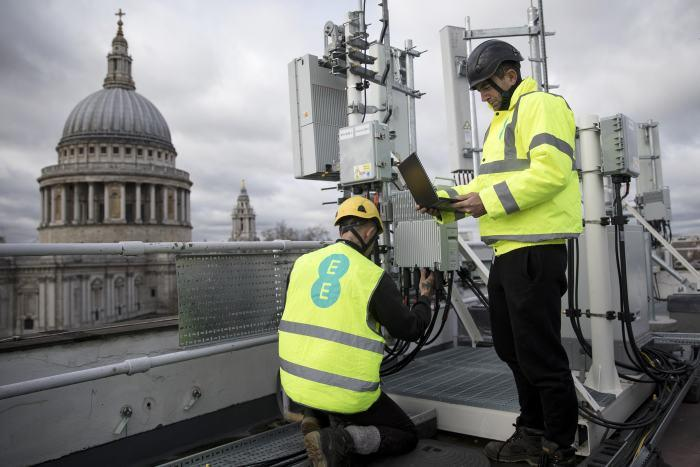
A Connectivity Challenge Facing One of the World’s Busiest Cities
London is one of the world’s leading digital cities, yet reliable mobile connectivity remains an everyday frustration for some residents, commuters and visitors. From busy shopping streets to crowded railway stations, the ability to make a call, send a message or load a website depends on more than simply owning a modern phone. The quality of the surrounding mobile network can make a significant difference.
On 15 October 2026, the Mayor of London announced further measures to improve mobile connectivity across the capital. The initiative includes a new evidence report, an interactive connectivity map and a framework of practical actions that boroughs can take to support network improvements. The findings highlight differences in signal strength and performance between neighbourhoods, giving authorities and network providers a clearer picture of where further investment may be needed.
For Londoners, this development is about much more than faster downloads. Reliable connectivity affects commuting, remote working, digital payments, navigation and access to essential services. It can also influence how people use their phones throughout the day, including how quickly their devices consume energy.
As smartphones become increasingly central to modern life, the relationship between network performance and everyday device efficiency deserves greater attention. Better connectivity could make digital services more dependable while helping users understand why their phones sometimes struggle to last through a demanding day.
Why London’s Mobile Coverage Still Matters
London’s dense urban landscape presents a complicated challenge for mobile operators. Tall buildings, underground transport infrastructure, changing property developments and heavily populated commercial districts can all affect how wireless networks perform.
A coverage map may suggest that a location receives a mobile signal, but that does not necessarily mean the connection will be fast or reliable when someone needs it. Network performance depends on several factors, including signal strength, available capacity, latency and the number of people using the network at the same time.
The latest London connectivity initiative aims to provide a more detailed understanding of these differences. Its assessment considers download speeds, upload speeds, signal strength and latency rather than relying exclusively on predicted coverage.
Areas including Camden, Islington, Hackney and Tower Hamlets were identified as places where signal strength can be weaker than in some other parts of the capital. These differences matter to people who depend on their phones for work, travel arrangements and communication.
For example, a commuter trying to access an electronic train ticket may encounter delays when a network is congested. A delivery worker might struggle to upload proof of delivery, while a small business owner could experience difficulties processing an online transaction.
Such problems do not necessarily mean that a phone is faulty. The issue may lie with the surrounding network, the building itself or the demands placed on local infrastructure. Understanding that distinction is an important step towards improving the overall mobile experience.
How Weak Signals Can Affect Phone Battery Life
Mobile connectivity and energy consumption are closely connected. A smartphone continually communicates with nearby network equipment, managing its connection as the user moves between locations or switches between different types of service.
When reception is poor, the device may need to work harder to maintain communication. Depending on the network conditions and handset design, it may increase transmission power, search for a more suitable connection or repeatedly attempt to complete data transfers.
These activities can consume additional energy. The effect varies considerably, however, and weak reception does not automatically mean that every phone will experience a dramatic reduction in battery life.
For Londoners travelling through areas with inconsistent coverage, the difference may become noticeable over a long day. Someone who regularly uses navigation, video calls, messaging applications and mobile data may already place considerable demands on their device. Difficult network conditions can add another source of energy consumption.
A modern smartphone battery must support a wide range of activities, from processing demanding applications to maintaining wireless connections in the background. Its performance therefore depends not only on its rated capacity but also on the way the phone is used and the conditions in which it operates.
This is particularly relevant for commuters who leave home early and return late. A phone that comfortably lasts through a normal working day under strong coverage may behave differently during a journey involving repeated network changes, congested stations and areas with limited reception.
Nevertheless, battery age, screen brightness, temperature, application activity and mobile network settings can also influence endurance. Signal strength is one part of a much broader picture.
London’s Underground Shows What Better Connectivity Can Achieve
The London Underground provides an important example of how infrastructure improvements can change the mobile experience.
For years, passengers travelling through tunnels and underground stations often faced interruptions to their mobile connections. The expansion of 4G and 5G coverage has been designed to reduce these gaps, allowing people to access online services while travelling below ground.
Transport for London and Boldyn Networks have been working on the rollout, with coverage extending across additional stations and tunnel sections. The wider programme aims to deliver mobile connectivity throughout the Underground network by the end of 2026.
The project is technically challenging. Installing equipment in tunnels requires careful planning, strict safety procedures and work during limited overnight maintenance windows. Network infrastructure must also accommodate the physical constraints of a transport system that has operated for more than a century.
For passengers, improved connectivity can make journeys more productive. People can check journey updates, respond to messages, read digital newspapers or prepare for meetings without waiting until they reach street level.
There may also be benefits for people who rely on online tickets, mobile banking and cloud-based work applications. More dependable access can reduce interruptions and make everyday digital services easier to use.
Better underground coverage does not guarantee longer battery life in every situation. Nevertheless, a stable connection may reduce some of the repeated searching and reconnection activity that can occur in difficult reception conditions. The actual energy benefit depends on the device, network and circumstances.
The Role of 4G and 5G in Everyday Energy Efficiency
The expansion of 5G has created new opportunities for mobile services, but its effect on energy consumption is not straightforward.
A modern network can deliver data efficiently under suitable conditions, potentially allowing certain tasks to finish more quickly. However, 5G performance depends on the frequency bands available, network deployment, signal quality and the phone’s implementation of its wireless hardware.
In some circumstances, a weak 5G connection or repeated switching between network modes can consume more energy than expected. In other situations, 5G may provide an efficient connection that allows data-intensive activities to complete quickly.
This is why the quality of coverage matters alongside the generation of network technology. A 5G symbol on a phone’s display does not necessarily guarantee the best experience at every location.
For consumers, practical choices can make a difference. Where a phone offers suitable network settings, users may choose an automatic connection mode that balances availability and performance. If reception is consistently poor in a particular building, connecting to trusted Wi-Fi may help reduce reliance on mobile data.
People should also remember that Wi-Fi is not always the lower-energy option in every circumstance. Its effectiveness depends on the quality of the local wireless connection and how the device is being used.
The most useful approach is to consider actual performance rather than assuming that a newer network standard will always provide better efficiency.
What London’s New Connectivity Map Means for Residents
One of the most useful aspects of the Mayor’s initiative is its focus on real-world performance. Traditional coverage information can provide a starting point, but residents often want to know what happens at a particular street, station or workplace.
The new interactive map allows users to explore mobile performance across London and compare conditions at different locations. This information can help identify areas where signal strength, download speeds or responsiveness may be falling short of expectations.
For consumers, the map offers a practical way to investigate persistent connectivity problems. Someone experiencing repeated interruptions in north London, for example, may be able to compare local conditions with those in neighbouring areas.
Businesses can also benefit from a better understanding of connectivity. Retailers increasingly depend on cloud-based point-of-sale systems, delivery services use mobile applications to coordinate drivers, and professionals rely on video calls and online collaboration tools.
However, a public connectivity map cannot diagnose every individual problem. Reception inside a particular building may differ from outdoor performance because of construction materials, internal layouts and the location of nearby network equipment.
The initiative also does not mean that every weak-signal area will receive an immediate upgrade. Improvements require cooperation between local authorities, property owners, developers and mobile operators, alongside investment in suitable infrastructure.
The long-term value lies in making decisions using better evidence and identifying the locations where additional work could have the greatest impact.
Everyday Habits That Can Help Phones Last Longer
While infrastructure improvements take time, Londoners can take several practical steps to manage their phone’s energy consumption.
First, users should pay attention to reception patterns. If a phone consistently struggles in a particular location, connecting to reliable Wi-Fi where appropriate may help. Enabling Wi-Fi calling, when supported by the handset, network and service plan, can also improve calling reliability in places with poor cellular reception.
Second, unnecessary background activity can be reduced. Applications that continually refresh information, synchronise large files or access location services may contribute to energy consumption throughout the day. Reviewing battery usage settings can help identify which applications use the most power.
Screen settings are another consideration. Lowering brightness, shortening the automatic screen timeout and enabling an appropriate power-saving mode can make a meaningful difference, particularly during long journeys.
Users should also keep their devices and applications updated. Software updates may improve power management, although results vary by model and update.
Finally, it is worth considering the condition of the smartphone battery itself. Rechargeable batteries gradually lose capacity through normal ageing and repeated use. A phone that drains rapidly even under strong reception may have a battery-related issue or another underlying problem.
Looking at several factors together is more useful than blaming every sudden drop in charge on weak mobile coverage.
What Better Connectivity Could Mean for London’s Digital Economy
Reliable mobile service is an increasingly important part of London’s economic infrastructure. Small businesses use connected devices to communicate with customers, accept payments and manage deliveries. Larger organisations depend on mobile access for field operations, staff coordination and business continuity.
When connections become unreliable, even brief interruptions can disrupt these activities. Workers may need to repeat tasks, customers may abandon online transactions, and employees may lose time waiting for applications to respond.
Improved coverage could help reduce these everyday obstacles, particularly in busy commercial districts and transport corridors. Better network planning may also support future services that depend on consistent data access.
The benefits will not be distributed automatically. Areas with limited infrastructure may require targeted investment, and the success of the programme will depend on whether the evidence leads to practical improvements on the ground.
London’s approach could nevertheless offer a useful model for other UK cities. By measuring real-world connectivity and identifying local weaknesses, authorities may be better equipped to coordinate infrastructure development with housing, transport and commercial planning.
For a city competing internationally for businesses and investment, dependable digital access is increasingly part of what makes urban life and work function smoothly.
A More Connected London Needs More Than Faster Networks
London’s latest mobile connectivity initiative highlights a simple but important point: digital infrastructure should be judged by how well it serves people in everyday situations, not merely by the technologies available on paper.
The expansion of Underground coverage, the introduction of a detailed connectivity map and the proposed actions for local boroughs represent steps towards a more evidence-based approach. Their ultimate success will depend on cooperation, investment and the ability to address persistent gaps in service.
For residents, better mobile coverage could mean fewer interrupted calls, more reliable navigation and easier access to online services. It may also help reduce some of the additional energy demands associated with maintaining a connection under difficult network conditions, although improvements in battery endurance are not guaranteed.
As mobile networks evolve, consumers will continue to judge their devices by practical measures: whether a call connects, whether an application responds and whether their phone lasts through a full day of work and travel.
A well-managed smartphone battery remains important, but it is only one part of the equation. Effective network infrastructure, sensible device settings and efficient software all contribute to a dependable mobile experience.
London’s challenge is therefore not simply to deliver faster connections. It is to build a network environment that supports the way people actually live, travel and work across the capital.