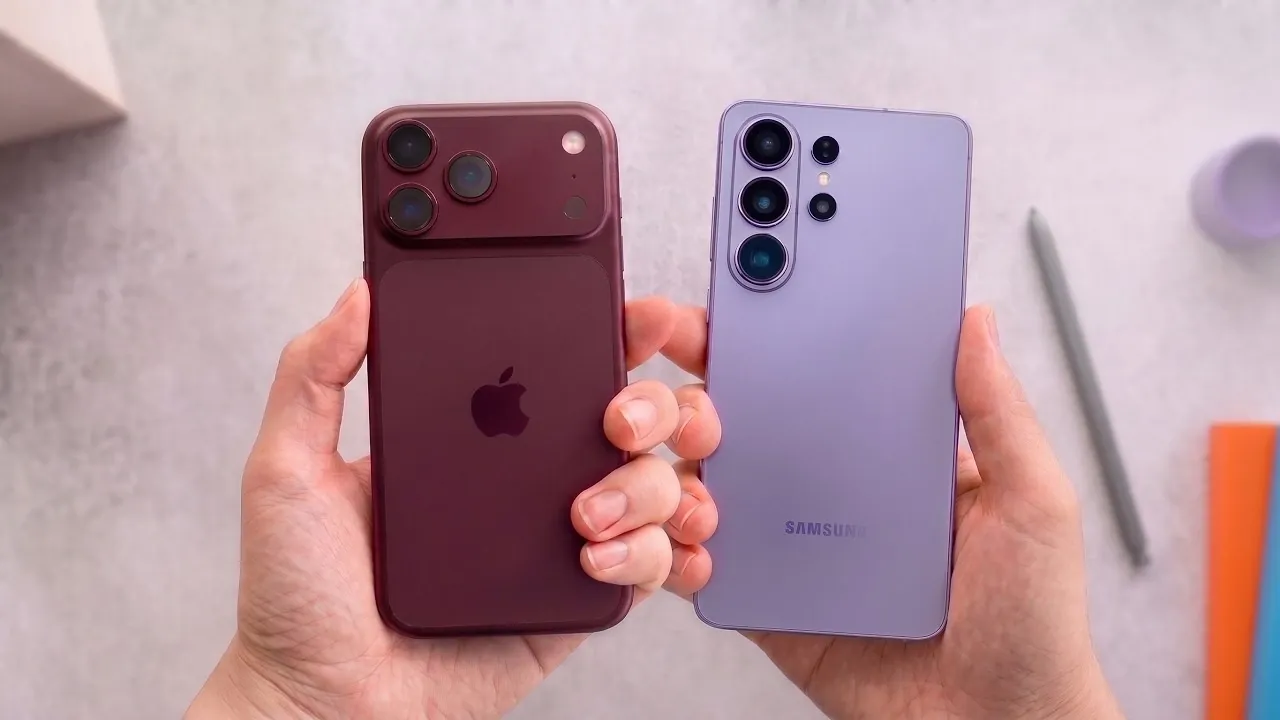
The UK smartphone market is entering another fascinating period. Apple has unveiled the iPhone 18 Pro and iPhone 18 Pro Max, while Samsung’s Galaxy S26 Ultra remains one of the strongest premium Android choices available to British consumers. With both brands competing for shoppers who want excellent cameras, fast performance, premium displays and dependable battery life, choosing a new flagship phone is becoming less straightforward.
For years, the decision often came down to a simple question: iPhone or Android? In 2026, that question is no longer enough. British buyers are looking more closely at photography, charging, software support, ecosystem features, screen quality and how well a phone fits into everyday life.
The latest generation makes the comparison even more interesting.
Apple and Samsung Are Fighting for the Same Premium Buyers
Apple’s latest iPhone 18 Pro generation arrives at a particularly important moment. The company has introduced major camera improvements, a new generation of processing technology and better efficiency, while Samsung continues to push its Galaxy range with powerful hardware, flexible cameras and the customisation advantages of Android.
The competition is especially significant in the UK because both brands already have strong recognition among British consumers. Research and market data consistently place Apple and Samsung among the leading smartphone brands in the country.
That means neither company is trying to convince consumers that premium smartphones are useful. Instead, they are trying to persuade existing users that switching to the newest model is worthwhile.
For someone upgrading from an older iPhone, the iPhone 18 Pro can feel like a natural step forward. For a Galaxy owner, the S26 Ultra offers an equally convincing reason to remain within Samsung’s ecosystem.
iPhone 18 Pro Focuses on Photography and Performance
Photography remains one of Apple’s biggest selling points, and the iPhone 18 Pro continues that strategy.
Apple has introduced an improved 48-megapixel main Fusion camera with variable aperture technology, giving photographers more control over how the camera performs in different lighting conditions. The combination of new hardware and software is designed to make the phone useful for both casual photography and more demanding creative work.
For British users who frequently photograph holidays, family occasions, concerts or city scenes, this matters. London alone provides an enormous range of difficult shooting conditions, from bright outdoor streets to dim restaurants and evening events.
Apple is also placing greater emphasis on professional-style controls. Users who want to experiment with photography rather than simply point and shoot have more flexibility than previous generations.
Performance is another important part of the upgrade. The A20 Pro chip brings additional processing power and improved thermal architecture, which can help the phone maintain strong performance during demanding tasks.
That could be particularly useful for people editing 4K video, playing graphics-heavy games or working with large files while travelling.
Samsung Galaxy S26 Ultra Takes a Different Approach
Samsung’s Galaxy S26 Ultra approaches the flagship market from a slightly different direction.
Rather than focusing primarily on simplicity, Samsung offers a huge amount of flexibility. The Galaxy experience is built around a large high-resolution display, advanced camera hardware, Android customisation and productivity features.
For many UK consumers, the Galaxy S26 Ultra is attractive because it can function as more than just a communications device. It can become a portable entertainment screen, productivity tool, gaming device and photography platform.
The large display is particularly useful for people who regularly watch streaming services or work from their phones. Samsung’s approach also appeals to consumers who prefer greater control over how their phone looks and behaves.
This is where the two brands reveal an important philosophical difference.
Apple tends to make the experience feel tightly integrated and predictable. Samsung gives users more options.
Neither approach is automatically better. It depends on what the buyer actually wants.
Battery Life Is Still a Major Buying Decision
Despite all the attention surrounding cameras and processors, battery life remains one of the most important practical considerations when choosing a smartphone.
A flagship can have an excellent camera and spectacular display, but those features become less useful if the battery cannot comfortably last through a busy day.
The latest iPhone generation puts greater emphasis on efficiency and battery performance. Apple’s improved processor architecture is designed to deliver strong performance while managing energy consumption more effectively.
For everyday users, battery performance is not simply about the number of hours shown in a laboratory test.
A typical British day might include commuting by train, checking emails, navigating through London, listening to podcasts, watching videos during a break, taking photographs and using social media in the evening.
That is why the long-term condition of an iphone battery can be just as important as the specifications printed on the phone’s box.
A brand-new flagship may provide excellent endurance, but after years of daily charging, battery capacity naturally changes. Consumers considering a refurbished phone or an older model should therefore look beyond the processor and camera specifications.
Samsung Has a Strong Case for Heavy Users
Samsung’s flagship strategy also makes battery performance a central part of the overall experience.
The Galaxy S26 Ultra is aimed at people who expect their phone to handle demanding workloads. Large displays, advanced cameras, gaming and multitasking can all place substantial demands on a battery.
This makes battery management increasingly important.
A samsung smartphone battery is not something most people think about when purchasing a phone on day one. However, it becomes much more noticeable after months or years of intensive use.
Heavy users may also pay closer attention to charging habits. Frequent navigation, video recording and gaming can result in more charging cycles, making long-term battery condition an increasingly important part of the ownership experience.
For buyers planning to keep a flagship for several years, battery longevity deserves almost as much attention as camera megapixels.
Which Phone Has the Better Camera?
The answer depends heavily on the type of photography you enjoy.
The iPhone 18 Pro is particularly compelling for people who value natural-looking photographs, video recording and Apple’s tightly integrated camera software. The latest camera system also gives users more control than previous generations.
Samsung, meanwhile, has traditionally positioned its Ultra models as extremely versatile camera phones. The combination of multiple lenses and advanced computational photography gives Galaxy users plenty of options.
For someone who takes a lot of portrait photographs, travel photos and social media content, either phone can be an excellent choice.
The more interesting question is which camera experience you prefer.
Apple generally makes it easy to achieve consistent results with minimal adjustment. Samsung gives enthusiasts more room to experiment.
For casual users, that distinction may not matter. For photography enthusiasts, it could determine the purchase.
Display Size Could Decide the Winner
The screen is another area where personal preference matters enormously.
The iPhone 18 Pro features a 6.3-inch display, while the Pro Max increases the size to 6.9 inches. Apple’s latest Pro models also introduce improvements to the overall display experience and interface.
Samsung’s Ultra strategy has traditionally placed a strong emphasis on a large, immersive screen.
For British commuters, a large display can be particularly useful. Watching a video on a train, reading a long article or reviewing photographs is simply more comfortable on a larger screen.
However, larger phones also take up more space in pockets and bags.
Someone who spends a lot of time walking around London may prefer a device that feels easier to handle with one hand. Someone who watches Netflix during a long train journey may happily accept the additional size.
There is no universal winner here.
Software and Ecosystem Are Becoming More Important
One of the biggest differences between Apple and Samsung is the wider ecosystem.
An iPhone makes the most sense for people who already use products such as MacBooks, iPads, Apple Watches or AirPods. The ability to move between devices smoothly can make everyday tasks significantly easier.
Samsung offers its own ecosystem, while Android also provides greater flexibility for users who rely heavily on Google services and a wider range of hardware brands.
This means switching between Apple and Samsung can be more complicated than simply buying a new phone.
A British consumer who has spent years building an Apple ecosystem may find that staying with iPhone is the easiest option. Likewise, someone who already owns a Galaxy Watch, Galaxy Buds and other Samsung products may have little reason to leave Samsung.
The best phone is often the one that works best with the devices you already own.
What About Long-Term Ownership?
Price is another major factor.
Premium smartphones are expensive investments, and many UK shoppers are increasingly thinking about how long a device can realistically remain useful.
Buying a flagship every year is not necessary for most people. A high-end smartphone can remain capable for several years, particularly when software support continues and the hardware remains powerful.
This makes durability and battery condition more important.
After several years, a replacement iphone battery may become relevant for someone who wants to continue using an older iPhone rather than buying a completely new device.
The same principle applies to Samsung. If the phone remains fast, the camera remains good enough and software support continues, improving battery condition can help extend the practical life of the device.
That can make a significant difference for consumers trying to reduce the overall cost of ownership.
Samsung Galaxy or iPhone 18 Pro for Gaming?
Mobile gaming is another area where the differences become interesting.
The iPhone 18 Pro’s powerful processor makes it suitable for demanding games, while Apple’s ecosystem gives developers a consistent hardware and software environment to work with.
Samsung’s large display, Android flexibility and high-end hardware make Galaxy phones equally attractive to gamers who prefer a bigger screen and greater customisation.
For casual games, either device will be more than capable.
For serious mobile gamers, however, thermal performance, screen size, sustained performance and battery endurance become more important than simple benchmark scores.
A phone that performs brilliantly for ten minutes but becomes hot and drains quickly is less useful than one that can maintain performance during a long gaming session.
So Which One Should UK Buyers Choose?
There is no single winner because the two phones are designed around slightly different philosophies.
The iPhone 18 Pro is an excellent choice for people who prioritise video, photography, smooth software integration and the wider Apple ecosystem. It is particularly appealing to existing iPhone users who want a significant upgrade without changing how they use their devices.
Samsung Galaxy remains highly attractive to consumers who want Android flexibility, a large display, extensive camera capabilities and greater control over the user experience.
The decision becomes even more interesting for someone who is considering switching brands.
An iPhone user moving to Samsung will gain flexibility but may lose some of the convenience of Apple’s ecosystem. A Samsung user moving to iPhone will experience a more tightly integrated environment but may miss some Android customisation options.
The Real Winner Depends on Your Daily Routine
The iPhone versus Samsung debate will probably continue for years, but the latest generation shows why there is no simple answer.
If your priority is effortless photography, premium video recording and integration with other Apple products, the iPhone 18 Pro makes a strong case.
If you want a huge display, Android flexibility and a flagship experience built around customisation and versatility, Samsung Galaxy remains difficult to ignore.
Battery performance should also remain part of the decision. A smartphone is something people use throughout the entire day, so long-term battery health can ultimately have a bigger impact on satisfaction than a small difference in camera specifications.
Whether you choose Apple’s newest Pro model or Samsung’s flagship Galaxy, the most sensible approach is to think beyond launch-day excitement.
Consider how you actually use your phone, how long you intend to keep it, which ecosystem fits your other devices and how important battery longevity is to your routine.
For British consumers facing one of the most competitive smartphone seasons in years, that may be the smartest way to decide between the two biggest names in premium mobile technology.