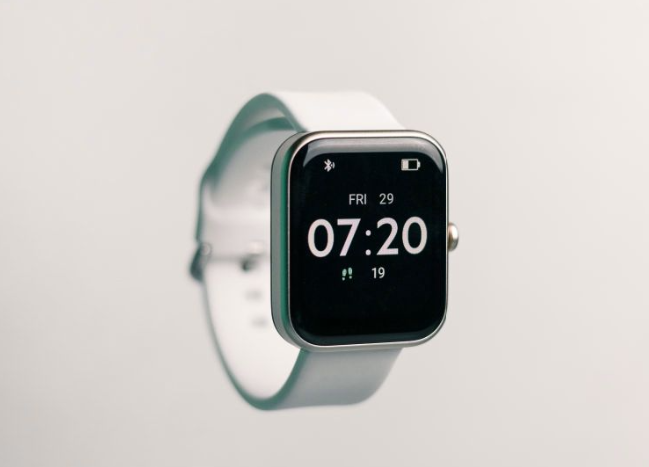
For years, the smartwatch was treated as a convenient extension of the smartphone. It showed notifications, counted steps, displayed incoming calls and occasionally reminded its owner to stand up. Useful, certainly, but hardly revolutionary.
That perception is changing rapidly in Britain.
In 2026, the smartwatch is becoming a much more personal piece of technology. Instead of simply displaying information from a phone, newer models are increasingly designed to collect health data, understand exercise patterns, support navigation, assist with everyday tasks and provide more intelligent insights. At the same time, manufacturers are trying to make watches thinner, lighter and more comfortable to wear throughout the day.
The result is a fascinating battle for the wrist. The winning smartwatch may no longer be the one with the biggest screen or the longest list of apps. It could be the device that quietly becomes part of everyday life without constantly demanding attention.
From Smartphone Companion to Everyday Assistant
The biggest change in the smartwatch market is not necessarily visible from the outside.
A modern smartwatch can handle a surprisingly wide range of tasks without requiring a phone to be pulled from a pocket. Users can check messages, make payments, follow directions, control music and monitor workouts directly from their wrists.
Health and fitness have become particularly important. Current models can track activities, heart rate, sleep and other measurements, while more advanced devices are adding increasingly sophisticated health-related features. Samsung’s current UK smartwatch range, for example, highlights functions such as ECG, body composition measurement and 4G connectivity.
This is changing the role of the product. A smartwatch is no longer simply a miniature screen attached to a wrist. It is becoming a personal sensor platform.
For British consumers who commute, exercise, travel or simply want to keep track of their daily routines, that distinction matters.
Smaller Designs Are Becoming More Important
There is an obvious contradiction in wearable technology.
Consumers want more features, but they do not necessarily want a bigger device.
A smartwatch has to sit comfortably on the wrist for hours at a time. It needs to be light enough for running, thin enough to sleep in and comfortable enough to wear while working at a desk. Adding more sensors, processors and connectivity can easily make a device larger and heavier.
That is why smaller and more efficient hardware is becoming such an important part of the competition.
Manufacturers are looking for ways to squeeze more computing power and sensing technology into increasingly compact cases. Better component efficiency can allow companies to add new capabilities without simply making the watch physically bigger.
This is especially important for people who wear their watches overnight. Sleep tracking only works properly when people are willing to keep the device on their wrist while sleeping. A bulky watch can quickly become annoying, while a lighter model can effectively disappear into the background.
The ideal smartwatch, therefore, may be one that users almost forget they are wearing.
Battery Life Is Becoming a Defining Feature
There is another challenge hiding inside the push for smaller smartwatches: power consumption.
More sensors, brighter displays, GPS, mobile connectivity and increasingly sophisticated software all require energy. Yet consumers still expect a smartwatch to work reliably throughout a busy day.
That makes the internal smart watch battery one of the most important components, even though most users never see it.
For a smartwatch owner, battery performance can influence almost every part of the experience. A watch that needs frequent charging may interrupt sleep tracking, stop recording a long run or simply become inconvenient during travel.
This is one reason battery efficiency is becoming as important as raw battery capacity. A smaller watch does not necessarily need a dramatically larger battery if its processor, display and sensors can operate more efficiently.
Recent smartwatch coverage also shows how strongly battery life is being used as a differentiating feature. Some of the latest high-end models are competing specifically on endurance, while manufacturers are experimenting with more efficient hardware and charging systems.
The AI Watch Is Starting to Take Shape
Artificial intelligence is another major change coming to the wrist.
For years, smartwatch software mostly followed simple rules. If the heart rate reached a certain level, display a warning. If the user walked a certain number of steps, show the total. If a notification arrived, display it.
AI creates the possibility of something more sophisticated.
Instead of simply presenting raw numbers, a smartwatch could increasingly interpret patterns and provide useful context. It might notice changes in exercise habits, identify unusual activity patterns or help users understand their fitness progress.
The shift is already visible in the Android smartwatch market. Samsung’s latest Galaxy Watch generation has been positioned around more advanced health tools and Gemini-powered assistance, while Google’s latest Pixel Watch models are also pushing further into health-focused features and intelligent services.
The important point is that AI does not necessarily need to appear as a chatbot on the watch screen.
The most useful AI could be almost invisible.
Instead of asking a smartwatch a question, users may simply receive better recommendations, clearer explanations and more relevant information at the right moment.
Britain Is a Natural Market for Wearable Technology
The UK is particularly interesting for the smartwatch industry because wearable technology has become increasingly connected with health, fitness and everyday convenience.
The British wearable technology market is forecast to continue growing strongly through the rest of the decade, with health monitoring and personal wellness among the factors supporting demand.
There is also a practical reason why smartwatches fit British lifestyles so well.
Consider a typical weekday.
A commuter leaves home in the morning, checks directions on the train, receives a message during a meeting, walks through central London at lunchtime and goes for a run after work. A smartwatch can accompany every part of that routine.
At the weekend, the same device might be used for cycling, hiking, gym sessions or simply tracking sleep.
This versatility is one of the smartwatch’s greatest strengths. It does not need to replace another device completely. It simply needs to become useful often enough to justify wearing it every day.
Fitness Is Becoming More Sophisticated
The fitness side of the market is also changing.
Early fitness trackers focused heavily on basic numbers: steps, distance and calories. Modern smartwatches are becoming much more sophisticated.
Runners can monitor pace and training data. Hikers can use GPS navigation. Cyclists can track performance. Swimmers can record workouts. Sleep tracking can provide another layer of information about recovery.
The growing popularity of GPS watches among British outdoor enthusiasts demonstrates how wearable technology is expanding beyond traditional gym use. Current UK-focused gear coverage continues to examine advanced GPS watches for hiking and navigation, showing how important outdoor functionality has become.
This creates a fascinating divide in the market.
Some consumers want a fashionable everyday smartwatch. Others want an endurance-focused tool for serious training. Increasingly, manufacturers are trying to satisfy both groups with different versions of the same product family.
The Smartwatch Does Not Always Need a Screen
Perhaps the most surprising development in wearable technology is that some consumers are beginning to question the idea that every wearable needs a screen.
In 2026, screen-free wearables are gaining attention. These products focus on quietly collecting health and fitness information rather than constantly displaying notifications.
The trend reflects a growing tension in consumer technology.
People want useful technology, but they do not necessarily want more distractions.
A smartwatch can be incredibly convenient, but every notification creates another reason to look at a screen. For someone trying to concentrate at work, enjoy dinner or relax before bed, that can become frustrating.
Screen-free wearables take the opposite approach. They collect information quietly and present it later through an app.
This suggests that the future of wearable technology may not be about adding as many features as possible. It may be about deciding which features deserve the user’s attention.
Battery Replacement Could Become More Relevant
As smartwatches become more sophisticated, longevity will become an increasingly important consumer question.
A traditional watch can potentially operate for decades. A smartwatch has a much more complicated life cycle. Its software may eventually become outdated, components can wear out and its battery gradually loses capacity.
For owners who want to keep a favourite watch for several years, battery condition can therefore become a major consideration.
A declining smart watch battery can affect the entire experience. A watch that once comfortably lasted through a day may eventually require charging much earlier, making GPS workouts, sleep monitoring and mobile connectivity less convenient.
This is particularly important as consumers become more conscious about electronic waste.
Replacing an entire smartwatch simply because its battery has deteriorated may feel wasteful if the rest of the device still works perfectly. Better repairability and longer product lifespans could therefore become important selling points in the future.
The Competition Is Moving Beyond Apple and Samsung
The smartwatch market is no longer simply a two-company race.
Apple and Samsung remain major names, but Google, Garmin, Huawei, Fitbit and other manufacturers are competing for different groups of consumers.
Recent 2026 consumer discussions illustrate how fragmented the market has become. Google’s Pixel Watch 5, Samsung’s Galaxy Watch Ultra 2 and Galaxy Watch 9 are competing for Android users, while specialist sports watches are targeting runners, hikers and serious athletes.
At the same time, cheaper models are becoming more attractive to consumers who want essential features without paying premium prices.
Samsung may even be preparing a more affordable smartwatch concept focused on efficiency and longer battery life, according to recent reports. Such a move would demonstrate how important the affordable end of the market has become.
This competition is good news for British shoppers.
More competition means consumers have more choices. Instead of buying the most expensive watch available, people can choose a device based on what they actually need.
The Most Important Upgrade May Be Invisible
When a new smartphone arrives, consumers can immediately see the difference. A new screen, camera or design makes the upgrade obvious.
Smartwatches are different.
The most meaningful improvements may happen inside the device.
A better sensor may produce more accurate measurements. A more efficient processor may improve battery life. Smarter software may provide more useful insights. Better algorithms may make GPS tracking more reliable.
None of these improvements necessarily makes the watch look dramatically different.
That is why the next stage of smartwatch development could be less about visual excitement and more about invisible improvements.
The best smartwatch might be the one that quietly does everything better.
What British Consumers Should Look For
For anyone considering a new smartwatch this autumn, specifications alone should not determine the decision.
Battery endurance is worth examining carefully. A smart watch battery that can comfortably support a full day of normal use is far more useful than a watch packed with features but constantly looking for a charger.
Comfort is equally important. A smartwatch is a wearable device, so weight, thickness and strap design can make a major difference.
Compatibility should also be checked. Some watches work best within a particular smartphone ecosystem, while others offer broader support.
Finally, consumers should consider which features they will genuinely use.
Someone who runs three times a week may benefit greatly from GPS and advanced fitness tracking. Someone who mainly wants notifications and contactless payments may not need an expensive sports watch.
The smartest purchase is not necessarily the smartest watch.
It is the watch that fits the user’s life.
The Future of the Wrist Is Getting More Personal
The smartwatch industry is entering an interesting phase.
The first generation of smartwatches convinced people that a computer could sit on their wrist. The next generation is trying to make that computer more useful, more personal and less demanding.
Smaller designs, better sensors, AI-powered software, advanced fitness tracking and improved efficiency are all pushing the category forward.
At the same time, the rise of screen-free wearables shows that consumers are not simply asking for more technology. They are also asking for technology that knows when to stay quiet.
That may ultimately define the next era of wearable devices.
The future smartwatch will not necessarily shout for attention. It may quietly understand what its owner needs, provide useful information at exactly the right moment and disappear into the background for the rest of the day.
And underneath all of those intelligent features, one humble component will remain essential: the battery.
As watches become smaller, smarter and more capable, the challenge will be making sure they can keep going.
For British consumers, that could make battery performance one of the most important — and most overlooked — factors when choosing the next device for their wrist.