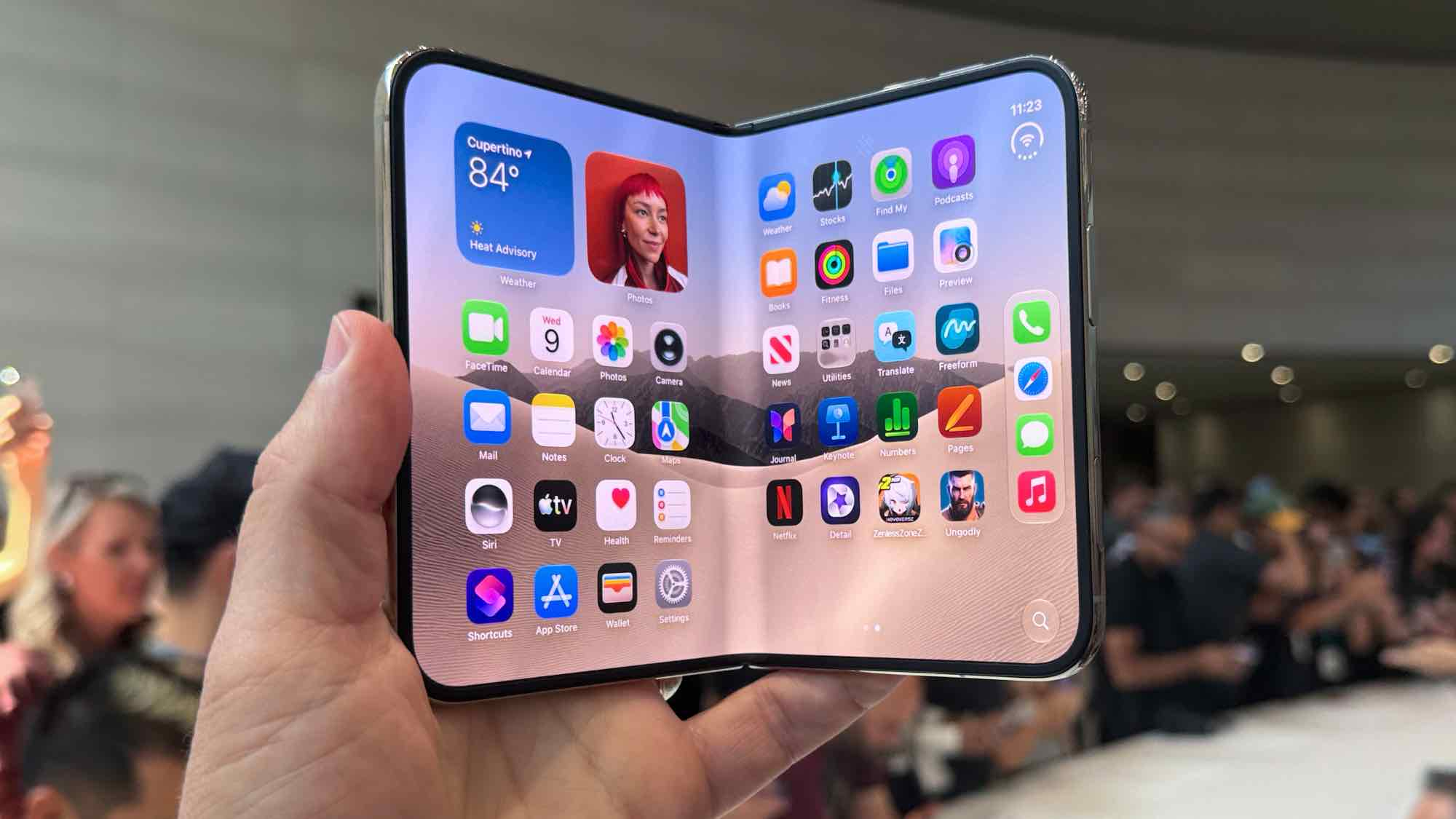
Apple Finally Enters the Foldable Era
For years, foldable smartphones have been one of the most talked-about ideas in consumer technology. Samsung, Huawei, Google and other manufacturers have already experimented with folding screens, giving consumers a choice between compact designs and larger displays. Apple, however, stayed outside the category until now.
That changed in September 2026 with the introduction of the iPhone Duo, Apple’s first foldable iPhone. The device is scheduled to become available in October, marking one of the company’s most significant changes to the iPhone design since the introduction of the iPhone X. Apple says the new model combines a traditional smartphone experience with a larger internal display, creating a device that can move between phone and tablet-style use.
A Phone That Opens Into Something Bigger
The biggest attraction of the iPhone Duo is its physical transformation. When folded, it has a compact outer display designed for conventional smartphone tasks. When opened, users get a much larger 7.6-inch internal screen.
This gives the device a different role from a conventional iPhone. A user checking a message on the Tube could keep the phone folded, while someone working on a document, watching a video or using several apps could open it to take advantage of the larger display.
The Price Will Be a Major Talking Point
The biggest barrier may not be the technology itself but the price. The iPhone Duo starts at $1,999 in the United States, and UK pricing is expected to make it one of Apple’s most expensive consumer devices.
For many shoppers, this changes the question from whether a foldable iPhone looks interesting to whether its additional functionality justifies the premium.
Battery Life Becomes Even More Important
Foldable phones create a unique challenge for battery performance. A larger display can consume more energy, while the internal design has to accommodate two screens, a folding mechanism, cameras, processors and other components within a relatively thin body.
This makes everyday battery efficiency an important part of the conversation around the iPhone Duo. Apple has stated that the device can deliver up to 24 hours of general use, while fast charging is also part of its specification.
For users who spend long days travelling around London, Manchester, Birmingham or Edinburgh, battery performance can be more important than an impressive specification sheet.
That is why an iPhone battery is no longer simply a background component of the smartphone experience. As screens become larger and phones become more capable, battery efficiency becomes increasingly connected to how people actually use their devices.
The Foldable Design Could Change Mobile Photography
The camera experience is another area where the iPhone Duo takes a different approach.
Apple has introduced camera functions designed specifically around the foldable form factor. Because the device can remain partially folded, users can place it on a surface without necessarily needing a separate tripod.
This could be useful for travellers, families and content creators. Imagine taking a group photograph in a London park without asking another person to hold the phone, or recording a hands-free video while visiting a museum or landmark.
At the same time, the iPhone Duo does not simply reproduce every camera feature found on the iPhone 18 Pro models. Apple has made some compromises in the camera system, including the absence of a dedicated telephoto camera.
A Different Way to Multitask
The larger display could be one of the strongest reasons for choosing a foldable iPhone.
On a conventional smartphone, switching between applications can feel restrictive because the display is relatively narrow. A larger internal screen creates more space for two applications or multiple pieces of information to remain visible.
For British professionals, students and frequent travellers, this could have practical advantages. Someone could keep a video call open while checking notes, compare train information with a map or read an email while working on a document.
The UK Market Could Be an Interesting Test
Britain has a strong mobile ecosystem, with consumers commonly buying phones outright or through network contracts. This means the way retailers and carriers package the iPhone Duo could have an important effect on its accessibility.
Sky Mobile, for example, has announced that it will offer the iPhone Duo alongside the iPhone 18 Pro, iPhone 18 Pro Max, Apple Watch Series 12 and AirPods 5.
That makes the foldable iPhone more than an experimental product sitting on a technology website. It is entering the same retail environment as Apple’s conventional flagship devices.
Durability Will Be Closely Watched
Foldable phones have always raised questions about durability. A conventional smartphone has a fixed body, while a foldable model introduces a hinge and a flexible display.
Apple has highlighted the materials and engineering used in the Duo, including a titanium frame and other protective materials. The device also carries an IP68 rating for water and dust resistance.
Nevertheless, real-world durability cannot be fully understood from launch specifications alone. British consumers considering a device that costs considerably more than a conventional smartphone are likely to pay close attention to long-term experiences.
Battery Longevity Matters Too
There is another long-term issue that deserves attention: battery ageing.
Every rechargeable smartphone battery gradually loses capacity over time. Users who keep their phones for several years may eventually notice shorter periods between charges, particularly if their daily usage is demanding.
For a premium foldable phone, this matters because replacing or maintaining components can be more complicated than with a conventional smartphone design.
An iPhone battery can influence the practical lifespan of the entire device, especially for users who rely on their phone for navigation, mobile banking, entertainment and communication throughout the day.
Could Foldables Replace Tablets?
One of the most interesting questions surrounding the iPhone Duo is whether it could reduce the need for another device.
The 7.6-inch internal screen is large enough to make reading, watching videos and working with documents more comfortable than on a conventional smartphone. That puts the Duo somewhere between a standard phone and a small tablet.
For some users, this could simplify their technology collection. Instead of carrying a phone and a tablet, they could potentially use one foldable device for both roles.
What It Could Mean for Future iPhones
The launch of the iPhone Duo may also influence Apple’s conventional iPhone designs.
Once consumers become accustomed to flexible displays, larger mobile workspaces and new multitasking options, expectations could change across the smartphone market. Even people who never buy a foldable phone may eventually benefit from software features first developed for foldable devices.
Competition could accelerate this process. Huawei and Xiaomi have also continued to develop premium foldable smartphones, showing that the category is becoming increasingly competitive.
A New Chapter for the iPhone
The iPhone Duo does not simply add another model to Apple’s catalogue. It introduces a different philosophy for what an iPhone can be.
Instead of choosing between a phone and a larger-screen device, users can potentially have both experiences in one product. The trade-offs are equally clear: the price is high, the design is more complex and buyers will need to consider durability, battery longevity and whether the larger screen genuinely fits their lifestyle.
For British consumers, the arrival of the Duo will provide an opportunity to see whether Apple’s approach to foldables can move the category from an interesting premium option into a more mainstream smartphone format.
As the device approaches its October launch, attention will increasingly shift from Apple’s presentation to real-world use. People will want to know how comfortable it is on a daily commute, how useful the larger display feels, how well applications adapt and how long the device can remain practical after years of charging cycles.
Battery efficiency will remain part of that conversation. A powerful foldable with a beautiful display is only as useful as its ability to stay powered throughout the day, making the quality and longevity of an iPhone battery an important consideration alongside the screen, cameras and processor.
Apple has now entered the foldable race. The next chapter will be written not only by the company, but by consumers deciding how they want their smartphones to fit into everyday life.